

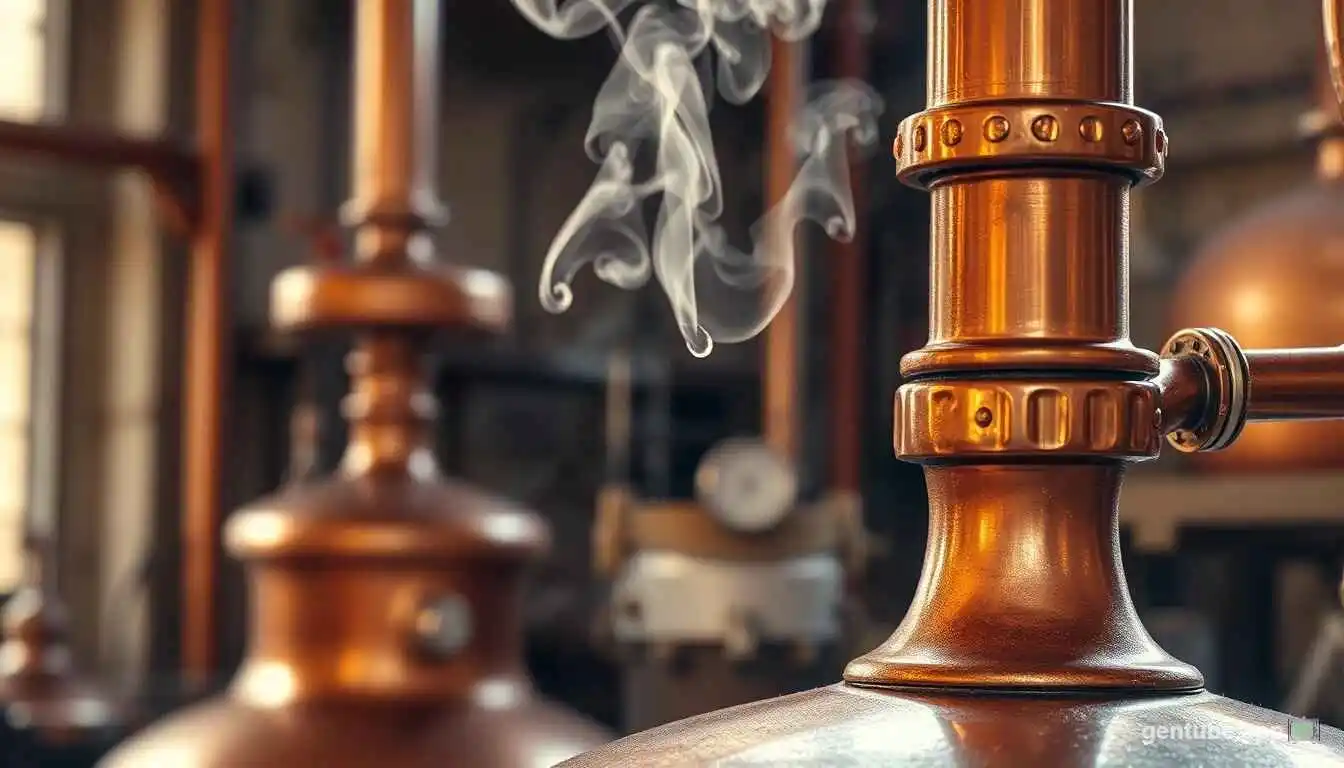
Distillation Decoded: The Ancient Art Behind Fuel, Whisky, and Fresh Water
Somewhere beneath a smoky Scottish glen, inside a towering steel refinery column, and behind the label of every bottle of essential oil sits the same quiet chemistry: distillation. It is one of the oldest deliberate technologies in human history, older than gunpowder, older than the printing press, and yet it remains one of the most industrially critical processes on the planet, running continuously inside oil refineries, desalination plants, pharmaceutical facilities, and distilleries around the clock.
At its heart, distillation is a strikingly simple idea: heat a mixture until part of it turns to vapor, then cool that vapor back into liquid somewhere else, and you have separated one substance from another based on nothing more than how easily each one boils. That single principle, applied with increasing sophistication over roughly two thousand years, now underpins the fuel in your car, the drinking water on ships and remote islands, the alcohol in a cocktail, the perfume on your wrist, and the pure chemical reagents used in every modern laboratory.
This guide takes an in-depth look at distillation from every angle: the physics and chemistry that make it work, the many different distillation techniques engineers have developed for different materials, the industries quietly built on top of it, the equipment used at both laboratory and industrial scale, the problems that plague real-world operations, and where this remarkably old technology is headed next. Whether you are a curious home enthusiast, a student of chemistry, or a professional in energy, beverages, or pharmaceuticals, this article will give you a thorough, practical understanding of distillation.
What Is Distillation, Really?
Distillation is a separation process that exploits differences in volatility, meaning how readily different substances within a mixture turn into vapor at a given temperature. When a liquid mixture is heated, the component with the lower boiling point evaporates more readily and becomes concentrated in the vapor phase, while the component with the higher boiling point tends to remain concentrated in the liquid that is left behind. By capturing and cooling that vapor separately, condensing it back into liquid form, distillation allows a mixture to be pulled apart into its individual components, or at least significantly enriched in one direction or another.
It is important to understand that distillation is a physical process, not a chemical reaction. No new substances are created and none are destroyed; molecules of ethanol, water, or any other component remain chemically unchanged throughout. What changes is simply their location and concentration, moved from a mixed liquid into a separated vapor and then back into a purified, or at least altered, liquid.
This distinguishes distillation from techniques like crystallisation, which relies on solubility and lattice formation, or filtration, which relies on particle size. Distillation is fundamentally about boiling points, vapor pressure, and the thermodynamic relationship between a liquid and the vapor sitting above it, a relationship chemists formalize through the concept of vapor-liquid equilibrium.
A Brief History of Distillation
The roots of distillation stretch back over two thousand years. Early evidence suggests that Mesopotamian and Egyptian craftspeople used rudimentary distillation-like techniques to produce fragrant oils and perfumes as far back as 2000 BCE, long before anyone understood the underlying chemistry. The technique was significantly refined by alchemists in the Hellenistic period, particularly in Alexandria, who developed some of the earliest true stills, glass apparatus with a heated chamber and a cooled collection vessel connected by a tube.
It was medieval Islamic chemists, most notably Jabir ibn Hayyan, often regarded as a father of early chemistry, who dramatically advanced distillation apparatus and technique between the eighth and tenth centuries, developing more sophisticated alembic stills that were later transmitted to medieval Europe. By the twelfth and thirteenth centuries, European alchemists were using distillation extensively, most famously to isolate concentrated alcohol, laying the groundwork for the spirits industry that still exists today.
The industrial revolution transformed distillation from a small-batch, craft-based process into a large-scale continuous operation. The invention of the continuous column still in the early nineteenth century, credited in large part to Aeneas Coffey, allowed distillers and, later, petroleum refiners to process enormous volumes of liquid continuously rather than in individual batches, a shift that made modern oil refining and mass beverage production possible.
The Science Behind the Separation
To understand why distillation works, it helps to understand two related concepts: vapor pressure and vapor-liquid equilibrium. Every liquid has a vapor pressure at a given temperature, essentially a measure of how eager its molecules are to escape into the gas phase. Substances with weaker intermolecular forces, such as ethanol compared to water, tend to have higher vapor pressures and lower boiling points, meaning they evaporate more readily.
When a mixture of two or more liquids is heated, the vapor rising above it is not identical in composition to the liquid itself; it is enriched in whichever component is more volatile. This relationship is often visualized using a vapor-liquid equilibrium diagram, which plots how the vapor and liquid compositions relate to each other at a given pressure. Raoult’s Law and Dalton’s Law together provide the theoretical foundation for predicting this behaviour in relatively simple, ideal mixtures, though many real-world mixtures deviate from ideal behaviour in important ways.
One particularly important complication is the azeotrope, a specific mixture ratio of two or more liquids that boils at a constant temperature and produces vapor with exactly the same composition as the liquid. Once a mixture reaches its azeotropic composition, ordinary distillation can no longer separate it further, no matter how many times it is redistilled. The ethanol-water mixture is a famous example, forming an azeotrope at roughly ninety-five point six percent ethanol by weight, which is why simple distillation alone can never produce completely pure, one hundred percent anhydrous alcohol.
Each theoretical separation stage inside a distillation system, whether that is a single simple pot still or one tray inside a tall fractionating column, is often referred to as an equilibrium stage or theoretical plate. The more theoretical plates a system provides, the more thoroughly it can separate components with similar boiling points, which is why tall, carefully packed fractionating columns can achieve far sharper separations than a single simple pot still.
Types of Distillation Processes
Just as crystallisation encompasses several distinct industrial techniques, distillation is really a family of related methods, each suited to particular mixtures, scales, and goals.
Simple Distillation
The most basic form, simple distillation involves heating a liquid mixture in a single vessel and condensing the resulting vapor immediately, with no intermediate separation stages. It works best when the components being separated have significantly different boiling points, generally at least twenty five degrees Celsius apart, and it is commonly used for separating a volatile liquid from dissolved solids or non-volatile impurities, such as producing basic distilled water.
Fractional Distillation
When the components of a mixture have boiling points that are close together, simple distillation is not precise enough, and fractional distillation is used instead. A tall column packed with trays or packing material provides many repeated cycles of partial vaporization and condensation as vapor rises through it, progressively concentrating the more volatile component near the top of the column. This is the workhorse technique behind petroleum refining, where crude oil is separated into fractions like gasoline, kerosene, diesel, and heavy fuel oils based on their differing boiling ranges.
Steam Distillation
Steam distillation is used to extract volatile compounds, most famously essential oils and fragrance compounds, from plant material without exposing those delicate compounds to damaging high temperatures. Steam is passed through the plant material, carrying volatile oils along with it into the vapor phase even though those oils would normally have much higher boiling points on their own, a phenomenon made possible because immiscible liquids exert their vapor pressures independently and boil at a lower combined temperature than either would alone.
Vacuum Distillation
By lowering the pressure inside the distillation system, vacuum distillation reduces the boiling point of the liquid being processed, allowing separation to occur at much lower temperatures. This is essential for heat-sensitive materials that would decompose, discolor, or react undesirably if heated to their normal atmospheric boiling point, and it is widely used in petroleum refining for processing heavy residues as well as in pharmaceutical and fine chemical manufacturing.
Azeotropic and Extractive Distillation
These specialized techniques are designed specifically to break through azeotropes that ordinary distillation cannot separate. Azeotropic distillation introduces a third substance, called an entrainer, that forms a new, more easily separated azeotrope with one of the original components. Extractive distillation instead adds a high-boiling solvent that selectively alters the relative volatility of the components without forming a new azeotrope itself, making the original mixture easier to pull apart.
Molecular or Short-Path Distillation
Used for extremely heat-sensitive or high molecular weight compounds, such as certain vitamins, specialty polymers, and pharmaceutical actives, this technique operates under very high vacuum with an extremely short distance between the heated evaporation surface and the cooled condensing surface, minimizing the time the material spends at elevated temperature and reducing thermal degradation.
Cryogenic Distillation
Operating at extremely low temperatures rather than high ones, cryogenic distillation is used to separate the components of air, primarily nitrogen, oxygen, and argon, after they have been liquefied. This technique is fundamental to producing the industrial and medical gases used in steelmaking, hospitals, welding, and countless other applications.
Reactive Distillation
This hybrid process combines a chemical reaction with simultaneous distillation inside the same vessel, continuously removing a desired reaction product as it forms, which can push a chemical equilibrium further toward completion while saving considerable energy and equipment costs compared to running the reaction and separation as two separate steps.
The Key Variables That Determine Distillation Performance
Getting a clean, efficient separation out of a distillation system depends on carefully managing several interrelated variables, whether you are running a laboratory-scale rig or a refinery column processing thousands of barrels a day.
Reflux Ratio
In fractional distillation, a portion of the condensed vapor at the top of the column is often deliberately sent back down into the column rather than being collected as final product, a practice known as reflux. The reflux ratio, the proportion of condensed liquid returned to the column versus removed as distillate, has an enormous influence on separation quality. A higher reflux ratio generally produces a purer distillate but also slows down production and increases energy consumption, forcing operators to balance purity against throughput and cost.
Temperature and Heat Input
The rate and evenness of heating directly affects vapor generation, and in turn the stability of the separation happening throughout the column. Heating too aggressively can cause liquid to be violently carried upward along with the vapor, a problem discussed further below, while heating too gently can cause the process to stall or produce inconsistent results.
Pressure
Because boiling point is directly tied to pressure, operating a distillation system under vacuum, atmospheric pressure, or elevated pressure changes the temperatures at which separation occurs, and is a critical tool for handling heat-sensitive materials or improving energy efficiency.
Column Design and Packing
The number of theoretical plates a column provides, determined by its height, internal trays, or packing material, directly controls how sharply it can separate components with similar boiling points. Structured packing, random packing, and various tray designs each offer different tradeoffs between separation efficiency, pressure drop, and capacity.
Feed Composition and Rate
The starting composition of the mixture being distilled, along with how quickly fresh feed is introduced into the system, strongly influences achievable purity and throughput. Sudden changes in feed composition or rate can destabilize an otherwise well-tuned continuous distillation column.
Where Distillation Powers the World Around Us
Much like crystallisation, distillation is embedded so deeply into modern infrastructure that most people never consciously notice it, despite relying on its output every single day.
Petroleum Refining
Crude oil distillation is arguably the single largest application of this technology on the planet. Massive fractionating columns inside refineries separate crude oil into gasoline, jet fuel, diesel, heating oil, lubricants, and the raw feedstocks used to manufacture plastics, based entirely on differences in boiling range among the thousands of hydrocarbon compounds present in crude oil.
Spirits and Beverage Production
From single malt whisky to vodka, brandy, rum, and gin, essentially every distilled spirit owes its existence and character to careful control of distillation, where the shape of the still, the cut points chosen during a distillation run, and the number of distillation passes all shape the final flavor and strength of the product.
Water Purification and Desalination
Thermal desalination plants use distillation, often in highly efficient multi-stage or multi-effect configurations, to produce fresh drinking water from seawater in regions where other freshwater sources are scarce, particularly across the Middle East and other arid coastal regions.
Perfumery and Essential Oils
Steam distillation remains the primary method for extracting the fragrant volatile oils from flowers, herbs, and spices that form the backbone of the perfume and aromatherapy industries, prized for preserving delicate scent compounds that would be damaged by more aggressive extraction methods.
Pharmaceuticals and Fine Chemicals
Vacuum and molecular distillation are routinely used to purify heat-sensitive active pharmaceutical ingredients, solvents, and specialty chemical intermediates to the extremely high purity standards required for medicines and advanced materials.
Industrial Gas Production
Cryogenic air separation, essentially distillation performed on liquefied air, supplies the oxygen, nitrogen, and argon gases essential to steel manufacturing, hospitals, food packaging, welding, and countless other industrial processes.
Inside a Distillation Column: Equipment and Design
An industrial distillation column, sometimes still called a distillation tower, is a considerably more sophisticated piece of equipment than the simple glass apparatus most people picture. At its base sits a reboiler, which vaporizes a portion of the liquid feed and drives vapor upward through the column. As that vapor rises, it repeatedly contacts descending liquid on a series of internal trays or across packing material, exchanging heat and mass at each stage in a way that steadily concentrates the more volatile components toward the top.
At the top of the column, a condenser cools the rising vapor back into liquid. Part of this liquid is withdrawn as the final overhead product, while, as discussed earlier, part is often returned to the column as reflux to improve separation quality. Meanwhile, the less volatile components that never made it to the top are withdrawn from the bottom of the column as bottoms product, sometimes after passing through additional stripping sections designed to recover any remaining valuable volatile material.
Modern distillation columns are extensively instrumented, with temperature, pressure, and flow sensors positioned at multiple points throughout the column feeding data into control systems that continuously adjust heat input, reflux ratio, and feed rate to maintain product specifications even as feed composition or ambient conditions shift throughout the day.
Scaling Distillation From Lab Bench to Industrial Column
A distillation setup that performs beautifully on a laboratory bench, using a small flask, a short column, and a modest heating mantle, faces a very different set of challenges when scaled up to an industrial column many meters tall and several meters in diameter.
At industrial scale, engineers must carefully account for pressure drop across the column, the way vapor and liquid distribute themselves evenly, or unevenly, across a large tray or packed bed, and the sheer thermal mass involved in heating and cooling such large volumes of material. Poor liquid or vapor distribution across a wide column can create channeling, where vapor and liquid effectively bypass large sections of the internal packing or trays, dramatically reducing separation efficiency compared to what a small-scale test might have predicted.
Engineers rely heavily on process simulation software to model how a given column design will behave before it is ever built, testing different tray counts, packing types, reflux ratios, and feed points virtually. Pilot-scale distillation units, larger than benchtop equipment but far smaller than a full industrial column, are frequently used as an intermediate step to validate these models with real material before committing to full industrial construction.
Common Distillation Problems and How Operators Solve Them
Distillation columns, whether running in a laboratory or a massive refinery, are prone to a recurring set of operational problems that engineers and operators must constantly watch for.
Flooding occurs when vapor is moving upward through the column so aggressively that it prevents liquid from properly draining downward, causing liquid to back up and accumulate on trays or within packing. This dramatically reduces separation efficiency and, if severe enough, can force an emergency shutdown. Flooding is typically resolved by reducing vapor flow, adjusting reboiler heat input, or, at the design stage, increasing column diameter or improving internal geometry.
Weeping is essentially the opposite problem, occurring when vapor flow is too low to properly support liquid on a tray, causing liquid to leak downward through openings meant only for vapor rather than flowing properly across the tray surface. This reduces contact time between vapor and liquid and can be addressed by increasing vapor flow or adjusting tray design.
Entrainment happens when small droplets of liquid are physically carried upward along with the vapor stream, contaminating the vapor phase with material that should have stayed behind in the liquid. This is often caused by excessive vapor velocity and can compromise the purity of the distillate collected further up the column.
Fouling, much like in crystallisation equipment, involves the gradual buildup of solid deposits, scale, or polymerized material on internal surfaces, reducing heat transfer efficiency and eventually forcing a shutdown for cleaning. Regular maintenance, careful control of operating temperatures, and appropriate material selection all help minimize fouling over a column’s operating life.
Azeotrope formation, discussed earlier, is less an operational malfunction than a fundamental thermodynamic limitation, but it remains one of the most persistent challenges in distillation, requiring specialized techniques such as azeotropic or extractive distillation, pressure swing distillation, or entirely different separation technologies to overcome.
Distillation at Home: A Window Into the Science
Watching distillation happen firsthand is one of the clearest ways to understand the principles described throughout this article, and simple, legal home demonstrations such as distilling water or extracting a small batch of herbal essential oil through steam distillation require nothing more exotic than a heat source, a flask, some tubing, and a condensing vessel.
As the mixture heats, the more volatile component vaporizes first and travels through the condenser, where it cools back into liquid and is collected separately from the less volatile material left behind in the original flask. Watching the temperature at the top of the apparatus, often called the vapor temperature, hold roughly steady while a particular component is actively distilling over, then rise once that component is largely depleted, is a direct, visible demonstration of vapor-liquid equilibrium and boiling point separation in action.
It is worth noting that in most countries, distilling alcohol at home without the appropriate license is illegal, even for personal use, due to tax regulations and safety concerns around flammable vapors, so home distillation experiments are best kept to water purification, herbal steam distillation, or other legally unrestricted materials unless you hold the relevant permits.
The Future: Efficient, Hybrid, and Smarter Distillation
Despite being thousands of years old, distillation remains under active development, largely because it is also one of the most energy-intensive separation processes used in industry today, responsible for a significant share of global industrial energy consumption. This has driven intense interest in improving its efficiency.
Heat integration techniques, where the heat released during condensation at the top of one column is captured and reused to help vaporize liquid elsewhere in the same plant, are increasingly standard in modern refinery and chemical plant design. Hybrid separation processes that combine distillation with membrane separation, adsorption, or other technologies are being developed to reduce energy consumption, particularly for difficult separations involving close-boiling components or azeotropes.
Advanced process control, informed by real-time sensor data and increasingly sophisticated simulation models, allows modern distillation columns to be operated closer to their true performance limits with far less energy waste and product giveaway than older, more conservatively operated systems. As industries face mounting pressure to decarbonize and reduce energy consumption, distillation, despite its ancient origins, is likely to remain a central focus of process engineering innovation for many years to come.
Distillation Compared to Other Separation Techniques
Distillation is only one tool in a much larger separation toolbox, and understanding how it compares to alternatives helps explain why engineers reach for it in some situations and choose something else in others. Filtration, for example, separates solids from liquids or gases based purely on particle size, offering no ability to separate two miscible liquids from one another, which is precisely the gap distillation fills. Crystallisation, covered in depth elsewhere, relies on differences in solubility and the formation of an ordered solid lattice, making it well suited to isolating a solid compound from a solution but poorly suited to separating two liquids that never form a solid phase at all.
Membrane separation technologies, including reverse osmosis and pervaporation, achieve separation by selectively allowing certain molecules to pass through a specialized barrier while blocking others, based on molecular size, shape, or chemical affinity rather than boiling point. These methods can be considerably more energy efficient than distillation for certain applications, particularly desalination, which is why reverse osmosis has increasingly displaced thermal distillation in many modern desalination plants. However, membranes can struggle with fouling, limited selectivity for some chemical mixtures, and scaling to the enormous volumes routinely handled by distillation columns in petroleum refining.
Liquid-liquid extraction, another common alternative, separates components based on their differing solubility between two immiscible liquid phases rather than differences in volatility, and it is often preferred when the components of interest are heat-sensitive or when their boiling points are too close together for practical distillation. Adsorption-based techniques, which rely on selectively binding certain molecules to a solid surface, are frequently used for final purification steps or for separating trace contaminants that would be uneconomical to remove through distillation alone.
In practice, many modern industrial processes do not rely on a single separation technology in isolation but instead combine several methods into a hybrid process train, using distillation for the bulk separation of a mixture into broad fractions, then applying membranes, extraction, or adsorption for final polishing steps where distillation alone would be too energy intensive or insufficiently selective. This hybrid approach is becoming increasingly common as industries search for ways to reduce the substantial energy footprint associated with large-scale thermal separation.
The Environmental and Economic Footprint of Distillation
Because distillation depends fundamentally on heating a liquid until it vaporizes, it is inherently energy intensive, and this reality carries significant environmental and economic consequences at industrial scale. Distillation columns across the petroleum refining and chemical manufacturing sectors collectively consume an enormous share of global industrial energy, and the heat required to run them is very often generated by burning fossil fuels, contributing meaningfully to industrial carbon emissions.
This energy intensity has made distillation a natural target for efficiency improvements and decarbonization efforts. Heat integration strategies, where surplus heat from one part of a plant is captured and reused elsewhere rather than wasted, can substantially reduce the net energy required to run a column. Some facilities are increasingly exploring electrification of distillation heat sources, allowing reboilers to draw power from renewable electricity rather than combusting fossil fuels directly, along with heat pump-assisted distillation, which uses mechanical compression to upgrade low-grade waste heat into a form usable for vaporization, dramatically cutting primary energy demand for certain separations.
From an economic perspective, the capital cost of building a large distillation column, along with its associated reboilers, condensers, piping, and control systems, represents a substantial investment for any refinery or chemical plant, and the ongoing energy cost to operate it can rival or exceed that initial capital expense over the equipment’s operating lifetime. This is precisely why so much engineering effort goes into optimizing reflux ratios, column design, and heat recovery, since even small efficiency improvements can translate into meaningful cost savings when applied continuously across a column running twenty four hours a day, every day of the year.
Regulatory pressure is also reshaping how distillation is deployed. Stricter emissions standards, carbon pricing mechanisms, and corporate sustainability commitments are pushing refineries and chemical manufacturers to invest in more efficient column designs, better heat recovery networks, and hybrid separation processes that reduce reliance on pure thermal distillation wherever a viable, less energy intensive alternative exists. Even so, for the enormous volumes and demanding purity requirements involved in petroleum refining and many chemical processes, distillation remains, for now, difficult to fully replace.
Choosing the Right Distillation Method
https://youtu.be/Aw7p4StwPzI

