

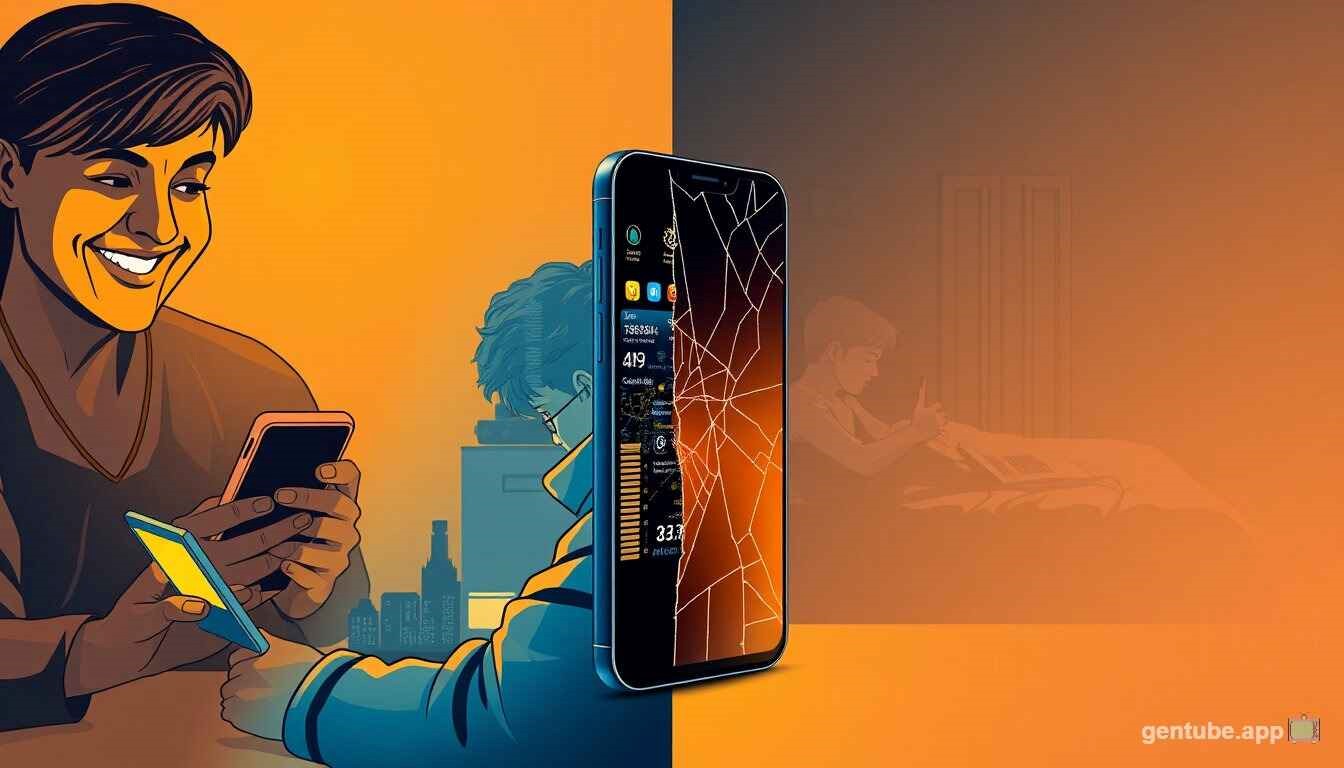
The Double-Edged Device: The Complete Truth About the Advantages and Disadvantages of Using Phones
What If the Most Powerful Thing You Own Is Also the Most Dangerous?
Consider this: the average person unlocks their phone 96 times a day. That is once every ten minutes during waking hours. In the time it takes you to read this sentence, someone somewhere sent a text that saved a relationship, someone else received a call that saved a life, a student in a remote village watched a lesson that changed their future — and a teenager in a quiet bedroom scrolled past the two hundredth piece of content that made them feel quietly worthless.
The phone is not good or evil. It is both, simultaneously, in the same body of glass and metal, in the same pocket, in the same hand.
No technology in human history has transformed daily life as completely, as quickly, or as ambiguously as the smartphone. From the moment the first iPhone launched in 2007 — less than two decades ago — the phone went from being a communication device to being our camera, our bank, our doctor, our library, our newspaper, our television, our social life, our alarm clock, our GPS, our therapist, and our worst habit, all at once.
This blog does not tell you to throw your phone away. It does not tell you your phone is fine and you should use it without thinking. It tells you the truth — every advantage, every disadvantage, every nuance — so that you can decide what relationship you want to have with the most intimate piece of technology in your life.
Let us begin.
Part One: The Advantages of Using Phones — Why They Changed Everything
-
Communication Without Limits
The most fundamental advantage of the phone is the one that gave it its name: the ability to communicate. But in 2025, “communication” has expanded so far beyond its original meaning that it barely fits the same word.
Today, a phone allows you to have a real-time video conversation with someone on the other side of the world for free. You can send a voice note to your mother while boarding a plane. You can coordinate a business deal across three time zones in a single group chat. You can receive news of a birth, a death, a disaster, or a triumph within seconds of it happening — no matter where you are on earth.
For families separated by migration, for long-distance relationships, for elderly parents who live alone, for soldiers deployed overseas — the phone is not a convenience. It is a lifeline. It collapsed geographical distance into something manageable and made the world feel, for the first time in human history, genuinely small.
Platforms like WhatsApp alone now serve over 2 billion users, carrying an estimated 100 billion messages per day. This is not a technology. It is a transformation of what it means to be in relationship with another human being.
-
A World of Information in Your Pocket
Before smartphones, accessing information required effort: a library visit, an encyclopedia, a phone call to someone who might know. Today, you can type any question — no matter how obscure, specific, or complex — into the device in your hand and receive a credible answer within seconds.
This democratization of information is one of the most significant developments in human intellectual history. A farmer in rural Kerala can look up the best crop rotation for her soil type. A first-generation college student in Lagos can watch lectures from MIT. A child in rural Montana can learn to code from YouTube tutorials. A patient with a rare diagnosis can read the same research papers as their doctor.
Phones have made knowledge borderless. They have given billions of people access to resources that were once reserved for the privileged, the wealthy, or the geographically lucky. The educational implications alone are staggering — and they are only beginning to unfold.
-
Emergency Access and Personal Safety
In moments of crisis, the phone becomes something more than a device. It becomes a guardian.
A phone can summon an ambulance in three taps. It can guide a first-time responder through CPR step by step. It can allow a woman who is being followed to alert a friend with a single message. It can pinpoint the location of a lost child. It can allow a hiker injured on a remote trail to be found and rescued. It can help a person having a mental health crisis reach a support line at 3am when no one else is awake.
Modern phones include emergency SOS features that can automatically call emergency services and share your location if you press a button multiple times. Some can even detect car crashes or hard falls and call for help automatically. These features have, without exaggeration, saved thousands of lives.
The phone as a safety device is perhaps its most underappreciated advantage — particularly for women, children, elderly people, travelers, and anyone living with a health condition.
-
Productivity, Work, and Economic Opportunity
For hundreds of millions of people, the phone is not a distraction from work. It is work.
Freelancers manage entire careers from their phones. Small business owners in developing economies use mobile payment apps to receive customers who have never owned a debit card. Farmers in sub-Saharan Africa receive real-time market prices via SMS, allowing them to negotiate fair prices for their crops. Gig economy workers — drivers, delivery riders, handymen — coordinate their entire professional lives through apps on their phones.
In countries where traditional banking infrastructure is weak or absent, mobile money platforms like M-Pesa (Kenya) have transformed economic inclusion. M-Pesa alone now processes transactions worth more than 50% of Kenya’s GDP. The phone became the bank, the ledger, the marketplace, and the payment terminal — all for someone who previously had no financial infrastructure at all.
Beyond developing economies, the rise of remote work has made the phone a central productivity tool. Emails answered on the go, documents reviewed on commutes, meetings joined from anywhere — the phone has made professional life more flexible, more fluid, and in many cases more efficient.
-
Entertainment, Creativity, and Culture
The phone is the world’s most accessible entertainment device — and increasingly, its most powerful creative tool.
Streaming services deliver thousands of hours of film, television, music, and podcasts to anyone with a data connection. Gaming on mobile has become one of the largest entertainment industries on the planet, with games like PUBG Mobile and Candy Crush drawing hundreds of millions of players. Musicians record and produce albums on their phones. Filmmakers shoot short films and documentaries on handsets that rival professional cameras. Photographers who once needed expensive equipment now carry a device in their pocket capable of producing gallery-quality images.
Perhaps most transformatively, the phone has democratized content creation. Anyone with a smartphone and a story can become a journalist, a comedian, a chef, an educator, an activist. The YouTube creator who earns a living teaching mathematics to high schoolers, the TikTok user who documents their culture and reaches millions worldwide, the Instagram photographer from a small town whose work is seen globally — all of these exist because the phone put studio-level tools in everyone’s hands.
-
Health and Wellness Monitoring
Modern smartphones — particularly when paired with wearable devices — have become remarkable health monitoring tools.
Step counters encourage physical activity. Sleep trackers reveal patterns that help people understand and improve their rest. Period trackers give millions of women insight into their bodies. Mental health apps provide guided meditation, breathing exercises, and cognitive behavioral therapy techniques to users who might never access professional support. Calorie and nutrition tracking helps people manage chronic conditions like diabetes and heart disease.
Telehealth — the ability to consult a doctor via video call, share symptoms via a medical app, or manage prescriptions through a digital platform — has expanded healthcare access dramatically, particularly in rural areas and underserved communities. During the COVID-19 pandemic, the phone became a primary healthcare tool for billions of people worldwide.
The phone as health companion is one of the most exciting frontiers in medicine, with AI-powered diagnostic tools already showing the ability to detect conditions like diabetic retinopathy, skin cancer, and cardiovascular risk through a camera lens and a few simple inputs.
-
Navigation and Travel
Remember getting lost? Remember paper maps, gas station attendants, confusing road signs, and the anxiety of arriving somewhere unfamiliar without a guide?
GPS navigation on phones has made getting lost nearly optional. Turn-by-turn directions, real-time traffic updates, alternative route suggestions, public transit maps, walking directions, bike routes — all delivered instantly, updated in real time, and accurate to within meters. For travelers in foreign cities, for new drivers, for delivery workers, for tourists — the phone-as-navigator has eliminated a category of stress that once defined travel.
Beyond navigation, phones have transformed travel planning entirely. Flights, hotels, visas, currency exchange, restaurant reservations, local recommendations, translation of foreign languages in real time — all handled by apps that fit in a coat pocket.
Part Two: The Disadvantages of Using Phones — The Costs We Often Ignore
-
Addiction and Compulsive Use
Here is the uncomfortable truth that the technology industry spent years trying to avoid acknowledging: smartphones are designed to be addictive. This is not an accident. It is a feature.
The infinite scroll, the variable reward of notifications, the dopamine hit of likes and comments, the fear of missing out if you put the phone down — these are not side effects of phone design. They are the product of billions of dollars in behavioral psychology research applied to interface design by some of the world’s smartest engineers, all with the goal of keeping you engaged as long as possible.
The result? Average screen time figures of four to seven hours per day for adults in many countries. Teenagers averaging even higher. The global “attention economy” — in which your attention is the product being sold to advertisers — has made compulsive phone use not just a personal failing but a structural feature of the platforms we use.
Phone addiction is now recognized by many mental health professionals as a genuine behavioral disorder, sharing neurological pathways with substance addiction. Withdrawal symptoms — anxiety when the phone is not nearby, an inability to concentrate without checking it, physical discomfort when it is out of reach — are now common experiences for millions of people.
-
Mental Health Consequences
The relationship between smartphone use — particularly social media — and mental health is one of the most researched and debated topics in contemporary psychology. The evidence, while complex, is deeply concerning in several areas.
Studies consistently link heavy social media use to increased rates of anxiety, depression, loneliness, and low self-esteem — particularly in adolescent girls. The mechanism is not mysterious: social media presents a relentlessly curated highlight reel of other people’s lives, bodies, relationships, and achievements. When compared to the full, messy reality of one’s own life, the comparison is almost always unflattering.
Social comparison, cyberbullying, FOMO (fear of missing out), the anxiety of waiting for a response, the distress of being left on “read,” the pressure to perform for an audience at all times — these are psychological stressors that are new to human experience, and we are collectively only beginning to understand their effects.
The impact on young people is particularly alarming. Rates of teenage depression, anxiety, and self-harm have risen sharply in the years since smartphones became ubiquitous among adolescents. Correlation is not causation — but the correlation is consistent, strong, and cross-cultural enough to demand serious attention.
-
Sleep Disruption
The phone may be the most widespread cause of poor sleep in the modern world.
Blue light emitted by smartphone screens suppresses the production of melatonin — the hormone that signals to the body that it is time to sleep. Using a phone in the hour before bed disrupts the body’s natural sleep preparation process, making it harder to fall asleep and reducing the quality of the sleep that follows.
But the problem is not only physical. The psychological stimulation of social media, news, messages, and entertainment keeps the mind in an alert, engaged state that is incompatible with the winding-down process the brain needs for healthy sleep. A scroll through Instagram or a final check of news headlines before bed is, neurologically, the equivalent of splashing cold water on your face and drinking a small coffee.
The effects cascade: poor sleep leads to impaired concentration, weakened immune function, irritability, reduced emotional regulation, increased risk of obesity, diabetes, cardiovascular disease, and mental health challenges. Sleep deprivation is itself a public health crisis — and the phone by the bedside may be its most common cause.
-
Erosion of Attention and Cognitive Function
There is growing evidence that the habitual, fragmented way we use phones — checking for notifications every few minutes, switching between apps, consuming information in short bursts — is reshaping our capacity for deep attention.
The average attention span for digital content has shrunk dramatically in the past two decades. Concentration on a single task for extended periods — the kind of focused attention required for reading a book, having a deep conversation, doing complex analytical work, or creating something meaningful — is becoming harder for people who have been trained by their phones to expect constant novelty and stimulation.
The cognitive cost is real. Workers report greater difficulty staying focused. Students struggle to engage with long-form texts. The simple act of sitting quietly without reaching for a phone has become uncomfortable for many people. What neurologists call “deep work” — the focused, uninterrupted cognitive effort that produces the most valuable output — is increasingly compromised by phone habits.
This is a slow erosion. It does not happen all at once. But over years, the cumulative effect of fragmented attention may represent a serious diminishment of cognitive capability at an individual and societal level.
-
Social Disconnection and Relationship Damage
There is an exquisite irony at the heart of phone culture: devices designed to connect us are simultaneously disconnecting us from the people physically present in our lives.
The phenomenon has a name — “phubbing” (phone snubbing) — and research shows that the mere presence of a phone on a table during a conversation reduces the quality, intimacy, and satisfaction of that conversation for both participants, even if neither person touches the device.
Families sit at dinner tables in silence, each member engaged with their own screen. Couples in bed scroll separately rather than connecting. Friends at social gatherings photograph the moment for Instagram rather than inhabiting it. Parents distracted by their phones miss the small, unrepeatable moments of their children’s early years. Children use phones to avoid the discomfort and practice of face-to-face conversation — and miss developing the social skills that require discomfort to grow.
The phone has not destroyed human connection. But it has created a persistent, low-grade competition for our attention that real human relationships increasingly lose.
-
Privacy and Security Risks
Every app you install, every search you conduct, every location you visit, every message you send, every purchase you make on your phone generates data — and that data is enormously valuable to someone.
The scale of data collection by phone apps, operating systems, and platforms is almost impossible to comprehend as a user. Your location is tracked. Your browsing habits are logged. Your preferences are inferred. Your conversations — though rarely literally — are modeled so thoroughly that platforms can predict your next purchase, your next mood, your next anxiety, with disturbing accuracy.
Privacy erosion is one of the most serious long-term disadvantages of the phone era. Most users have no meaningful understanding of what data is being collected about them, by whom, for what purpose, or where it ends up. The terms of service that govern this collection run to hundreds of pages that almost no one reads.
Beyond passive data collection, phones are targets for active security threats: phishing scams, malware, SIM-swapping attacks, account compromises, and financial fraud. The more of our lives we place on our phones — banking apps, health records, identity documents, communications — the higher the stakes if that phone is compromised.
-
Physical Health Consequences
The body pays a price for phone use that is only now being fully documented.
“Text neck” — cervical spine strain caused by repeatedly looking down at a phone — is now one of the most common causes of neck and upper back pain in young adults. Prolonged phone use is associated with eye strain, dry eyes, and the development of myopia (nearsightedness), particularly in children. The sedentary posture of phone use contributes to the broader epidemic of physical inactivity.
Repetitive strain injuries of the thumb and wrist — sometimes called “smartphone thumb” or “texting tendinitis” — are increasingly common. Sleep deprivation driven by phone use creates cascading physical health consequences. And the simple act of walking while using a phone contributes to thousands of pedestrian accidents every year.
-
Impact on Children and Adolescent Development
Children are encountering smartphones earlier than ever — and the developmental consequences are only beginning to be understood.
Language development, social skill acquisition, emotional regulation, creativity, and physical activity are all potentially disrupted by excessive phone use in early childhood. Young children learn about the world through physical exploration, face-to-face interaction, and unstructured play. Time displaced by screen time is time not spent on these irreplaceable developmental activities.
For teenagers, the stakes are different but equally serious. Adolescence is the critical period for identity formation, the development of deep friendships, the navigation of romantic relationships, and the cultivation of independence. Much of this development is now happening — or failing to happen — through the mediated, performative, comparison-saturated environment of social media.
The world’s leading child psychologists are not generally neutral on this question. Many now describe the current smartphone environment for children and adolescents as a developmental emergency — and the call for minimum age requirements for social media, phone-free schools, and stronger parental controls is growing louder by the year.
-
Environmental Impact
Phones are physical objects, and their physical existence comes at a cost to the planet that is largely invisible to users.
The manufacturing of a single smartphone requires rare earth minerals — cobalt, lithium, tantalum — that are often mined under exploitative and environmentally destructive conditions, particularly in parts of Central Africa and Southeast Asia. The carbon footprint of manufacturing a new phone is substantial, and the global smartphone market produces hundreds of millions of new devices every year.
Electronic waste from discarded phones is one of the fastest-growing waste streams in the world. Phones contain toxic materials — mercury, lead, cadmium — that can leach into soil and water when improperly disposed of. And globally, only a small fraction of phones are recycled through appropriate channels.
The environmental cost of the phone — from mining to manufacture to disposal — is a real and growing disadvantage that rarely enters public conversation about smartphone use.
-
Distracted Driving and Physical Danger
Despite widespread awareness and legislation, distracted driving caused by phone use remains one of the leading causes of traffic fatalities worldwide. Texting while driving is statistically more dangerous than driving under the influence of alcohol — yet it is practiced by a staggering proportion of drivers daily.
Beyond driving, phone distraction contributes to pedestrian accidents, workplace injuries, cycling accidents, and falls. The phone’s ability to pull attention completely out of the physical environment — making us mentally absent while physically present — is a direct physical danger in any context that requires awareness of one’s surroundings.
Part Three: Finding the Balance — Living Well With Your Phone
https://youtu.be/-hNU2GkRuDw

