

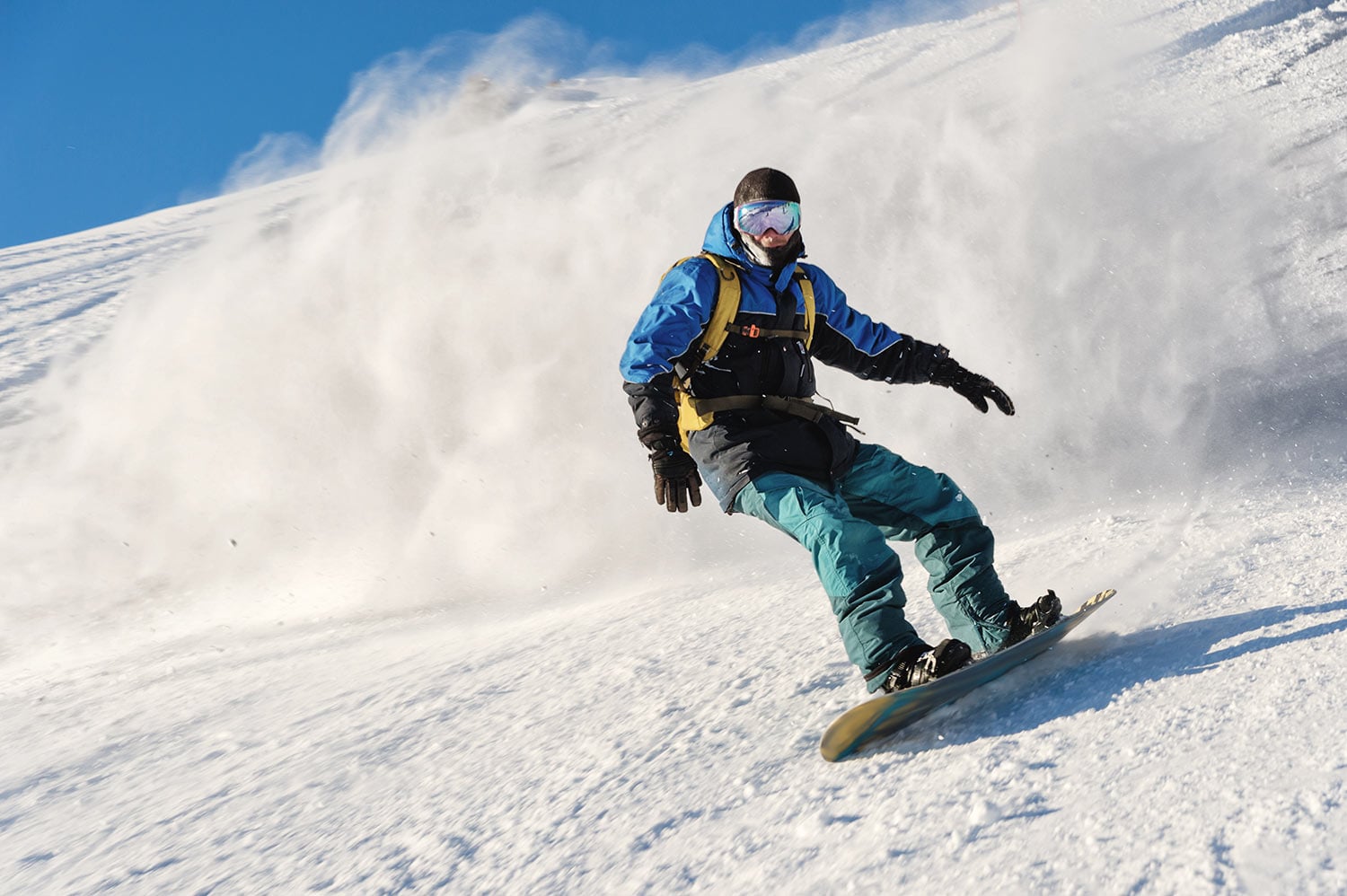
Agony and Ecstasy on the Ice and Snow: Winter Olympics 2022 Day Five – Shiffrin’s Stumble and the Chaos of Snowboard Cross
Introduction: The Two Faces of the Olympic Games
The Winter Olympic Games are, at their core, a theater of extremes. Nowhere else in the sporting world is the line between absolute triumph and crushing defeat drawn so thinly, so invisibly, and so frequently. Over the course of sixteen days, the world watches as humans push the boundaries of physics, gravity, and mental endurance. But for every golden moment immortalized in slow motion, there are a hundred moments of quiet, devastating heartbreak that define the true nature of the Olympics.
Day Five of the Beijing 2022 Winter Olympics served as the ultimate masterclass in this duality. It was a day that will be remembered not for a parade of flawless victories, but for the visceral, raw emotion of elite sport. It was a day of two completely different stories, set on two completely different mountains, yet bound together by the same unforgiving Olympic standard.
At the Yanqing National Alpine Skiing Centre, under a gray, brooding sky and on a hillside stripped of natural snow, the greatest alpine skier of her generation experienced the lowest moment of her career. Mikaela Shiffrin, the American superstar expected to dominate these Games, stepped out of the starting gate for the slalom—and mysteriously, inexplicably, did not finish.
Hours later, and a world away at the Genting Snow Park in Zhangjiakou, the temperature had plummeted to a biting minus 17 degrees Celsius. Here, the sport was not about millimeter precision, but about survival, chaos, and contact. In the snowboard cross finals, four riders hurtled down a rugged, roller-coaster track of ice and artificial snow, battling not just the clock, but each other. It was here that American Lindsey Jacobellis finally exorcised a sixteen-year-old ghost, capturing the gold medal that had agonizingly eluded her.
Day Five was a profound reminder of why we watch the Olympics. We watch for the redemption of Jacobellis, but we watch just as intently for the agony of Shiffrin, because in their contrasting narratives, we see the complete spectrum of the human condition.
The Weight of the World
The Unbearable Burden of Greatness
To understand the magnitude of what happened on the icy slopes of Yanqing on Day Five, one must first understand the weight Mikaela Shiffrin was carrying into the starting gate. In the world of alpine skiing, Shiffrin was not just a competitor; she was a generational anomaly.
By the age of 26, she had already amassed more World Cup victories than any other American alpine skier in history—surpassing the legendary Lindsey Vonn. She had Olympic gold from Sochi 2014 (slalom) and PyeongChang 2018 (giant slalom). She had World Championship titles in five different disciplines. The narrative heading into Beijing was simple, heavily pushed by broadcasters, and seemingly undeniable: Shiffrin was poised to sweep the alpine events, potentially winning three, four, or even five gold medals, cementing her status as the undisputed Greatest of All Time (GOAT).
But greatness in sports is a heavy crown. It is forged in the quiet, solitary hours of training, but it is displayed on a global stage where millions of eyes dissect every microsecond of movement. Shiffrin is an intensely analytical athlete. Her brain processes terrain changes, snow conditions, edge angles, and gate positions at a speed that baffles sports psychologists. However, that same hyper-analytical brain can become a prison when things go awry.
The trouble in Beijing began before Day Five. Three days earlier, Shiffrin had entered the giant slalom—the event she won four years prior in South Korea. She skied a conservative, uncharacteristically tentative first run. In the second run, she straddled a gate early on the course and earned a DNF (Did Not Finish). It was a shock to the system. The invincible athlete looked human. The “five-gold sweep” narrative died on that very hillside.
The media reaction was swift and, at times, brutal. The questions shifted from how many golds she would win to what was wrong. The psychological compounding had begun.
The Anatomy of a Slalom Run
Slalom is arguably the most mentally demanding discipline in alpine skiing. Unlike the speed events (downhill, super-G) where athletes reach 80 mph and rely on raw adrenaline and aerodynamic tucks, slalom is a violent, rhythmic dance.
The gates are close together. The skier must make rapid, aggressive turns, pivoting their skis across the fall line with their bodies crossing over the gates, knocking them down with their shinguards. There is no room for error. A hand dropped too low, a hip shifted a fraction of an inch too far back, or a ski edge failing to bite into the hard-packed ice results in a lost hundredth of a second—or a straddled gate.
The snow conditions in Yanqing were notoriously difficult. Beijing is a dry, cold climate; there was no natural snow on the race courses. The entire mountain was covered in artificial snow, which, when groomed and water-injected for Olympic racing, turns into a surface akin to a skating rink. The skiers were essentially skiing on sheer ice. If you lost your edge, you didn’t slide; you fell.
The Fall: Day Five in Yanqing
When Shiffrin pushed out of the start gate for her first run of the women’s slalom on Day Five, the tension was palpable. She needed a clean run just to get back into the Olympic conversation, to silence the noise, and to remind herself of her own brilliance.
She came out of the starting gate aggressive. Too aggressive.
As she navigated the top section of the course, her skis were moving fast, but her upper body was slightly behind. She was fighting the hill rather than dancing with it. Approaching the ninth gate—a flush section where the gates are set in a straight line requiring quick, short turns—Shiffrin’s outside ski slipped on the bulletproof ice.
She tried to save it, leaning desperately into the turn, but the physics were already lost. Her inside ski crossed over the outside ski, and she slid backward, her skis hooking the gate pole. She stopped, sitting in the snow just a few seconds into her Olympic hopes.
Again. DNF. Did Not Finish.
The silence in the broadcast booth was deafening. Cameras lingered on Shiffrin as she sat in the snow, her face a mask of absolute bewilderment and devastation. This was not an injury. This was not a mechanical failure. This was the mind and body betraying an athlete at the exact moment they needed to perform.
The Human Cost of “Did Not Finish”
In the immediate aftermath, the internet did what the internet does: it reacted. Some were sympathetic, but many were confused, and some were cruel. How could the best skier in the world fail to finish two consecutive races?
What the cameras captured next, however, shifted the narrative from athletic failure to human tragedy. Shiffrin didn’t immediately pop up and ski to the finish line, as many athletes do to maintain their dignity. She sat there, immobilized by the realization of what had just happened. When she finally got up and skied down, she was met at the bottom by her boyfriend, Norwegian alpine skier Aleksander Aamodt Kilde.
The footage of Shiffrin burying her face into Kilde’s chest, sobbing uncontrollably, her shoulders heaving with the weight of shattered expectations, was heartbreaking. It stripped away the “GOAT” label. It removed the billion-dollar Olympic broadcast machine. All that was left was a 26-year-old woman whose lifelong dream had just crumbled, not once, but twice, in front of the entire world.
Shiffrin later described the feeling as a complete “out-of-body experience.” She stated she didn’t feel fear, but rather a total disconnect between what her brain was telling her body to do and what her body was actually doing. It was a psychological block, a manifestation of the immense pressure that had been building up.
Day Five reminded us that athletes are not machines. They are human beings subject to the same anxieties, doubts, and psychological collapses as the rest of us. Mikaela Shiffrin’s DNF was not a disgrace; it was the darkest, most honest moment of the Beijing Games.
Embracing the Chaos
The Radical Shift to Zhangjiakou
While the Alpine Centre was a place of solitary, silent agony, the Genting Snow Park in the Zhangjiakou cluster was a scene of glorious, organized bedlam. If alpine skiing is a game of chess played at 60 mph, snowboard cross is a bar fight on a frozen roller coaster.
To transition from the Shiffrin story to the snowboard cross finals is to step into an entirely different dimension of winter sports. Here, there is no “perfect line” to hold for a minute and a half. There are no quiet moments of introspection. Snowboard cross (SBX) is a four-person, knockout tournament where riders race down a narrow track filled with massive jumps, sharp banked turns, and treacherous rollers.
Contact is not only expected; it is practically encouraged. Elbows are thrown, boards clash, and the drafting—riding in the slipstream of the rider ahead—creates a dynamic, ever-changing chess match of speed and aggression. To win in snowboard cross, you don’t just need to be the fastest rider; you need to be the most resilient, the most tactical, and sometimes, the luckiest.
The conditions in Zhangjiakou on Day Five were brutal. The wind chill was staggering, frosting the goggles and lungs of the competitors. The track was fast, dangerously fast, meaning the consequences of a mistake were amplified.
The Anatomy of a Boardercross Track
The Genting track was a masterpiece of course design, engineered to test every facet of a rider’s ability. It started with a steep drop-in leading into a series of blind, high-banked berms where riders had to trust their peripheral vision and momentum.
This was followed by a massive step-up jump, where riders launched themselves 50 feet into the freezing air. Landing in the wrong spot on the artificially made snow could mean landing flat, which sends shockwaves through the ankles and knees, or landing too far down the transition, which costs crucial seconds.
Then came the “Woops” section—a series of tightly packed rollers that force the riders into a state of violent physical vibration, testing their core strength as they try to maintain aerodynamic tucks. Finally, the track bottlenecked into tight, technical turns before spitting the riders out toward the finish line, often separated by mere inches.
The Women’s Final: A Story of Redemption
The narrative heading into the women’s snowboard cross final was not about the favorite; it was about the veteran. Lindsey Jacobellis, a 36-year-old American, was competing in her fifth Olympics. She had won every title there was to win in her sport—multiple World Championships, countless X-Games gold medals.
But she did not have an Olympic gold medal.
The shadow of Torino 2006 hung over her like a dark cloud. Sixteen years earlier, a 20-year-old Jacobellis had a commanding lead in the final. She had the gold medal in her grasp. On the final jump, decided to add a little flair—a celebratory method grab of her board. She landed flat, lost her balance, and fell, allowing Tanja Frieden of Switzerland to pass her and take the gold. It remains one of the most infamous bonehead moves in Olympic history, a moment of youthful hubris that defined her career.
For sixteen years, Jacobellis carried that burden. She returned to the Olympics in 2010 and 2014, failing to reach the podium. In 2018, she finished fourth, missing bronze by a fraction of a second. Many assumed her window had closed.
But Jacobellis had evolved. The cocky kid from 2006 was long gone, replaced by a calculated, fiercely intelligent veteran who knew that speed and tactics were more important than style.
The final on Day Five featured Jacobellis alongside three formidable opponents: Chloe Trespeuch of France (who would win bronze), and two of Jacobellis’s American teammates, Faye Gulini and Lindsey surviving the chaotic semifinals to make it an all-American affair for two of the four spots.
As the gate dropped, the chaos erupted. Trespeuch got out to an early lead, using the inside line to dictate the pace. Jacobellis, starting from the second position, immediately tucked in behind her, utilizing the draft. In snowboard cross, the leader works the hardest, breaking the wind, while the trailing riders conserve energy.
As they hit the massive jumps, the four riders were suspended in the frigid air, a frozen tableau of athletic fury. Landing smoothly, they rocketed into the technical turns. Jacobellis bided her time. She didn’t panic. She didn’t make any rash moves.
Then, on a critical banked turn midway down the course, Jacobellis found her opening. She took a higher, faster line out of the berm, carrying more momentum than Trespeuch. She pulled alongside the French rider. For a terrifying split second, their boards were inches apart, a crash seemingly inevitable.
But Jacobellis held her line with steely precision. She didn’t look back. She didn’t celebrate early. She just pointed her board down the fall line and let gravity do the work.
Crossing the finish line, Jacobellis threw her hands in the air—not in a premature celebration this time, but in sheer, cathartic release. She had done it. Sixteen years of agonizing “what-ifs” were erased in a blur of snow and speed.
The contrast between Jacobellis at the bottom of the course and Shiffrin at the bottom of hers just hours earlier was striking. Where Shiffrin was collapsed in tears, Jacobellis was screaming with joy, her face a picture of pure, unadulterated relief. The Olympic Games had given her a second act, and she had seized it with both hands.
The Men’s Final: Austrian Precision in a French Storm
If the women’s final was a story of long-awaited redemption, the men’s snowboard cross final on Day Five was a masterclass in aggressive, tactical racing, culminating in a massive upset.
The favorite in the men’s event was undoubtedly the French rider, Pierre Vaultier. A two-time Olympic gold medalist, Vaultier was the king of the discipline, known for his incredible physical strength and ability to muscle his way past opponents. The home crowd (figuratively speaking, as there were no spectators due to COVID-19) expected a French coronation.
But the sport of snowboard cross is a great equalizer. In the final, Vaultier found himself matched against Alessandro Hämmerle of Austria, Eliot Grondin of Canada (who took silver), and Omar Visintin of Italy.
As the gate dropped, Grondin, the youngest in the field, exploded out of the start with blinding speed, taking the early lead. Vaultier, struggling to find his rhythm on the highly technical top section, found himself buried in third place. Hämmerle, starting from the outside gate, used a phenomenal line through the first set of berms to slot into second.
The race was a physical slugfest. On the massive step-up jump, Visintin attempted to pass Grondin but got bumped offline, losing valuable speed. Vaultier, trying to make up ground, pushed hard on the exit of a turn, but his board washed out slightly on the icy surface, costing him precious momentum.
Hämmerle, skiing with calm, calculated precision, saw the door open. He didn’t try to force a pass; he simply rode a faster, cleaner line through the “Woops” section. As they approached the final jumps, Hämmerle drew alongside Grondin. The Canadian fought valiantly, but the Austrian had too much speed.
Hämmerle crossed the line first, throwing his hands up in disbelief. It was Austria’s first gold medal of the Beijing Games. For Vaultier, the three-peat was not to be; the chaotic nature of the sport had finally caught up to him, proving that in snowboard cross, past glory offers no protection from the present reality of the track.

