

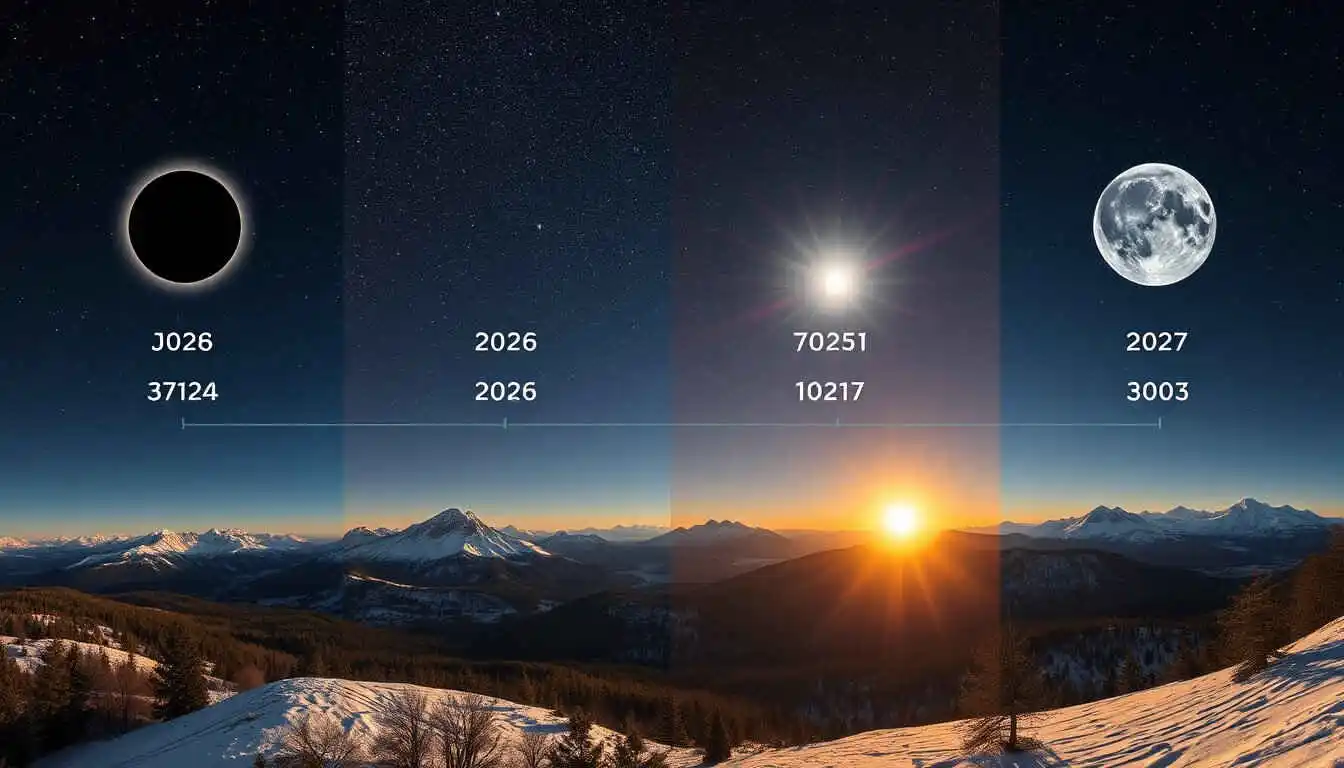
Balance Returns to the Sky
March 2027 brings the vernal equinox, marking the official beginning of spring in the Northern Hemisphere and autumn in the Southern, as well as the conclusion of our ten-month astronomical journey.
Vernal Equinox (March 20, 2027)
The vernal equinox occurs on March 20, 2027, at approximately 10:00 UTC. On this day, the Sun crosses the celestial equator moving northward, and day and night are approximately equal in length worldwide. The Sun rises due east and sets due west, providing a natural compass for observers.
For astronomers, the equinox marks a transition period. Winter constellations remain prominent in the evening sky but set earlier each night, while spring’s celestial treasures begin to rise in the east. The constellation Leo the Lion dominates the spring sky, with its distinctive sickle-shaped head and bright star Regulus.
Spring Galaxy Season Begins
March marks the beginning of galaxy season, as the region of sky opposite the Milky Way’s center rises in the evening. This area, free from the obscuring dust and stars of our galaxy’s plane, offers clear views of distant galaxies. The Virgo Cluster, containing thousands of galaxies, becomes accessible to telescope users, though these faint objects require dark skies and patience to observe.
Looking Ahead
As March 2027 concludes our ten-month journey, the cycle begins anew. The astronomical events we’ve explored—from the August 2026 total solar eclipse to the March 2027 equinox—represent just a fraction of the universe’s ongoing spectacle. Each night offers something new to discover, whether it’s a meteor streaking across the sky, a planet shining brightly among the stars, or the Moon’s ever-changing face.
Conclusion: Your Cosmic Journey Continues
As we’ve explored, the period from June 2026 to March 2027 offers an extraordinary array of astronomical events that will inspire, educate, and entertain observers worldwide. From the transformative experience of a total solar eclipse to the reliable spectacle of the Geminid meteor shower, from supermoons that dominate the night sky to planetary alignments that showcase our solar system’s dynamic nature, the cosmos is putting on a show that transcends cultural, geographic, and generational boundaries.
But beyond the specific events and dates, this ten-month period offers something more profound: the opportunity to reconnect with the night sky, to experience wonder and awe at the universe’s grandeur, and to remember that we are part of something vast and magnificent. In our busy, screen-dominated lives, taking time to look up at the stars can be surprisingly transformative, reducing stress, improving sleep, and providing perspective on our daily concerns.
The astronomical events we’ve detailed require varying levels of preparation and equipment, but all are accessible to dedicated observers. Some, like the total solar eclipse and meteor showers, are best experienced with minimal equipment—just your eyes and a dark sky. Others, like planetary observation and deep-sky viewing, benefit from binoculars or telescopes but remain accessible to beginners.
So mark your calendars, plan your trips, gather your equipment, and prepare yourself for ten months of astronomical wonders. Whether you’re witnessing totality during the August eclipse, counting meteors on a cold December night, or simply gazing at a supermoon rising over the horizon, you’re participating in a tradition as old as humanity itself.
The universe has been waiting billions of years for this moment—for you to look up and witness its beauty. Don’t miss it. Clear skies await!
FAQS
Solar Eclipse FAQs
1.When is the total solar eclipse in August 2026?
The total solar eclipse occurs on August 12, 2026, with totality visible from the Arctic, Greenland, Iceland, Spain, and northeastern Africa between 15:45-18:00 UTC depending on location.
- Where is the best place to view the August 2026 solar eclipse?
Northern Spain (Bilbao, San Sebastián, Zaragoza), Iceland (Akureyri), and Greenland offer the best combination of accessibility, infrastructure, and favorable weather probabilities for viewing totality.
- How long will totality last during the August 2026 eclipse?
Totality will last approximately 2 minutes and 18 seconds at maximum duration, though this varies depending on your exact location within the path of totality.
- What makes the August 2026 eclipse special?
This eclipse is special because it occurs on the same date as the Perseid meteor shower peak, offering a rare double astronomical event within 24 hours, plus it crosses heavily populated areas of Europe making it accessible to millions.
Meteor Shower FAQs
- What is the best meteor shower to watch between June 2026 and March 2027?
The Geminids (December 13-14, 2026) are the year’s best, producing 60-120 meteors per hour. The Perseids (August 12-13, 2026) are a close second with up to 100 meteors per hour.
- When do the Perseids peak in 2026?
The Perseids peak on the night of August 12-13, 2026, coincidentally the same date as the total solar eclipse (though the eclipse occurs during daylight hours).
- What makes the Quadrantids unique?
The Quadrantids (January 3-4, 2027) have an extremely sharp peak lasting only a few hours, with rates up to 80 meteors per hour. Timing is crucial, as missing the peak by even a day significantly reduces visible meteors.
- Why are the Geminids so reliable?
The Geminids originate from asteroid 3200 Phaethon rather than a comet, creating a dense, consistent debris stream. They’re also visible early in the evening and produce bright, colorful meteors.
- Can I see the Orionids from the city?
While you can see some Orionids from urban areas, light pollution significantly reduces visibility. The Orionids (October 20-22, 2026) produce only 20 meteors per hour, so dark skies are recommended for optimal viewing.
- What time is best for watching meteor showers?
The best viewing is typically after midnight when Earth’s rotation brings you into the direct path of meteoroid debris. However, the Geminids can be viewed effectively from early evening, with rates increasing throughout the night.
Supermoon & Micromoon FAQs
- When are the supermoons between June 2026 and March 2027?
Supermoons occur on December 7, 2026, and likely in early February 2027. The January 14 and February 12, 2026 supermoons occur before this period.
- What is a micromoon and when does it occur?
A micromoon occurs when a full moon coincides with apogee (the Moon’s farthest point from Earth). The July 1, 2026 micromoon appears 14% smaller and 30% dimmer than a supermoon.
- How much bigger does a supermoon look?
A supermoon appears up to 14% larger and 30% brighter than a micromoon. However, the difference is subtle to the naked eye and best appreciated through side-by-side photography comparisons.
- Why does the Moon look huge on the horizon?
This is the “Moon illusion,” a psychological effect where your brain compares the Moon to foreground objects like trees and buildings, making it appear larger. The Moon is actually the same size whether on the horizon or overhead.
Planetary Events FAQs
- What planets will be visible during this period?
All five naked-eye planets (Mercury, Venus, Mars, Jupiter, and Saturn) will be visible at various times. Venus dominates the evening sky, while Jupiter and Saturn are prominent in morning and evening skies respectively.
- When is the Venus-Jupiter conjunction in September 2026?
On September 5, 2026, Venus and Jupiter appear within one degree of each other in the pre-dawn sky, creating a spectacular pairing of the solar system’s two brightest planets.
- What is a triple conjunction?
A triple conjunction occurs when three celestial objects (planets or stars) appear to dance around each other over several weeks. September 2026 features Venus, Jupiter, and star Regulus in such a configuration.
- Can I see Jupiter’s moons with binoculars?
Yes! Even small 7×50 or 10×50 binoculars can reveal Jupiter’s four largest moons (Io, Europa, Ganymede, and Callisto) as tiny points of light aligned on either side of the planet.
- When is Saturn best viewed in 2026?
Saturn reached opposition on March 12, 2026, but remains well-placed for observation through September 2026, with its rings beautifully tilted for optimal viewing.
Equinox & Solstice FAQs
- When is the summer solstice 2026?
The summer solstice occurs on June 21, 2026, marking the longest day of the year in the Northern Hemisphere and the beginning of summer.
- What happens during the autumnal equinox?
The autumnal equinox on September 22, 2026, at 18:21 UTC marks when the Sun crosses the celestial equator moving southward. Day and night are approximately equal worldwide, and the Sun rises due east and sets due west.
- When is the winter solstice 2026?
The winter solstice occurs on December 21, 2026, at 09:50 UTC, marking the shortest day and longest night of the year in the Northern Hemisphere.
- What is the vernal equinox 2027?
The vernal (spring) equinox occurs on March 20, 2027, at approximately 10:00 UTC, marking the Sun’s northward crossing of the celestial equator and the beginning of spring in the Northern Hemisphere.
Viewing & Equipment FAQs
- Do I need a telescope to enjoy these events?
No! Many events including meteor showers, supermoons, planetary conjunctions, and the solar eclipse (with proper eye protection) are spectacular to the naked eye. Telescopes enhance planetary and deep-sky viewing but aren’t necessary for most events.
- What equipment do I need for the solar eclipse?
You MUST have ISO 12312-2 certified eclipse glasses for viewing partial phases. For photography, you need solar filters for cameras and telescopes. During the brief totality phase only, you can safely view without protection.
- What’s the best beginner telescope for 2026-2027?
A 6-8 inch Dobsonian reflector offers the best value for beginners, providing excellent light-gathering ability for planets and deep-sky objects at an affordable price ($300-500). For portability, consider a quality refractor.
- How do I find dark skies for meteor showers?
Use light pollution maps like Dark Site Finder or Light Pollution Map to locate dark areas near you. Aim for Bortle Class 4 or darker skies. International Dark Sky Parks offer guaranteed dark conditions.
- What apps help me track these events?
Download Stellarium, SkySafari, Star Walk 2, or Time and Date apps for real-time sky maps, event reminders, and location-specific viewing times.
Safety & Preparation FAQs
- How cold will it be for December meteor showers?
December nights can drop below freezing in many locations. Dress in layers, bring warm beverages, use blankets or sleeping bags, and consider chemical hand warmers. The Geminids’ spectacular display makes the cold worthwhile.
- What if weather is bad on eclipse day?
Have backup locations planned within the path of totality. Monitor weather forecasts closely in the week before the eclipse and be prepared to travel to clearer skies. Even 70% clear skies can provide a memorable eclipse experience.
Disclaimer: The content on this blog is for informational purposes only. Author’s opinions are personal and not endorsed. Efforts are made to provide accurate information, but completeness, accuracy, or reliability are not guaranteed. Author is not liable for any loss or damage resulting from the use of this blog. It is recommended to use information on this blog at your own terms.

