

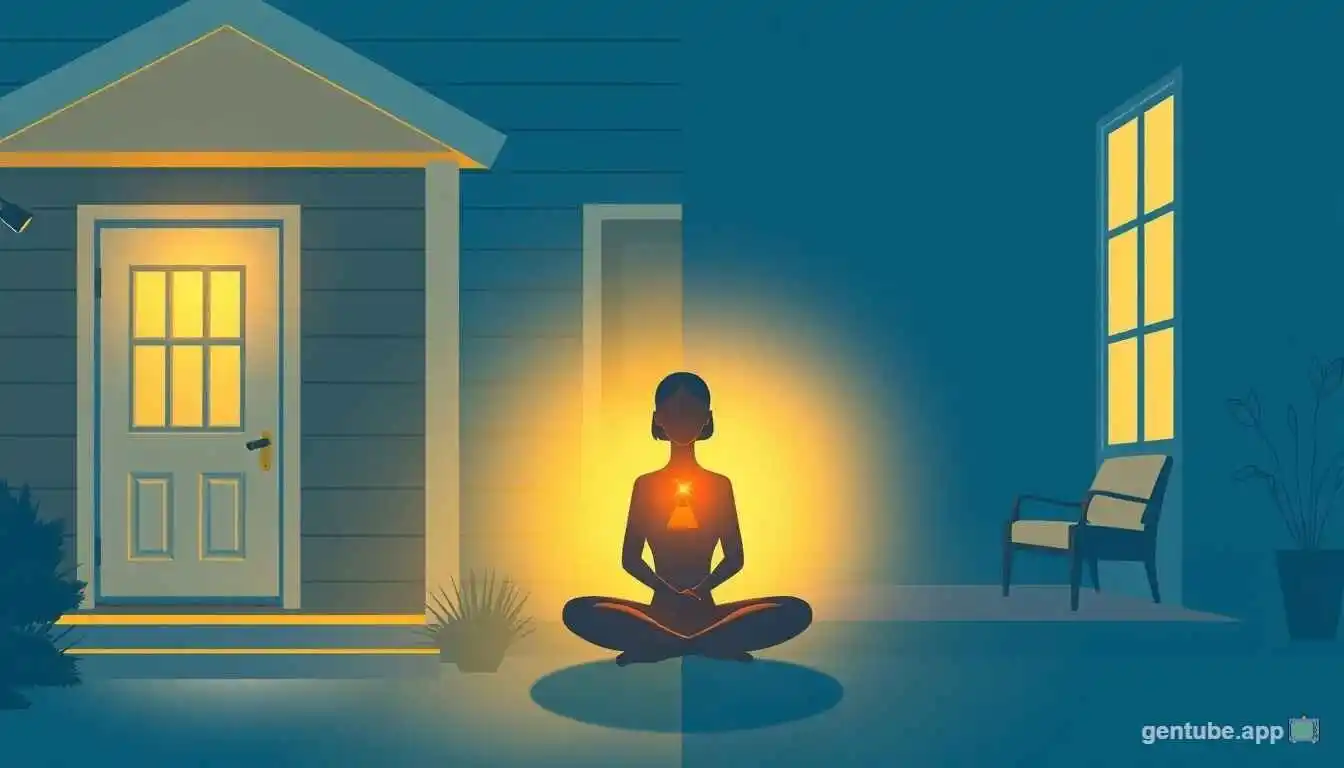
Physical:
- Reinforced doors, windows, and locks
- Working alarm and camera systems
- Adequate exterior and interior lighting
- Controlled access to sensitive areas
- Emergency plans and regular drills
- Secured storage for valuables and important documents
Psychological:
- Predictable daily routines
- Reliable, trusted support network
- Open, honest communication about risks and plans
- Healthy boundaries around news and social media consumption
- Access to mental health support when needed
- A workplace or home culture where people feel safe to speak up
Final Thoughts
Security isn’t a single system — it’s a partnership between the physical world you build around yourself and the mental and emotional foundation you build within yourself. A house full of locks can’t fully protect someone whose mind is in constant survival mode, and a calm, resilient mindset can’t fully compensate for a genuinely unsafe environment. The strongest, most sustainable form of security comes from addressing both at once: hardening the physical layer while nurturing the psychological one, so that safety isn’t just something you have — it’s something you actually feel.
FAQS
1.What’s the difference between physical security and psychological security?
Physical security refers to tangible measures that protect people and property from real-world threats, like locks, cameras, and alarms. Psychological security refers to a person’s internal sense of safety and stability, which can exist independently of the actual level of physical risk present.
2.Can you have strong physical security but still feel psychologically unsafe?
Yes, this is very common, especially after a past traumatic event. A person can live in a heavily secured home and still experience hypervigilance or chronic anxiety because psychological security depends on the nervous system’s learned sense of threat, not just the objective safety of the environment.
3.What are the main layers of physical security?
The main layers are perimeter security (fences, lighting, landscaping), exterior security (doors, windows, cameras), interior security (access control, monitoring), and asset-level security (safes, restricted areas), all working together to create overlapping protection.
4.How does lighting affect security?
Good exterior lighting deters criminal activity by removing hiding spots and increasing visibility, while also reducing anxiety for people walking or living in the space, making it one of the few measures that improves both physical and psychological security simultaneously.
5.What is psychological safety in the workplace?
Psychological safety in the workplace is a team environment where people feel comfortable speaking up, asking questions, admitting mistakes, and taking reasonable risks without fear of humiliation or punishment, and it has been strongly linked to higher team performance.
6.How can I make my home more physically secure on a budget?
Simple, low-cost steps include reinforcing door strike plates, adding a deadbolt, trimming landscaping near windows, installing motion-activated lights, and displaying visible security signage, all of which significantly increase deterrence without major expense.
7.Why do I still feel unsafe even though nothing bad is happening?
Persistent unease without an obvious current threat often stems from past experiences that trained the nervous system to stay alert, a phenomenon known as hypervigilance, which can occur even in objectively safe environments and often benefits from professional support to resolve.
8.What is hypervigilance and how does it relate to security?
Hypervigilance is a heightened state of sensory sensitivity and threat-scanning that often develops after a traumatic or dangerous experience, causing a person to perceive potential danger even in safe situations, which reflects a psychological security disruption rather than an ongoing physical threat.
9.Does having a security system reduce anxiety?
For many people, yes — a visible, functioning security system provides a tangible sense of control and predictability, both of which are core components of psychological security, though the effect varies depending on the individual’s underlying anxiety triggers.
10.What is Crime Prevention Through Environmental Design (CPTED)?
CPTED is an approach to reducing crime by designing physical spaces with better lighting, sightlines, and layout choices that naturally discourage criminal behavior, rather than relying solely on security personnel or enforcement after the fact.
11.How do I build psychological security in my children?
Consistency, predictable routines, calm and non-punitive responses to mistakes, and open communication about safety without inducing fear all help children develop a stable internal sense of security that carries into adulthood.
12.What role does trust play in psychological security?
Trust in key relationships is one of the strongest predictors of psychological security, since consistent, reliable relationships signal to the nervous system that support is available, reducing the baseline sense of threat a person carries day to day.
13.Can too much security monitoring actually harm psychological safety?
Yes, excessive surveillance, particularly in personal relationships or overly controlling environments, can erode trust and create a sense of being constantly watched or doubted, which undermines rather than builds genuine psychological security.
14.What is the connection between Maslow’s hierarchy of needs and security?
Maslow placed both physical and psychological safety needs near the base of his hierarchy, arguing that people struggle to pursue growth, relationships, or self-actualization until they feel reasonably secure on both fronts.
15.How does workplace uncertainty affect employee mental health?
Prolonged uncertainty, such as unclear communication during restructuring or leadership changes, is one of the strongest drivers of workplace anxiety, since the human brain tends to fill information gaps with worst-case assumptions.
16.What are the most common physical security mistakes homeowners make?
Common mistakes include leaving doors and windows unlocked, neglecting to reinforce entry points, allowing overgrown landscaping to create hiding spots, and failing to maintain or monitor installed alarm systems regularly.
17.How can businesses improve physical security without making employees feel surveilled?
Clear communication about the purpose of security measures, involving employees in safety planning, and focusing monitoring on entry points and shared spaces rather than individual workspaces helps maintain both safety and trust.
18.What is emotional regulation and why does it matter for psychological security?
Emotional regulation is the ability to manage and respond to emotional experiences in a balanced way rather than being overwhelmed by them, and it’s a core skill that supports psychological security by preventing minor stressors from triggering a prolonged threat response.
19.How does social media affect psychological security?
Constant exposure to alarming news and social comparison on social media can keep the brain in a low-grade state of perceived threat, gradually eroding psychological security even when no direct personal danger is present.
20.What is access control and why is it important?
Access control refers to systems like key cards, PIN codes, or biometric scanners that restrict entry to sensitive areas to authorized individuals only, creating both a physical barrier and an auditable record of who accessed a space and when.
21.How long does psychological recovery take after a security incident like a break-in?
Recovery timelines vary widely depending on the individual and the severity of the event, but lingering anxiety, hypervigilance, or avoidance behaviors are common for weeks or months afterward, and professional support can meaningfully shorten this recovery period.
22.What is the role of routine in psychological security?
Predictable daily routines signal safety to the nervous system by reducing uncertainty, which is one of the primary drivers of chronic stress, making routine one of the simplest and most effective tools for building psychological stability.
23.Are self-defense classes good for psychological security, not just physical safety?
Yes, beyond the physical skills learned, self-defense training often significantly boosts a person’s sense of competence and control, which directly strengthens psychological security by reducing feelings of helplessness.
24.What is Project Aristotle and what did it find about psychological safety?
Project Aristotle was a large-scale internal study conducted to identify what makes teams effective, and it found that psychological safety — the ability to take risks and speak up without fear of judgment — was the single strongest predictor of high-performing teams.
25.How can I tell if my anxiety about safety is rational or excessive?
A useful approach is to assess whether the anxiety is proportional to an actual, current, identifiable risk versus a generalized, persistent state that occurs regardless of the situation; the latter often benefits from professional evaluation to distinguish real risk from a learned threat response.
26.What security measures are best for elderly individuals living alone?
Medical alert systems, well-lit entryways, easily accessible locks, video doorbells, and regular check-ins from family or neighbors combine physical protection with the psychological reassurance of not being isolated in an emergency.
27.How does chronic stress affect physical health over time?
Chronic stress from ongoing psychological insecurity has been linked to elevated cortisol levels, weakened immune function, cardiovascular strain, and disrupted sleep, illustrating how unresolved psychological insecurity can eventually manifest as physical health problems.
28.What’s the difference between a security camera system and a monitored alarm system?
A camera system records or streams footage for review, which is useful for evidence and deterrence, while a monitored alarm system actively alerts a response service in real time when a breach is detected, providing a faster intervention during an active incident.
29.Can therapy help with feeling physically unsafe even when the environment is objectively secure?
Yes, therapeutic approaches such as trauma-informed therapy or cognitive-behavioral therapy are specifically designed to help retrain the nervous system’s threat response, which can significantly reduce feelings of unsafety that persist despite an objectively secure environment.
30.What is the single most effective way to improve both physical and psychological security at once?
Combining visible, well-maintained physical safeguards with clear, honest communication about risks and plans tends to be the most effective dual approach, since it reduces actual risk while also giving people the sense of predictability and control that underpins psychological security.
Disclaimer: The content on this blog is for informational purposes only. Author’s opinions are personal and not endorsed. Efforts are made to provide accurate information, but completeness, accuracy, or reliability are not guaranteed. Author is not liable for any loss or damage resulting from the use of this blog. It is recommended to use information on this blog at your own terms.

