

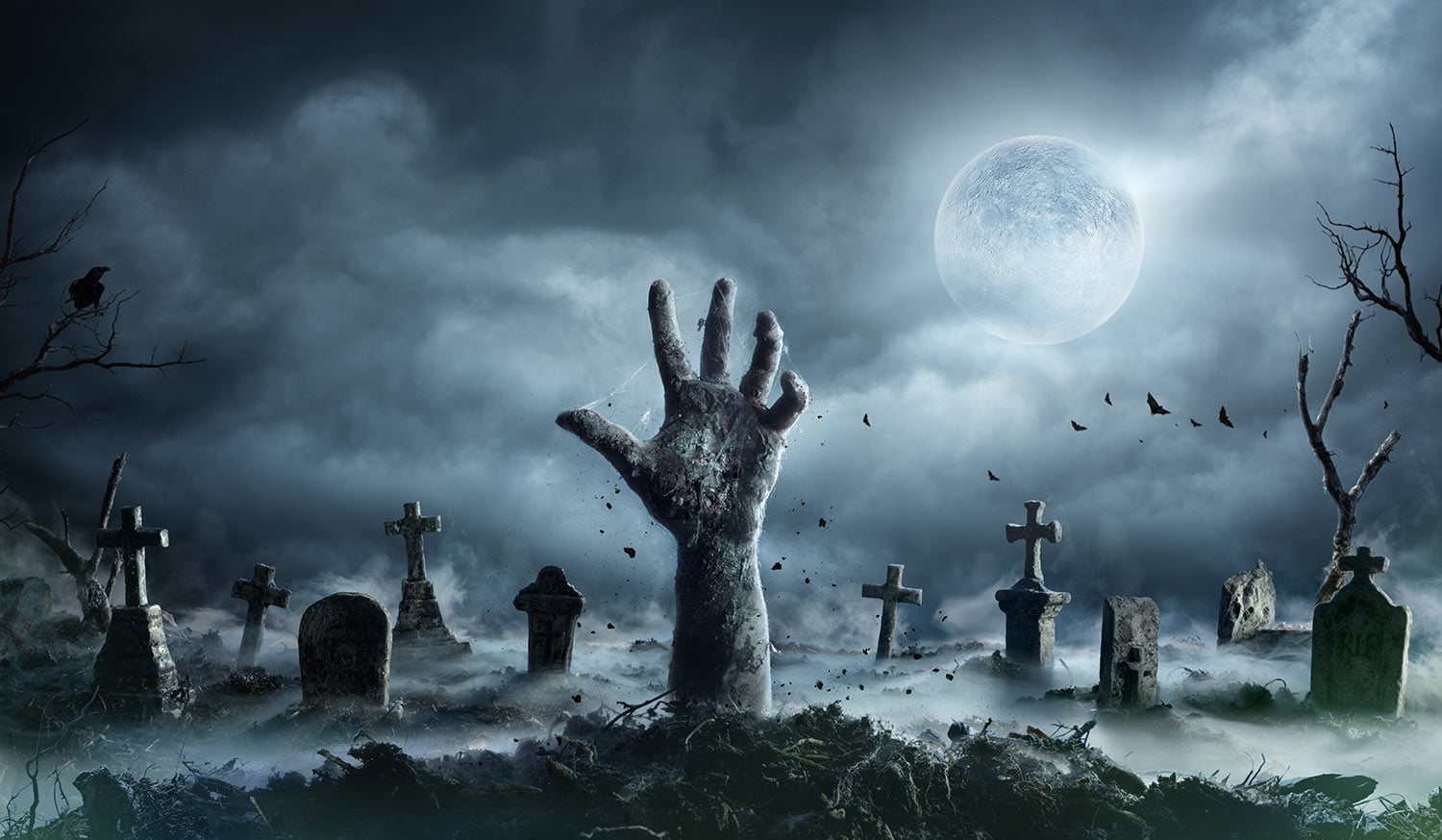
Trapped in the Hallways of Hell: Why Netflix’s All of Us Are Dead Revitalized the Zombie Genre
Introduction: A New Breed of Horror
There is a specific kind of exhaustion that settles over the modern horror viewer. It is the fatigue of the walking dead. For decades, we have watched the shambling hordes—first with terror in George Romero’s classics, then with adrenaline in 28 Days Later, and eventually with a sort of grim routine in The Walking Dead. The zombie genre, once a sharp scalpel for dissecting social ills, had begun to feel blunt. We knew the rules: aim for the head, don’t get bitten, trust no one. The surprises were gone. Then, in January 2022, Netflix dropped All of Us Are Dead, a South Korean series based on the popular webtoon Now at Our School. Suddenly, the dead were scary again, but not just because they wanted to eat us. They were scary because they were fast, relentless, and for a few terrifying moments, still human.
To say that All of Us Are Dead will blow you away is not mere hyperbole; it is a testament to the show’s relentless pacing, its visceral gore, and its surprising emotional depth. This isn’t just a show about a zombie outbreak; it is a masterclass in claustrophobic horror and a biting critique of the societal structures that fail the younger generation. By trapping its cast of high school students inside a sprawling, multi-story school building, the show creates a pressure cooker of panic that few Western counterparts have managed to replicate. It is a twelve-episode scream that leaves you breathless, proving that while the zombie trope may be old, the fear of being trapped with no escape is timeless.
The Setup: A Prison of Learning
The genius of All of Us Are Dead lies immediately in its setting. Hyosan High School is not just a backdrop; it is a character in itself—a labyrinth of lockers, desks, laboratories, and narrow hallways. In any other teen drama, this setting would be a place of romance and academic struggle. Here, it becomes a slaughterhouse. The show takes the familiar trope of the “school zone” and flips it on its head. Schools are supposed to be safe havens, places of structure and protection. By turning this sanctuary into a death trap, the show taps into a primal, almost subversive fear.
The outbreak begins not with a bang, but with a science experiment gone wrong—a nod to the classic Frankenstein trope, but grounded in the intense academic pressure cooker of South Korean society. A bullied student, driven to the brink by relentless torment, inadvertently creates a virus that turns people into rage-fueled monsters. When the outbreak hits, the school becomes a sealed tomb. The architecture that was designed for learning—rows of desks that block movement, narrow doorways that act as bottlenecks, stairwells that funnel victims—becomes the students’ worst enemy.
The containment of the setting for the first half of the season is a brilliant narrative choice. Unlike The Walking Dead, which quickly expanded to a road trip format, All of Us Are Dead forces us to sit in the terror. We feel the walls closing in. The geography of the school becomes vital tactical information. The students must use their knowledge of the building—where the sun hits, which staircases connect to the roof, which classrooms have reinforced doors—to survive. It transforms the students from victims into tacticians, using the very environment that traps them to fight back.
The Monsters: Speed, Rage, and the “Hambie”
If the setting is the trap, the zombies are the executioners. All of Us Are Dead makes a crucial deviation from the modern “shambler” zombie popularized by The Walking Dead. These are “sprinters.” They are fast, aggressive, and acrobatic. The show borrows heavily from the Train to Busan school of zombie physics—tendrils snapping, bodies contorting in unnatural poses, and a sheer speed that makes escape feel impossible. This kinetic energy changes the genre dynamic entirely. You cannot outrun them. You cannot stroll past them. You have to fight or hide.
However, the show introduces a fascinating variation that elevates it above standard zombie fare: the “hambie,” or half-zombie. Characters like Nam-ra, the class president, and Gwi-nam, the primary antagonist, contract the virus but do not fully turn. They retain their human consciousness while gaining the strength, speed, and sensory abilities of the infected. This narrative device is a stroke of genius. It adds a layer of internal conflict to the external survival struggle. For Nam-ra, it is a tragic burden—she is powerful yet alienated, struggling to hold onto her humanity while her thirst for blood grows. For Gwi-nam, it is an opportunity for god-like power and revenge.
The zombies themselves are terrifyingly realized through practical effects and prosthetics, blended seamlessly with CGI. The sound design is particularly effective; the snapping of bones and the wet, guttural growls create an auditory landscape of horror. The show does not shy away from the gore. Heads are smashed, limbs are severed, and blood sprays across the lens. Yet, the gore is rarely gratuitous for its own sake; it serves to underscore the sheer vulnerability of the human body against this biological storm. The infected act as a swarm, a singular entity of destruction that rushes through the corridors like water, drowning anyone in its path.
The Human Element: Bullying, Hierarchy, and Failure
What truly sets All of Us Are Dead apart and makes it a contender for one of the best zombie shows ever made is its social commentary. In Western horror, the focus is often on individual survival. In this Korean drama, the focus is on societal failure. The outbreak is not just a biological accident; it is a consequence of a toxic culture of bullying and academic hierarchy.
The show opens with a stark depiction of school violence. Gwi-nam is not just a bully; he is a predator protected by a system that looks the other way. The teachers are either complicit, indifferent, or overwhelmed. When the apocalypse hits, the social hierarchy of the school collapses, but the trauma remains. The students who were outcasts find themselves uniquely equipped to survive because they have spent their lives enduring pain. Meanwhile, the bullies find their physical dominance meaningless against the undead.
Beyond the school walls, the show delivers a scathing critique of the adult world and government response. The military intervention is portrayed with a cold, terrifying realism. We see the containment protocols not as rescue, but as a culling. The decision to bomb the city to contain the spread, the hesitation to rescue survivors who might be infected, and the incompetence of the government officials all speak to a deep-seated distrust of authority. The adults in this show are almost uniformly useless or harmful. They have created a world where children are driven to despair, and when that despair manifests as a literal virus, the adults choose to bomb the problem away rather than save the children. This thematic weight gives the show a resonance that lingers long after the credits roll. It asks the question: Who are the real monsters? The zombies, or the society that created them?
Character Dynamics: Archetypes Deconstructed
A show like this lives or dies by its characters. If we don’t care about the people being chased, the chase becomes boring. All of Us Are Dead takes standard teen drama archetypes—the jock, the nerd, the popular girl, the outcast—and deconstructs them through the lens of survival.
On-jo and Cheong-san: The heart of the show beats with On-jo, the pragmatic, skeptical firefighter’s daughter, and Cheong-san, her lovestruck neighbor. Their dynamic is the emotional anchor. Cheong-san represents the everyman; he isn’t the strongest or the smartest, but his loyalty and fear drive him. Their relationship is built on a lifetime of shared history, making their moments of tenderness amidst the chaos feel earned rather than forced.
Su-hyeok: If there is a “hero” archetype, it is Su-hyeok. A former delinquent turned conscientious student, he possesses the physical skills to fight but the morality to lead. He is the one who bridges the gap between the “cool kids” and the outcasts. His chemistry with Nam-ra provides some of the show’s most tender moments, a “Romeo and Juliet” storyline where one of the lovers is literally turning into a monster.
Nam-ra: As the introverted class president who becomes a hambie, Nam-ra’s journey is perhaps the most compelling. Her transformation is a metaphor for puberty, isolation, and the fear of losing control. She becomes the strongest member of the group, yet she feels the most fragile. Her struggle to maintain her identity while her body craves destruction is a fascinating psychological thread that runs through the latter half of the season.
Gwi-nam: The villain. Gwi-nam is the kind of character you love to hate. Even as a zombie, he retains his malicious personality. He uses his new powers not for survival, but for revenge. He represents the idea that evil survives the apocalypse. His pursuit of Cheong-san is personal, petty, and terrifying, proving that human malice can outstrip even zombie instinct.
The supporting cast, including the comic relief provided by Dae-su and Wu-jin, and the tragic arc of the teacher, Ms. Park, flesh out the world. Each death stings because the show takes the time to show them not as cannon fodder, but as kids with futures that will now never happen. The scene in the broadcasting room, where they record their last messages, is a masterclass in emotional manipulation—it breaks your heart before breaking their bodies.
The Action and Pacing: A Twelve-Hour Movie
One of the most common criticisms of modern streaming shows is the “padded” feeling—episodes that drag, subplots that go nowhere. All of Us Are Dead suffers from none of these ailments. It moves with the ferocity of its zombies. The pacing is relentless. The first episode sets the tone: within twenty minutes, the school is overrun. There is no slow build-up; it is an immediate descent into chaos.
The action sequences are choreographed with the precision of a dance. The hallway scenes are particularly noteworthy. In one iconic sequence, a tidal wave of students rushes down a corridor, trampling and infecting everyone in their path. The camera work is dynamic, often following the students into classrooms, spinning around them as they barricade doors, and creating a sense of vertigo and panic.
The show also utilizes sound and silence masterfully. The use of music—often melancholic Korean ballads played over scenes of absolute carnage—creates a jarring, dissonant tone that is uniquely Korean horror. It highlights the tragedy of the situation. The violence isn’t “cool”; it’s sad. When the students are fighting for their lives on the rooftop, waiting for a rescue that might not come, the soundtrack underscores their despair rather than their triumph.
The narrative structure cleverly splits the survivors into groups, allowing us to see different facets of the outbreak. One group in the science lab, one in the broadcasting room, one on the rooftop. This allows for distinct mini-arcs within the larger story. The science lab group relies on intellect and observation (using yeast to mask human scent). The broadcasting group uses technology and emotional appeals. The rooftop group relies on physical endurance. This variety keeps the show fresh, preventing the “zombie fatigue” that often sets in when the survival method is just “run and shoot.”
The Fear of Infection: Body Horror and Identity
While the external threat is the horde, the internal threat is the infection. All of Us Are Dead leans heavily into body horror. The transformation process is graphic and disturbing. We see students twitching, eyes rolling back, bones snapping as the virus rewrites their biology. But beyond the gore, the show explores the fear of losing one’s self.
The infected students are tragic figures. In many zombie shows, the zombie is an “other”—a faceless target. Here, the zombies are classmates. The students have to kill people they have known for years. They have to watch their friends turn. This adds a heavy emotional toll to every kill. When Cheong-san has to face off against his zombified former classmates, the hesitation in his eyes is palpable.
The “hambie” concept further complicates this. Nam-ra represents the fear of the “other” within the self. She is terrified that she will lose control and hurt the people she cares about. This internal struggle is just as tense as any fight with a zombie. It serves as an allegory for mental health struggles or addiction—the constant battle to keep one’s darker impulses at bay. The scene where Nam-ra and Su-hyeok sit together, with Su-hyeok essentially telling her that he trusts her despite what she is becoming, is a powerful moment of acceptance in a world gone mad.
Visual Language and Cinematography
Visually, the show is stunning. The color palette shifts as the series progresses. The early episodes are bathed in the bright, sterile fluorescent lights of the school and the warm sunshine of the city—representing the “normal” world. As the outbreak spreads and night falls, the palette shifts to cold blues, harsh emergency reds, and the dark gloom of the rainy second half of the season.
The cinematography makes excellent use of verticality. The school has multiple floors, an overhead bridge, and a rooftop. The students are constantly moving up—up the stairs, up to the broadcast room, up to the roof. This upward movement creates a false sense of hope (as if rescue is waiting above), which is repeatedly dashed. The drone shots of the city being bombed and overrun contrast with the tight, handheld camera work inside the school, emphasizing the scale of the disaster versus the intimacy of the survival.
One standout visual sequence involves the students running across the overhead walkway connecting two buildings. It is a glass tube suspended in the air, making them sitting ducks for the leaping zombies. The tension created by the transparency of the glass—seeing the zombies swarming below and jumping onto the glass—is visceral cinema. It is moments like these where the direction truly shines, using the environment to create maximum suspense.
Comparison to the Genre Giants
It is impossible to discuss All of Us Are Dead without mentioning Train to Busan, the 2016 film that put Korean zombie cinema on the global map. While Train to Busan is a masterpiece of contained, travel-based horror, All of Us Are Dead benefits from the longer format of a series. It allows for deeper character development and a more prolonged sense of entrapment. If Train to Busan was a sprint, All of Us Are Dead is a marathon.
Compared to Western giants like The Walking Dead, the show feels more urgent. The Walking Dead became a soap opera about survival politics. All of Us Are Dead is a disaster movie. It lacks the slow, meandering pacing of its American counterpart. Furthermore, the zombies in the Korean show are far more dangerous. In The Walking Dead, characters can often walk past walkers if they are quiet. In All of Us Are Dead, the infected are triggered by sound and movement, making stealth nearly impossible. This forces constant conflict, keeping the adrenaline high.
The show also shares DNA with Kingdom, Netflix’s other Korean zombie hit set in the Joseon era. Both shows use the zombie outbreak to critique political corruption and class inequality. Kingdom deals with the failings of the monarchy; All of Us Are Dead deals with the failings of the education system and the modern state. Both prove that the zombie genre is the perfect vessel for social allegory.
The Finale and What Comes Next
The first season ends on a bittersweet and somewhat open-ended note. The rescue that the students fought so hard for is ultimately denied by the government, who decide to bomb the city to contain the infection. The survivors—On-jo, Su-hyeok, Dae-su, Hyo-ryeong, Wu-jin, and Mi-jin—escape the school but find themselves in a ruined city. Nam-ra, the half-zombie, chooses to leave them to protect them from herself, a heartbreaking separation that leaves the group incomplete.
The final moments jump forward, showing a devastated Hyosan and a world that has not recovered. It is a cynical but realistic ending. There is no magical cure, no grand military victory. The virus is still out there. Nam-ra’s return on the rooftop in the final scene, sensing her friends, promises a second season where the “hambies” might play a larger role in the new world order. It leaves the viewer satisfied yet desperate for more, a difficult balance to strike.
Conclusion: Why It Will Blow You Away
All of Us Are Dead is not a perfect show—some of the CGI effects in the wider city shots can be a bit shaky, and some character decisions are born of panic rather than logic—but it is a perfect zombie show. It understands that horror works best when you care about the people being terrified. It understands that zombies are scary not just because they bite, but because they represent the collapse of order.
It will blow you away with its kinetic energy. You will find yourself holding your breath as the horde rounds the corner. You will feel the anxiety of the ticking clock as the infection spreads. But you will also be moved by the resilience of the students. In a world where the adults have failed, the teenagers are forced to grow up instantly. They bicker, they panic, they make mistakes, but they also show incredible bravery and loyalty.
For anyone who thought the zombie genre was dead and buried, All of Us Are Dead is a violent, bloody resurrection. It is a terrifying, emotional, and wildly entertaining ride that reminds us why we fell in love with the genre in the first place: the thrill of the chase, the fear of the dark, and the enduring power of the human spirit (or at least, the teenage spirit) to fight back against the inevitable. It is a must-watch, not just for horror fans, but for anyone looking for a television experience that grabs you by the throat and refuses to let go until the screen cuts to black.
Disclaimer: The content on this blog is for informational purposes only. Author’s opinions are personal and not endorsed. Efforts are made to provide accurate information, but completeness, accuracy, or reliability are not guaranteed. Author is not liable for any loss or damage resulting from the use of this blog. It is recommended to use information on this blog at your own terms

