

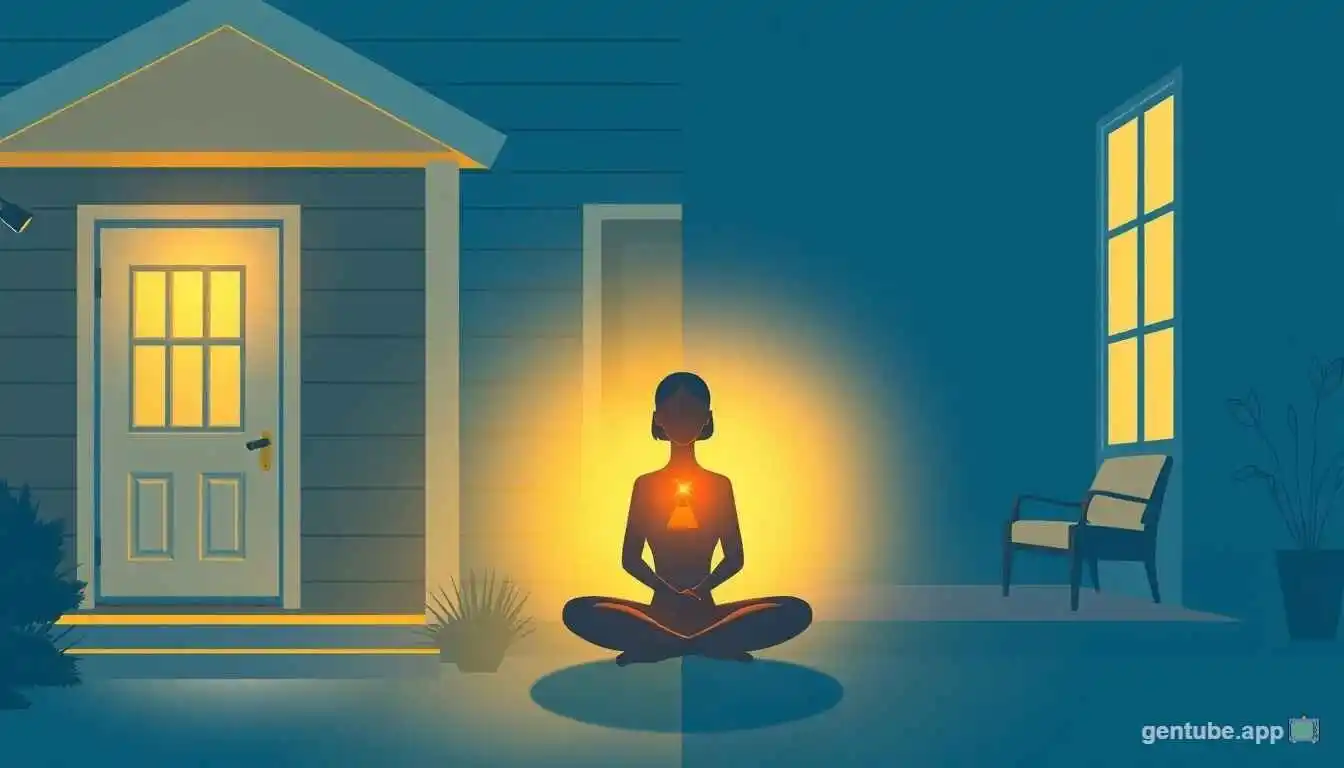
Beyond Locked Doors: Why Real Security Means Protecting Your Body AND Your Mind
Most people think of “security” as a deadbolt, a camera, or an alarm system. That’s half the picture — and arguably not even the more important half. True security is a two-layer system: physical security, which protects your body, property, and environment, and psychological security, which protects your sense of safety, stability, and mental wellbeing. You can have the most fortified house on the block and still feel unsafe if your mind is running on constant alert. Conversely, someone with modest physical safeguards but a deep, grounded sense of psychological security often navigates the world with more calm and confidence than someone surrounded by cameras and sensors.
This guide breaks down both dimensions of security — what they actually mean, why they’re deeply connected, and practical, research-backed ways to strengthen each one, whether you’re securing a home, a workplace, a family, or your own peace of mind.
It’s worth pausing on why this distinction matters so much right now. Rising awareness of mental health, growing conversations around trauma-informed care, and a security industry that has historically focused almost exclusively on hardware and enforcement have created a gap: plenty of guidance exists on installing better locks, but far less on understanding why some people still feel unsafe behind them. Closing that gap requires treating security as a whole-person concern rather than a purely technical one — which is exactly what this guide sets out to do.
What Is Physical Security, Really?
Physical security refers to the measures taken to protect people, property, and assets from physical threats — theft, intrusion, vandalism, violence, natural disasters, and unauthorized access. It’s the most visible and tangible form of security, and it spans a wide range of environments: homes, offices, schools, hospitals, data centers, and public spaces.
Physical security typically operates in layers, often described using the “concentric circles” model:
- Perimeter security — fences, gates, natural barriers, lighting, and landscaping designed to deter or delay intrusion at the outer boundary.
- Exterior security — locks, doors, windows, security cameras, motion sensors, and alarm systems that protect the building’s outer shell.
- Interior security — access control systems, interior cameras, safes, restricted zones, and monitoring within the building itself.
- Asset-level security — protection for the specific valuables, documents, or people inside, such as safes, secure server rooms, or panic rooms.
The idea behind layered security is simple: no single measure is foolproof, but multiple overlapping layers dramatically increase the difficulty, time, and risk required for an intrusion to succeed — which is often enough to deter it from being attempted at all.
What Is Psychological Security?
Psychological security, sometimes called emotional or felt safety, refers to a person’s internal sense of being safe, stable, and free from persistent threat — whether that threat is real, perceived, or rooted in past experience. It’s distinct from physical safety because it’s subjective: two people in the exact same physical environment can have wildly different levels of psychological security based on their history, mindset, relationships, and coping resources.
Psychologist Abraham Maslow placed safety needs — both physical and psychological — near the base of his famous hierarchy of needs, arguing that until a person feels reasonably secure, they struggle to pursue higher-order goals like belonging, esteem, or self-actualization. This is why psychological security isn’t a “soft” add-on to physical security — it’s foundational to how people function, make decisions, and form relationships.
Psychological security includes:
- Emotional stability — the ability to regulate emotions and not feel constantly on edge or overwhelmed.
- Trust in relationships — confidence that key people in your life are reliable and won’t cause harm.
- Predictability and control — a reasonable sense that your environment and routines are stable, not chaotic or arbitrary.
- Freedom from chronic fear — not living in a persistent state of hypervigilance or anticipated danger.
- Self-worth and identity stability — a secure sense of self that isn’t easily destabilized by criticism, conflict, or setbacks.
Why Physical and Psychological Security Are Inseparable
Here’s the part most security discussions miss: physical and psychological security constantly influence each other, and neither one functions well in isolation.
Physical insecurity breeds psychological insecurity. Someone who has experienced a break-in, an assault, or lives in a high-crime area often develops hypervigilance — a heightened, exhausting state of constant threat-scanning — even in objectively safe situations afterward. The nervous system doesn’t easily “reset” once it has learned that danger is possible; this is a well-documented feature of how the brain’s threat-detection systems, including the amygdala, adapt after real physical threats.
Psychological insecurity can undermine physical safety. People who feel chronically anxious, unsupported, or unstable are statistically more likely to make impulsive decisions, ignore warning signs, isolate from support networks, or end up in unsafe situations they might otherwise have avoided — from staying in unsafe relationships to neglecting basic safety precautions because they feel too depleted to act on them.
Perceived safety matters as much as actual safety. A well-lit street with visible security cameras doesn’t just prevent crime statistically — it changes how people feel while walking down it, which affects their stress hormones, their decision-making, and their overall quality of life. Security design that ignores the psychological experience of safety is only solving half the problem.
This is why modern security thinking — used by everyone from corporate risk consultants to trauma-informed therapists — treats physical and psychological safety as a combined system, not two separate departments.
Building Strong Physical Security: A Practical Framework
For the Home
- Reinforce entry points. Most break-ins occur through unlocked or poorly secured doors and windows. Deadbolts, strike plate reinforcement, and impact-resistant glass make forced entry significantly harder and slower.
- Install visible deterrents. Security cameras, yard signage, and motion-activated lighting deter opportunistic intrusion attempts before they start, since most burglars prioritize speed and low visibility.
- Layer your alarm response. A monitored alarm system that alerts both the homeowner and a response service closes the gap between an intrusion attempt and an actual response.
- Control landscaping. Overgrown bushes near windows and doors create hiding spots; trimmed, open sightlines remove them.
- Secure valuables separately. A fireproof, bolted-down safe protects important documents and valuables even if a broader intrusion occurs.
For the Workplace
- Access control systems. Key cards, biometric scanners, or PIN-based entry limit who can access sensitive areas, and create an auditable log of who entered where and when.
- Visitor management protocols. Requiring sign-in, ID verification, and escorted access for visitors closes a common vulnerability — unauthorized individuals simply walking in behind an employee.
- Security personnel and reception presence. A staffed front desk is both a physical deterrent and a psychological signal to employees that the space is actively monitored.
- Emergency preparedness plans. Clear evacuation routes, drills, and designated emergency roles reduce chaos and injury risk during actual incidents.
For Public and Community Spaces
- Environmental design (CPTED). Crime Prevention Through Environmental Design uses lighting, sightlines, and space planning to naturally discourage criminal behavior without relying solely on enforcement.
- Community reporting systems. Neighborhood watch programs and community reporting apps extend the “eyes on the street” principle, increasing the collective likelihood that suspicious activity gets noticed and reported.
Building Strong Psychological Security: A Practical Framework
Unlike physical security, psychological security can’t be installed — it has to be cultivated, often over time, and it looks different for individuals, families, and workplaces.
For Individuals
- Establish predictable routines. Consistent daily structure — regular sleep, meals, and habits — signals safety to the nervous system, which thrives on predictability.
- Build a reliable support network. Having even a small number of people you can consistently count on significantly buffers against feelings of chronic insecurity, according to decades of attachment and social support research.
- Practice nervous system regulation. Techniques like deep breathing, grounding exercises, and regular physical activity help down-regulate the body’s stress response, reducing the physical symptoms of chronic anxiety.
- Limit exposure to constant threat messaging. Doom-scrolling news and social media can keep the brain in a low-grade, sustained state of threat perception, which erodes psychological security over time even without any real personal danger present.
- Seek professional support when needed. Therapy, particularly trauma-informed or cognitive-behavioral approaches, can help address deep-rooted psychological insecurity stemming from past experiences.
For Families
- Create emotional safety at home. Children and adults alike develop psychological security through consistent, non-punitive responses to mistakes and open communication rather than unpredictable reactions.
- Talk about physical safety without inducing fear. Teaching children about safety (stranger awareness, fire drills, emergency contacts) in a calm, matter-of-fact way builds competence without creating anxiety.
- Model healthy coping. Children absorb how caregivers respond to stress; calm, regulated responses to challenges teach psychological resilience by example.
For Workplaces
- Foster psychological safety in teams. Organizational research, notably from Google’s Project Aristotle study on team effectiveness, has repeatedly found that psychological safety — the ability to speak up, take risks, and make mistakes without fear of humiliation — is one of the strongest predictors of high-performing teams.
- Provide transparent communication during change. Uncertainty is one of the biggest drivers of workplace anxiety; clear, honest communication during layoffs, restructuring, or leadership changes reduces speculation-driven stress.
- Support mental health resources. Employee assistance programs, mental health days, and manager training on recognizing burnout all contribute to a psychologically secure workplace culture.
The Overlap: Security Measures That Serve Both Needs
Some of the most effective security investments strengthen physical and psychological security simultaneously:
- Good lighting deters crime physically and reduces anxiety about walking through dark spaces psychologically.
- Visible, well-maintained security systems prevent break-ins and give occupants a tangible sense of control and safety.
- Clear communication protocols (emergency alerts, workplace check-ins, family safety plans) reduce actual risk and reduce the anxiety of uncertainty.
- Community and social connection both increase the likelihood that danger gets noticed and reported, and buffer individuals against the isolating effects of chronic fear.
- Training and preparedness (fire drills, self-defense classes, emergency response training) build real physical competence while also building the psychological confidence that comes from feeling capable rather than helpless.
Common Security Mistakes That Undermine Both Dimensions
- Over-securing without communicating. Installing extensive security measures without explaining them to family members or employees can paradoxically increase anxiety — people notice new cameras or restricted access and assume something dangerous prompted it, rather than feeling reassured.
- Treating anxiety as irrational without investigating it. Persistent unease sometimes reflects a real, unaddressed physical vulnerability. Dismissing it outright — rather than assessing whether the underlying environment is actually secure — can leave real risks unaddressed.
- Neglecting mental health in high-risk professions. Security, military, and first-responder roles that focus purely on physical protocols while ignoring psychological support tend to see higher rates of burnout, PTSD, and turnover.
- Confusing surveillance with safety. Excessive monitoring, especially in personal relationships or overly controlling parenting, can erode trust and psychological security rather than build it, even while technically increasing physical oversight.
- Ignoring the recovery period after an incident. After a break-in, an accident, or a threatening event, physical repairs often happen quickly, while the psychological aftermath is left unaddressed — leading to lingering hypervigilance or avoidance behavior long after the physical risk has passed.
Security Across Different Life Settings
Security needs shift depending on context, and a one-size-fits-all approach rarely serves people well. Here’s how the physical-psychological security balance plays out across common life settings.
Travel Security
Travel strips away many of the routines and familiar environments that normally support psychological security, which is why even confident people can feel unusually anxious in unfamiliar cities or countries. Physically, practical measures like using hotel safes, keeping copies of important documents separate from originals, researching neighborhoods in advance, and staying aware of common scams targeting tourists all reduce real risk. Psychologically, building in small anchors of familiarity — a consistent morning routine, regular check-ins with someone back home, or simply researching a destination thoroughly beforehand — helps offset the disorientation that unfamiliar environments naturally produce. Travelers who feel informed and prepared consistently report lower anxiety than those who arrive with no context, even when the objective risk level is identical.
Remote and Hybrid Work Security
The shift toward remote work introduced a new category of overlapping physical and psychological security concerns. Physically, remote workers must think about home network security, securing sensitive work documents outside a controlled office environment, and physical workspace safety, particularly for those working from shared or public spaces. Psychologically, remote work can either strengthen or undermine security depending on how it’s managed — the autonomy and reduced commute can lower stress for some, while isolation from colleagues and blurred boundaries between work and home life can erode others’ sense of stability. Organizations that succeed here tend to combine practical safeguards, like VPNs and clear data-handling policies, with intentional culture-building efforts, like regular check-ins, that maintain a sense of connection and psychological safety despite physical distance.
Security for Older Adults
Aging introduces unique security considerations that blend physical vulnerability with psychological wellbeing in particularly close ways. Physically, homes may need modifications like grab bars, improved lighting, medical alert systems, and easily accessible locks to reduce fall risk and improve emergency response times. Psychologically, isolation is one of the biggest threats to older adults’ sense of security, often more damaging over time than any single physical risk. Regular social contact, whether through family visits, community programs, or simple daily check-in calls, has been consistently linked to better mental and even physical health outcomes in aging populations, reinforcing just how tightly the two dimensions of security are linked at this life stage.
Security in High-Risk Professions
People working in law enforcement, the military, healthcare, and emergency response operate in environments where physical danger is a regular, expected part of the job. These professions have historically focused heavily on physical protocols, training, and equipment, sometimes at the expense of psychological support. This imbalance has real consequences: elevated rates of burnout, post-traumatic stress, and early career attrition are well documented in high-risk professions where psychological support lags behind physical training. Organizations that have shifted toward integrated models — pairing rigorous physical safety training with mandatory mental health check-ins, peer support programs, and destigmatized access to counseling — have generally seen better long-term outcomes for both individual wellbeing and organizational performance.
Digital-Physical Security Overlap
Modern security can no longer be neatly divided into “physical” and “digital” categories, since so much physical safety now depends on digital systems. Smart locks, connected security cameras, and app-controlled alarm systems mean that a cybersecurity failure can directly translate into a physical security failure. This overlap also has a psychological dimension: people who feel confident in their digital security tend to feel more secure in their physical spaces as well, since modern homes and workplaces are so deeply networked. Basic digital hygiene, like strong unique passwords, two-factor authentication on security apps, and regular software updates for connected devices, has become an essential extension of physical security rather than a separate concern.
A Combined Security Checklist
https://youtu.be/vH-ZHDrrz2g

