

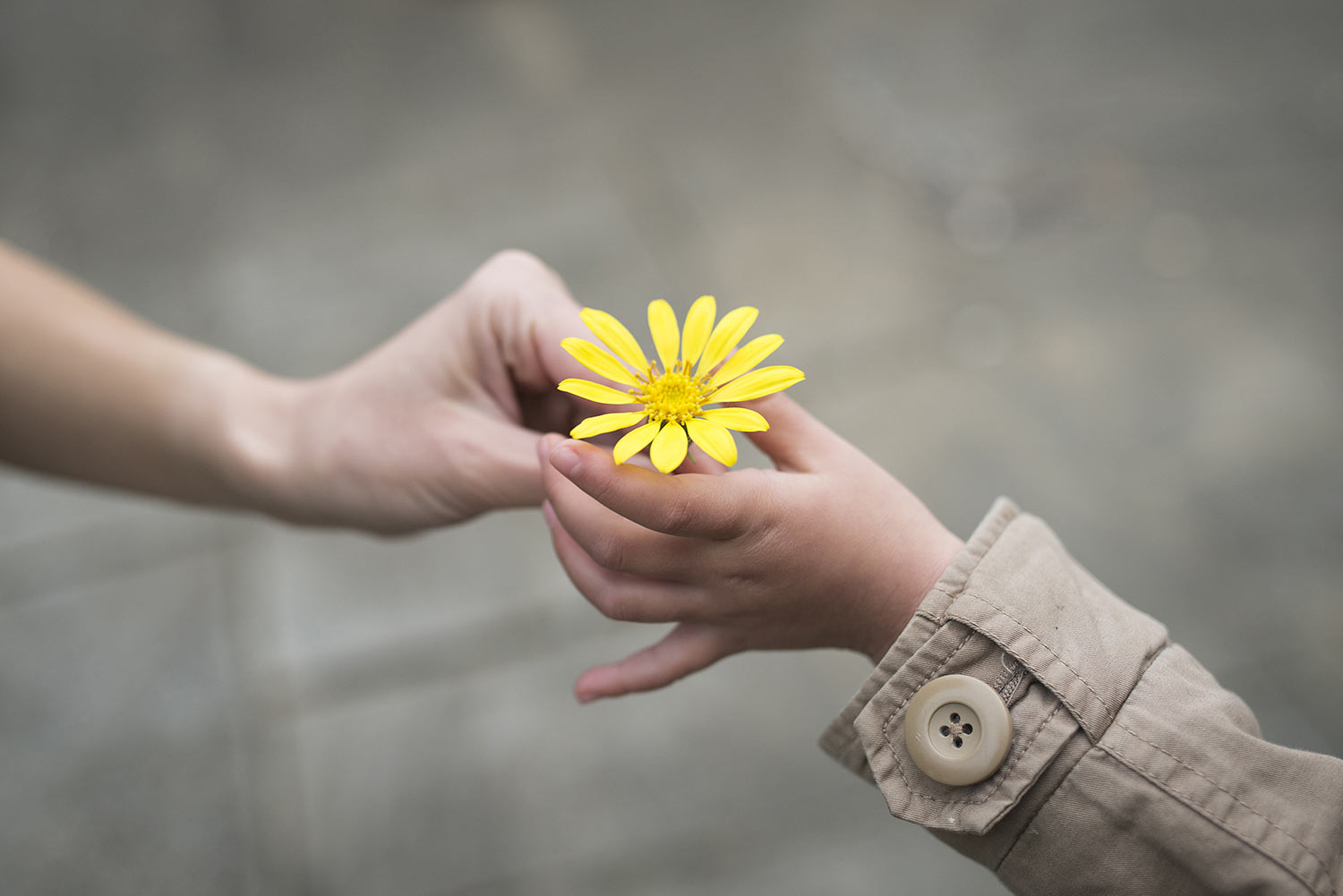
The Paradox of the Playground: Why “Kindness is Strength” is the Hardest Lesson to Teach Our Children
Introduction: The Platitudes We Hand Down
If you spend more than five minutes in the parenting section of a bookstore or scrolling through a motherhood forum, you will encounter the mantra. It is printed on wooden signs in pastel nurseries, stitched onto throw pillows, and repeated ad nauseam in pediatrician waiting rooms: “In a world where you can be anything, be kind.”
As adults, particularly those of us who have lived through the bruising realities of the professional world, fraught relationships, and personal loss, we know this to be profoundly true. We have learned the hard way that aggression is cheap, that cynicism is easy, and that building walls requires far less effort than building bridges. We understand, intuitively, that true kindness—the kind that extends grace to an undeserving colleague, or forgives a deep betrayal—is an act of immense, almost terrifying strength. It requires a solid sense of self, emotional regulation, and the willingness to be vulnerable.
We look at our children, with their wide eyes and boundless potential, and we desperately want to inoculate them with this wisdom. We want to save them from the mistakes we made. We want them to be the strong ones.
So, we sit them down, we look them in the eye, and we say, “Kindness is a strength, buddy. It’s not weak to be nice.”
And then, they go to school.
They go to the playground, the cafeteria, the locker room, and the group chat. They enter the brutal, unforgiving, hyper-visible microcosm of childhood socialization. And within approximately fifteen minutes, they realize that everything we just told them is, in their immediate reality, a lie.
Because try telling a ten-year-old that kindness is strength when they just watched the kindest kid in class get mocked for wearing the wrong shoes, or when their own act of sharing a snack resulted in them being labeled a “pushover.” Try telling a teenager that vulnerability is power when they know that showing the slightest crack in their armor will result in social annihilation.
This is the great paradox of modern parenting. We are trying to teach a Zen Buddhist philosophy to gladiators in training. If we want to raise children who are both genuinely kind and genuinely strong, we have to stop handing them platitudes and start acknowledging the incredibly complex, counter-intuitive reality of what kindness actually costs in the wild.
Part 1: The Darwinian Playground
To understand why children reject the “kindness is strength” narrative, we have to understand the environment in which they are operating. We often view childhood through a haze of nostalgia, remembering it as a time of innocent play and simple friendships. But from a sociological and developmental standpoint, childhood is a high-stakes survival game.
The schoolyard is a microcosm of society, but it lacks the civilized restraints, the polished social scripts, and the fully developed prefrontal cortices of the adult world. It is governed by a Darwinian logic: establish your place in the hierarchy, secure your resources (attention, snacks, playground space, social currency), and do not look vulnerable.
In this environment, strength is easily quantifiable. The strong kid is the one who runs the fastest, hits the hardest, commands the room with their jokes, or controls the social ladder through sheer force of personality. Weakness is equally quantifiable: it is the kid who cries easily, the kid who doesn’t get the joke, the kid who is too eager to please, and the kid who shares their lunch only to have it thrown on the ground.
When we tell a child that kindness is a strength, we are asking them to redefine the very physics of their universe. We are asking them to believe that dropping their shield in the middle of a battle is actually a superior form of defense.
From a child’s pragmatic perspective, kindness doesn’t look like strength; it looks like a liability. If you are kind to the kid that everyone else is excluding, you risk being excluded yourself. If you are kind by sharing your art supplies, you risk having your stuff ruined. If you are kind by forgiving someone who hurt you, you risk looking like a doormat.
Children are not inherently cruel, but they are inherently egocentric and deeply anxious about their social standing. Their brains are wired for survival and belonging, and in the brutal economy of the playground, traditional kindness often feels like a terrible investment strategy.
Part 2: The Empathy Gap and the Developing Brain
We also fail our children because we misunderstand the neuroscience of empathy. We treat kindness like a switch that can just be turned on. We expect our five-year-old to share their favorite toy without crying, and we expect our twelve-year-old to intuitively understand why a classmate’s sarcastic comment was born out of insecurity rather than malice.
But empathy—the foundational building block of kindness—is not an innate trait. It is a complex, higher-order cognitive function that takes decades to fully develop.
In early childhood, the brain is highly egocentric. A toddler genuinely believes that their experience of the world is the only experience of the world. If they want a block, they take it, not because they are malicious, but because they literally cannot compute that the other child has a mind that feels sad when the block is taken.
As children enter middle childhood and adolescence, “theory of mind” develops. They begin to understand that others have different thoughts and feelings. However, this is a double-edged sword. The realization that others are judging them creates acute self-consciousness. A teenager might possess the cognitive ability to understand that a peer is feeling lonely, but the neurobiological fear of social rejection is so overwhelming that it overrides their empathetic impulses.
When we demand kindness from a child whose brain is not yet equipped to process the complex emotional calculus required for it, we set them up for failure. We are essentially asking a child to run a marathon before their leg muscles have formed. They can try, it will be agonizing, and they will likely fall.
Real strength—the kind required to be kind when it costs you something—relies heavily on a developed prefrontal cortex, the part of the brain responsible for impulse control, long-term thinking, and emotional regulation. This part of the brain does not fully mature until the mid-twenties.
Therefore, when a child defaults to self-preservation or cruelty, they are not necessarily being “bad.” They are being neurologically typical. Our job is not to guilt them into kindness, but to patiently scaffold their developing brains until they are strong enough to bear the weight of it.
Part 3: The “Nice” Trap: Gendering Kindness
To complicate matters further, our society has deeply gendered the concept of kindness, and this does a profound disservice to both boys and girls.
For generations, girls have been socialized to equate kindness with compliance. “Be a good girl,” “don’t make a fuss,” “be nice to your brother.” For many girls, kindness is stripped of its radical, boundary-setting power and reduced to people-pleasing. It becomes a performance designed to keep the peace and secure approval.
When we tell a girl that kindness is her strength, she often internalizes this as: My value lies in how agreeable I am. This is not strength; this is a recipe for resentment, burnout, and vulnerability to boundary-violating relationships later in life. A girl who is taught that kindness means never saying no will struggle immensely to assert herself in a boardroom, or walk away from a toxic partner. We have taught her that setting a boundary is “unkind,” and therefore, weak.
Conversely, boys are socialized to view kindness as a synonym for softness, which is deeply stigmatized. “Man up,” “boys don’t cry,” “don’t be a sissy.” The cultural script handed to boys dictates that strength is stoic, aggressive, and emotionally walled-off.
If a boy shows kindness—comforting a crying friend, stepping in to stop a bully, expressing genuine affection—he risks being stripped of his masculine status. The social penalty for male kindness in childhood is swift and severe. He is mocked, his sexuality is questioned, and he is pushed to the bottom of the hierarchy.
So, when we tell a boy that “kindness is strength,” it directly contradicts every other cultural signal he is receiving from peers, media, and sometimes even other adults. It sounds like a foreign language.
To truly teach our children this lesson, we have to aggressively dismantle these gendered constructs. We must teach girls that true kindness requires the “fierce” ability to say “no.” And we must teach boys that vulnerability, empathy, and emotional courage are the highest expressions of masculinity.
Part 4: When Kindness Backfires (The Parent’s Dilemma)
Perhaps the most agonizing moment in parenting occurs when you watch your child do the right thing, and they get punished for it.
You tell your eight-year-old to include the new kid in their game. Your child, bravely following your advice, invites the new kid over. The established friend group turns on your child. “Why did you invite him? Now the game is ruined.” Your child comes home in tears, having lost their friends for the day because they were kind.
Or, your teenager defends a classmate who is being ruthlessly gossiped about in the group chat. Your teenager types, “Guys, lay off, this is messed up.” The immediate response? The group chat turns on your teenager. They are ousted from the inner circle. They sit alone at lunch.
This is the crucible. This is the exact moment when the platitude shatters.
As a parent watching this, your heart breaks. A primal, protective rage rises in your chest. You want to march down to that school and yell at those kids. You want to tell your child, “Fine. Don’t be kind to them anymore. They don’t deserve it. Look out for yourself.”
And here lies the parental dilemma. If we tell our children to abandon kindness when it gets hard, we teach them that kindness is merely a transactional tool—something you do only when you are guaranteed a positive return. We teach them that it is conditional.
But if we simply say, “I know it hurts, but keep being kind,” we sound like out-of-touch sadists, asking our children to continually offer their necks to the guillotine.
How do we navigate this? We have to validate the profound unfairness of the situation. We must stop telling them that being kind will make them feel good, because sometimes, especially in childhood, it feels terrible. It feels isolating. It feels weak.
We have to reframe the narrative for them in real-time. When your child is crying because they were punished for being kind, you sit with them in their pain. You say, “What you did took more guts than anything else you could have done. It feels awful right now because the people around you are operating out of fear. You operated out of courage. I am so sorry it cost you today, but I am so proud of your strength.”
You teach them that being ahead of the pack is a lonely place, but it is the only place worth standing.

