

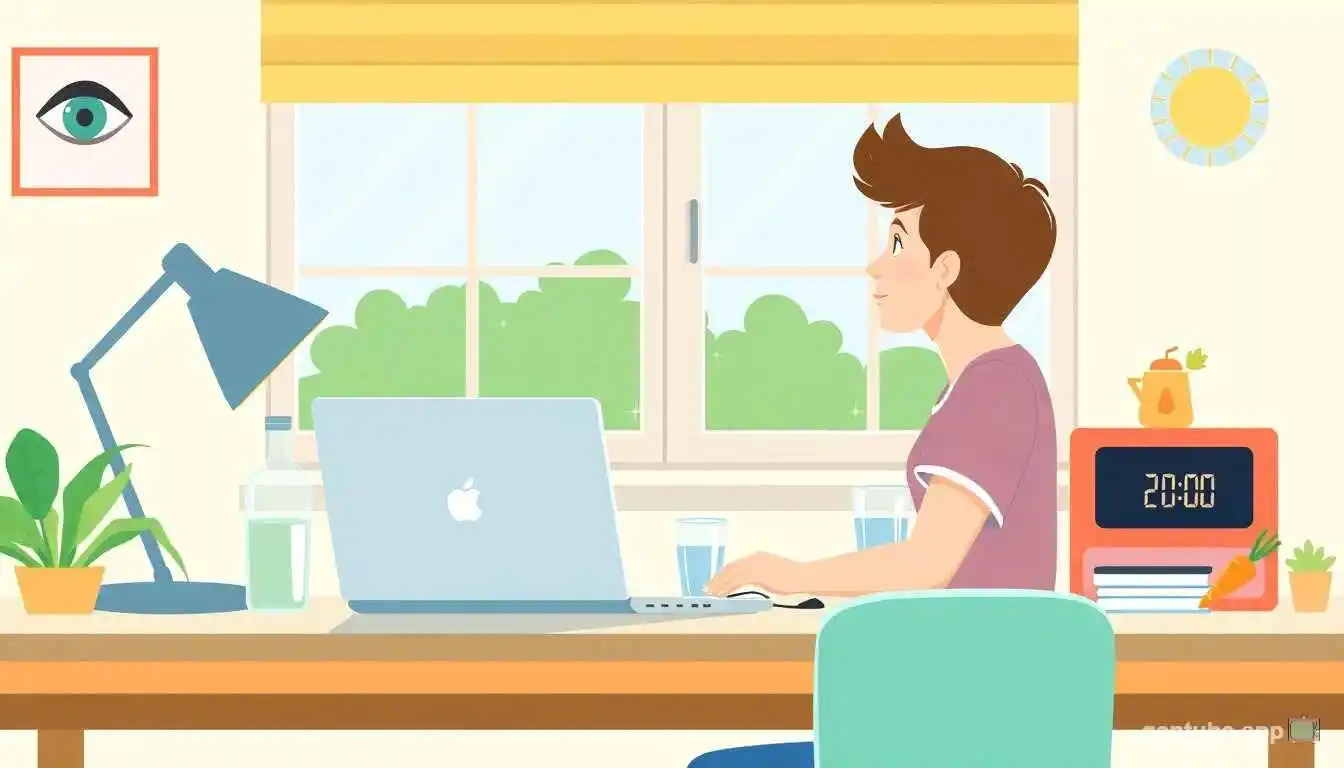
Are Your Eyes Crying for Help While You Study? The Survival Guide Nobody Taught You!
Meet Arjun — A Student Just Like You
Last semester, Arjun walked into my classroom looking like he had gone ten rounds with a boxing bag. His eyes were bloodshot, there were dark circles that could scare a ghost, and he kept rubbing his face every two minutes. He slumped into his chair and said, “Sir, I studied for 14 hours straight last night. But today I cannot even read the board clearly. Everything is blurry.”
I looked at him and asked one simple question: “When was the last time you looked at something farther than your phone screen?”
He stared at me. Then he stared at the floor. Then he mumbled, “I don’t remember.”
Arjun is not alone. In my 15 years of teaching, I have seen thousands of bright, hardworking students ruin their eyesight because nobody ever taught them how to take care of their eyes while studying. We teach you math, science, history, and grammar. But nobody sits you down and says, “Hey, your eyes are the tools you use to learn everything else. If they break, everything breaks.”
That is exactly what this blog is going to do.
By the time you finish reading this, you will know exactly how to protect your eyes, reduce strain, improve focus, and study longer without feeling like your eyeballs are on fire. And the best part? Every single tip is simple, free, and something you can start doing today.
What Is Eye Care?
Let us keep this plain and simple. Eye care means everything you do to keep your eyes healthy, comfortable, and working at their best. It is not just about wearing glasses or visiting a doctor when something goes wrong. Eye care is a daily habit, just like brushing your teeth or drinking water.
Think about it this way. You charge your phone every single day, right? You do not wait until the battery is at 1% and the phone is shutting down. Your eyes are the same. They need regular “charging” — through rest, proper lighting, good nutrition, and healthy habits — so they can keep working for you day after day, year after year.
Eye care for students specifically means taking care of your eyes during long hours of reading, screen time, and focused work. It covers three big areas:
- Prevention — Stopping problems before they start
- Maintenance — Keeping your eyes in good shape daily
- Correction — Fixing issues when they appear (like getting glasses when needed)
The Three Pillars of Eye Care
| Pillar | What It Means | Example |
| Prevention | Avoiding habits that damage eyes | Taking screen breaks |
| Maintenance | Daily habits that support eye health | Eating vitamin-rich food |
| Correction | Addressing problems early | Getting an eye exam yearly |
Why Eye Care Matters — Especially for Students
The Numbers That Should Wake You Up
Here are some facts that my students find shocking when I share them in class:
- Over 70% of students spend more than 6 hours a day looking at screens
- Digital eye strain affects approximately 50-90% of people who work on computers
- The average person blinks about 15-20 times per minute, but when staring at a screen, that drops to 5-7 times
- Myopia (nearsightedness) has doubled in the last 30 years among young adults
- By age 25, nearly half of all university students develop some form of vision problem
What Happens When You Ignore Your Eyes
When I ask students what problems they face from studying, here is what they report:
- Headaches that make it impossible to concentrate
- Burning or itching eyes that keep them awake at night
- Blurry vision that comes and goes
- Neck and shoulder pain from leaning into screens
- Dry eyes that feel like sand is stuck in them
- Difficulty shifting focus from near to far objects
- Falling grades because they simply cannot read comfortably anymore
One of my students, Priya, told me she failed her biology exam not because she did not know the material, but because her eyes hurt so much during the test that she could not read the questions properly. She had been studying on her bed with a dim lamp for three weeks straight. That story breaks my heart, and it is completely preventable.
Your Eyes Are Your Most Important Study Tool
You use your eyes for literally everything in your academic life. Reading textbooks, watching lectures, taking notes, scanning slides, reviewing flashcards, checking assignments online — every single activity depends on your vision. If your eyes are tired, strained, or damaged, your entire learning system slows down.
It is like trying to run a marathon with shoes that have nails inside them. You might push through for a while, but eventually the pain will stop you — and the damage might be permanent.
Core Concepts: How Your Eyes Work and What Goes Wrong
To take care of your eyes, you first need to understand them a little bit. Do not worry — I am not going to turn this into a medical textbook. Just the basics, in plain English.
How Your Eye Works — The Simple Version
Imagine your eye is a camera. Here is how the parts work together:
- Cornea — This is the clear front window. It lets light in and starts bending it.
- Lens — Right behind the pupil, this fine-tunes the focus, like adjusting a camera lens.
- Retina — This is the sensor at the back. It captures the image and sends it to your brain.
- Pupil — The black circle in the middle. It gets bigger in dim light and smaller in bright light.
- Iris — The colored part. It controls the pupil size.
When everything works perfectly, light enters, gets focused, hits the retina, and your brain says, “Ah, I see a textbook page!” But when something goes wrong — or when you exhaust your eye muscles — the system starts failing.
Common Eye Problems Students Face
-
Digital Eye Strain (Computer Vision Syndrome)
This is the big one. When you stare at a screen for hours, your eye muscles get locked in one position. Imagine holding your arm straight out for three hours. It would burn, right? Your eye muscles feel the same way, but you cannot feel them burning the same way — you only notice the symptoms later.
Symptoms:
- Tired or sore eyes
- Headaches
- Blurry or double vision
- Dry or watery eyes
- Increased sensitivity to light
- Difficulty focusing
-
Myopia (Nearsightedness)
This is when you can see close things clearly but far things are blurry. It is becoming an epidemic among students, and researchers believe excessive close-up work (reading, screens) is a major cause. When you spend all day focusing on things near your face, your eyeball actually elongates slightly, making distance vision worse.
-
Dry Eye Syndrome
Your eyes need tears to stay healthy and comfortable. When you stare at screens, you blink less, and your tear film breaks down. Result? Dry, gritty, burning eyes. In severe cases, this can damage the cornea.
-
Eye Fatigue from Poor Lighting
Too bright, too dim, or glaring light forces your eyes to work overtime. It is like trying to read a book in a room with a strobe light — your eyes keep adjusting and never get to relax.
-
Convergence Insufficiency
This sounds fancy but it is simple. When you read, both your eyes turn slightly inward to focus on the same near point. Sometimes, the muscles that do this get weak, and your eyes struggle to work together. This causes double vision, headaches, and reading fatigue. Many students have this and do not even know it — they just think they are “bad at reading.”
The Biology of Blinking
Here is something I teach all my students: blinking is your eye’s washing machine.
Every time you blink, your eyelid spreads a fresh layer of tears across your eye. This tear film does three critical jobs:
- Lubricates — Keeps the eye surface smooth
- Nourishes — Delivers oxygen and nutrients
- Protects — Washes away dust, debris, and bacteria
When you reduce your blink rate from 18 times per minute to 5 times per minute (which happens automatically when you look at screens), your tear film starts breaking down within seconds. After 30 minutes of reduced blinking, your eyes are significantly drier and more uncomfortable.
The 20-20-20 Rule and Other Essential Practices
This is the section that will actually change your daily life. I am going to give you the most practical, proven techniques that I have shared with thousands of students over the years.
The Golden Rule: 20-20-20
This is the single most important habit you can build for your eyes.
Every 20 minutes, look at something 20 feet away, for at least 20 seconds.
That is it. Simple, free, and incredibly effective.
Why does this work? When you look at something far away, your eye muscles relax. The ciliary muscle inside your eye, which has been squeezed tight for near focusing, finally gets to let go. Twenty seconds is long enough for this muscle to fully relax and reset.
How to Make It a Habit
- Set a timer on your phone for every 20 minutes
- Use a browser extension like “Eye Care 20 20 20” that pops up a reminder
- Put a sticker on your laptop or study desk that says “20-20-20”
- Make it a game — look out the window and try to identify the farthest object you can see
- Pair it with a quick stretch so it becomes a “mini-break ritual”
Proper Screen Setup (Ergonomics)
The way your screen and desk are arranged makes a massive difference. Here are the rules:
Screen Distance
- Your screen should be arm’s length away (about 25 inches or 60-65 cm)
- If you cannot read text at this distance, increase the font size — do not move closer
Screen Position
- The top of your screen should be at or slightly below eye level
- You should look slightly downward at the center of the screen (about 15-20 degrees)
- Never look upward at a screen — this exposes more of your eye surface and causes faster drying
Screen Settings
- Brightness: Match the brightness to your room. The screen should not look like a light bulb, nor should it look like a gray shadow
- Contrast: High contrast (dark text on light background) is easier on the eyes
- Text size: At least 12-14 point for comfortable reading. If you are squinting, the text is too small
- Color temperature: Use warmer (yellowish) tones in the evening and neutral tones during the day
Lighting Rules
- Never study in a dark room with only a screen for light. The contrast between the bright screen and dark room is brutal on your eyes
- Use ambient lighting that is similar in brightness to your screen
- Position your light source to the side, not directly behind or in front of the screen
- Avoid fluorescent lights if possible — they flicker at a frequency your brain detects even if you do not consciously notice it
- Use a desk lamp with a shade that directs light onto your work, not into your eyes
The Right Way to Read Physical Books
Screens get all the attention, but reading books for hours causes strain too.
- Hold the book 14-18 inches from your face
- Make sure the page is evenly lit — no pools of light and shadow
- Use a book stand so you are not hunching over
- Take the same 20-20-20 breaks — even with books
- Avoid reading on your side in bed — it creates uneven focus between your two eyes
Outdoor Time — The Secret Weapon
This surprises many of my students: spending time outdoors is one of the best things you can do for your eyes.
Research shows that children and young adults who spend more time outdoors have a significantly lower risk of developing myopia. Scientists believe it is because:
- Outdoor light is thousands of times brighter than indoor light, even on cloudy days
- Bright light stimulates dopamine release in the retina, which helps regulate eye growth
- The far visual distances outdoors give eye muscles a chance to fully relax
- Natural light has the full spectrum of wavelengths that eyes need
My recommendation: Aim for at least 1-2 hours of outdoor time per day. This can be walking to class, eating lunch outside, exercising outdoors, or just sitting in a park reading.
Nutrition for Eye Health
Your eyes are living tissue, and they need specific nutrients to function properly. Here are the most important ones:
| Nutrient | What It Does | Best Food Sources |
| Vitamin A | Essential for retina function, prevents night blindness | Carrots, sweet potatoes, spinach, mangoes |
| Lutein & Zeaxanthin | Protect retina from blue light damage | Kale, spinach, corn, eggs |
| Vitamin C | Keeps eye blood vessels healthy, reduces cataract risk | Oranges, strawberries, bell peppers, broccoli |
| Vitamin E | Protects eye cells from oxidative damage | Almonds, sunflower seeds, avocados |
| Omega-3 Fatty Acids | Reduces dry eye, supports retinal health | Salmon, sardines, walnuts, flaxseeds |
| Zinc | Helps vitamin A reach the retina | Oysters, beef, pumpkin seeds, lentils |
A simple daily plan: One handful of nuts (almonds/walnuts), one orange or serving of berries, one serving of leafy greens, and fish twice a week. That covers most of your eye nutrition needs.
Hydration — The Underrated Factor
Dehydrated bodies produce fewer tears. If you are someone who drinks two cups of coffee and no water during study sessions, your dry eyes are partly a hydration problem.
Target: At least 8 glasses (about 2 liters) of water per day. More if you are in air conditioning or heating, which dries the air.
Real-Life Case Study: How Meera Saved Her Eyes and Her Grades
Meera was a second-year pharmacy student in my class. She came to me during office hours looking exhausted and frustrated. Here is what she told me:
“I am studying harder than ever, but my grades are going down. I get terrible headaches after 45 minutes of reading. My eyes water constantly during lectures. I tried different glasses but they did not help. I am starting to think I just cannot handle this program.”
I asked her about her study setup. Here is what I found:
- She studied on her bed with her laptop on her lap
- She used her laptop at maximum brightness
- She studied in her dorm room with the overhead fluorescent light and no desk lamp
- She never took breaks — she felt guilty if she stopped
- She drank approximately one glass of water per day and lived on coffee
- She had not been outside in sunlight for days at a time during exam weeks
- She wore reading glasses she bought at a pharmacy without a prescription
I helped her make these changes:
- Moved to a proper desk with the screen at arm’s length and eye level
- Set the 20-20-20 rule using a phone timer
- Reduced screen brightness and enabled night shift mode
- Got a proper desk lamp with warm light
- Had a real eye exam — turns out she needed a different prescription and had mild convergence insufficiency, which was treated with simple exercises
- Increased water intake to 8 glasses per day
- Added a 30-minute outdoor walk every morning
- Added eye-healthy foods — a handful of almonds, a serving of spinach daily, and fish oil supplements
The results after 6 weeks:
- Headaches reduced from daily to once a week
- She could study comfortably for 2 hours at a time
- Her eyes stopped watering during lectures
- Her test scores went up by 15%
- She said, “I feel like I got my life back”
Meera’s story is not unusual. I have seen similar transformations hundreds of times. Small changes, consistently applied, produce remarkable results.
Benefits of Proper Eye Care
When you take care of your eyes, the benefits go far beyond just “not having eye pain.” Here is what students consistently report:
Academic Benefits
- Longer study sessions without discomfort — many students double their effective study time
- Better reading comprehension — when your eyes are not struggling, your brain focuses on content, not on decoding blurry text
- Fewer headaches — which means fewer missed classes and study sessions
- Faster reading speed — comfortable eyes read 15-20% faster than strained eyes
- Better performance in exams — you can actually read the questions and see your work clearly
Physical Benefits
- No more burning, dry, or gritty feeling in your eyes
- Reduced neck and shoulder pain (proper screen setup fixes posture too)
- Better sleep — less blue light exposure in the evening improves your sleep quality
- Fewer visits to the doctor for headaches and eye infections
- Slower progression of myopia and other vision problems
Mental and Emotional Benefits
- Less frustration and irritability from constant discomfort
- Greater confidence knowing you can study as long as you need to
- Reduced anxiety about whether your eyes are “getting worse”
- More energy because you are not fighting pain all day
Long-Term Benefits
- Lower risk of serious eye diseases later in life (cataracts, macular degeneration)
- Preserved vision quality as you age
- Better quality of life overall — vision is the sense people fear losing the most
Common Mistakes and Challenges Students Face
In my years of teaching, I see the same mistakes over and over. Let me save you from all of them.
Mistake 1: “If It’s Not Blurry, My Eyes Are Fine”
This is the most dangerous assumption. Eye strain, dry eyes, and early vision changes often do not cause obvious blurriness. Your brain is incredibly good at compensating — it will make a slightly blurry image seem clear by working harder to interpret it. You might not notice vision loss until it is significant, because it happens so gradually.
Fix: Get a comprehensive eye exam every year, even if you think your vision is perfect.
Mistake 2: Buying Cheap Reading Glasses Without a Prescription
I see this all the time. Students go to a pharmacy, grab a pair of +1.50 readers, and think they are solving the problem. But reading glasses from a store have the same prescription in both lenses. Most people have slightly different prescriptions in each eye. Plus, these glasses do not correct astigmatism, which is extremely common. Wearing the wrong prescription can actually make eye strain worse.
Fix: See an optometrist or ophthalmologist for a proper prescription.
Mistake 3: Using Maximum Screen Brightness
Some students think brighter is better. It is not. Your screen should match the brightness of your environment. A super-bright screen in a dim room is like staring into a flashlight.
Fix: Adjust brightness throughout the day. Use auto-brightness features or apps like f.lux that adjust your screen color and brightness automatically.
Mistake 4: Studying in Bed
Your bed is for sleep. When you study in bed, three things go wrong:
- Your screen or book is too close (usually less than 12 inches from your face)
- Your posture is terrible (neck bent, shoulders hunched)
- Your brain gets confused about whether it should be alert or sleepy
Fix: Always study at a desk or table with proper setup.
Mistake 5: Ignoring Blue Light at Night
Blue light from screens suppresses melatonin production, the hormone that makes you sleepy. Using screens late at night does two things: it strains your eyes AND it ruins your sleep. Poor sleep then makes your eye problems worse the next day. It is a vicious cycle.
Fix: Stop screen use 1-2 hours before bed. If you must use screens at night, enable night mode/blue light filter on all devices.
Mistake 6: Not Blinking Enough
Most students do not even realize they have reduced their blink rate. They just know their eyes feel dry and uncomfortable.
Fix: Put a note on your screen that says “BLINK!” Do conscious blink exercises: every few minutes, blink slowly and fully 5 times, squeezing your eyelids gently shut each time.
Mistake 7: Rubbing Your Eyes
When your eyes feel tired and dry, your instinct is to rub them. This is bad for several reasons:
- It introduces bacteria from your hands (risk of infection)
- It can scratch the cornea if there is debris on your eye
- In people with weakened corneas, aggressive rubbing can actually change the shape of the eye and worsen vision
- It increases pressure inside the eyeball temporarily
Fix: Instead of rubbing, use artificial tears (lubricating eye drops). If your eyes are tired, do the 20-20-20 break or place a warm, damp washcloth over your closed eyes for 30 seconds.
Mistake 8: Using “Redness Reliever” Drops
Those drops that promise to “get the red out” work by constricting blood vessels in your eyes. They provide temporary cosmetic improvement but actually make the underlying problem worse over time. Your eyes become dependent on them, and the redness rebounds worse than before.
Fix: Use preservative-free artificial tear drops (lubricating drops) instead. They add moisture without the dangerous vasoconstrictor chemicals.
Challenge: Screen Time Is Unavoidable
Students tell me, “Sir, I have to use screens. All my lectures are online, my assignments are online, my research is online.” You are right. You cannot eliminate screen time. But you can manage it smartly.
Strategies:
- Print out long readings when possible
- Listen to audio versions of content when available
- Use the 20-20-20 rule without exception
- Break your screen sessions into 45-minute blocks with 10-minute breaks
- Use a physical notebook for notes instead of typing everything
Challenge: Lack of Awareness
Many students simply do not know these eye care practices. Schools and colleges teach study skills, time management, and note-taking, but almost never include eye care. It is a gap in education that needs to be filled.
Comparison Table: Eye Care Methods
Here is a comparison of the most common approaches students take to manage their eye health, so you can see what actually works best:
| Method | Effectiveness | Cost | Effort | Time Required | Best For |
| 20-20-20 Rule | Very High | Free | Very Low | 20 sec every 20 min | All students with screens |
| Blue Light Filters | Moderate | Free – $20 | Very Low | One-time setup | Evening screen users |
| Artificial Tears | High | $5-15/month | Low | As needed | Dry eye sufferers |
| Proper Desk Setup | Very High | $0-100 | Moderate | One-time setup | All students |
| Outdoor Time | Very High | Free | Low | 1-2 hours/day | Myopia prevention |
| Eye-Healthy Diet | High | Varies | Moderate | Daily | Long-term eye health |
| Regular Eye Exams | Very High | $50-200/year | Low | 1 hour/year | Everyone |
| Eye Exercises | Moderate | Free | Moderate | 5-10 min/day | Convergence issues |
| Computer Glasses | Moderate-High | $30-200 | Low | Wear as needed | Heavy screen users |
| Screen Time Limits | High | Free | Moderate | Daily | Students with strain |
5 Proven Study Tips and Strategies for Eye-Friendly Learning
After working with thousands of students, these are the five strategies that produce the best results consistently. I have ranked them in order of impact.
Strategy 1: The Pomodoro Method + Eye Breaks (Most Powerful)
The Pomodoro Technique involves studying for 25 minutes, then taking a 5-minute break. After four rounds, you take a longer 15-20 minute break.
Here is how to modify it for eye care:
Study for 25 minutes → 5-minute break where you:
- Look out a window at distant objects for 30 seconds
- Blink slowly and fully 10 times
- Roll your eyes in circles 5 times in each direction
- Stretch your neck and shoulders
- Splash cool water on your closed eyes
After 4 rounds (about 2 hours):
- Take a 20-minute break
- Go outside or at least stand by a window
- Do not look at any screen during this break
This method works because it protects both your concentration AND your eyes. You study more effectively in shorter focused bursts, and your eyes never reach the point of exhaustion.
Strategy 2: The Print-and-Review System
For any material you need to study deeply for more than 30 minutes, print it out instead of reading it on a screen. Yes, paper uses resources, but the eye strain savings are significant.
How to do it:
- Print lecture slides with 3-4 slides per page (large enough to read comfortably)
- Print long articles or chapters you need to annotate
- Use a book stand to hold papers at eye level
- Adjust room lighting for comfortable paper reading (bright, even, no glare)
- Use a pen to underline and take notes — this engages different brain pathways than typing
After your study session, recycle the paper. This small habit can reduce your daily screen time by 2-3 hours.
Strategy 3: The Evening Protocol
What you do in the 2 hours before bed has a massive impact on your eyes and your sleep. Here is the protocol I give my students:
2 hours before bed:
- Enable night mode / blue light filter on all devices
- Reduce screen brightness to the lowest comfortable level
1 hour before bed:
- Switch to non-screen activities: review flashcards (paper), read a physical book, organize notes, listen to audio lectures, or plan tomorrow
- If you MUST use a screen, keep it to brief checks only
30 minutes before bed:
- No screens at all
- Apply a warm compress over closed eyes for 2-3 minutes (a washcloth soaked in warm water)
- Do the palming exercise (see below)
Palming Exercise:
- Rub your palms together vigorously for 10 seconds until they feel warm
- Cup your warm palms over your closed eyes (do not press on the eyeballs)
- Breathe deeply and relax for 30-60 seconds
- The warmth and darkness help your eye muscles relax completely
This protocol reduces eye strain, improves sleep quality, and means you wake up with fresh, rested eyes instead of tired, gritty ones.
Strategy 4: The Desk Audit — Do It Today
Right now, as you read this, look at your study setup. Then go through this checklist:
Desk Audit Checklist:
- Screen is at arm’s length (about 25 inches) from my eyes
- Top of screen is at or slightly below eye level
- Screen brightness matches room brightness
- No glare on the screen from windows or lights
- Room has good ambient lighting (not just the screen)
- Chair supports my back and feet are flat on the floor
- I have a timer set for 20-20-20 breaks
- I have lubricating eye drops on my desk
- My desk is near a window so I can look outside easily
- I have a desk lamp with warm (not cool/blue) light for paper reading
If any box is unchecked, fix it today. Most of these take less than 5 minutes to address, and they will change your entire study experience.
Strategy 5: The Morning Eye Routine
How you start your morning sets the tone for your eyes all day. Here is a 3-minute routine to do every morning:
Minute 1 — Hydration:
- Drink a full glass of water (your eyes need moisture)
- Splash cool water on your face and eyes 3-4 times (this stimulates blood flow and refreshes the tear film)
Minute 2 — Movement:
- Look out a window or go outside for 30 seconds
- Focus on the farthest thing you can see
- Then shift focus to something medium distance
- Then focus on something very close
- Repeat 3 times (this exercises your eye’s focusing muscles)
Minute 3 — Blink Training:
- Blink slowly and fully 20 times
- Squeeze your eyes gently shut for 2 seconds each blink
- This “reminds” your blink reflex to work properly throughout the day
Three minutes. That is all. But students who do this consistently report significantly less eye strain throughout the day, especially during afternoon study sessions when fatigue normally peaks.
FAQS
Q1: How often should I get my eyes checked?
A1: Once a year for students, even if you have no symptoms. Many eye problems develop silently and are much easier to treat when caught early.
Q2: Can eye exercises really improve my vision?
A2: Eye exercises can relieve strain and improve focusing ability, but they cannot reverse myopia or eliminate the need for glasses. They are helpful for comfort, not a cure.
Q3: Are blue light glasses worth buying?
A3: They can help reduce evening screen discomfort and improve sleep, but the research on long-term eye protection is mixed. Free software filters work well too.
Q4: What eye drops are best for students?
A4: Preservative-free artificial tears (lubricating drops). Avoid “redness reliever” drops. Brands like Systane, Refresh, or TheraTears are widely recommended.
Q5: Does reading in dim light really damage my eyes?
A5: It does not cause permanent damage, but it causes significant eye strain and fatigue. Your eyes work much harder in poor light, leading to headaches and discomfort.
Q6: Can too much screen time permanently damage my eyes?
A6: Current research shows it contributes to myopia progression and chronic dry eye, which can have long-lasting effects. The key word is “contributes” — it is a risk factor, not a guaranteed cause.
Q7: How much water should I drink for eye health?
A7: At least 8 glasses (2 liters) per day. In dry environments or during long study sessions, you may need more. Caffeinated drinks do not count — they are diuretics.
Q8: Is it bad to use screens in the dark?
A8: Yes. The high contrast between a bright screen and dark room causes rapid eye fatigue and disrupts your circadian rhythm. Always use ambient lighting.
Q9: What is the best screen color temperature for studying?
A9: During the day, use neutral (about 5000K). In the evening, shift to warm (3000-4000K). Most devices have a built-in night shift feature for this.
Q10: Can my diet really affect my eyesight?
A10: Absolutely. Nutrients like vitamin A, lutein, zeaxanthin, omega-3s, and vitamins C and E are essential for eye health. Deficiencies can cause real vision problems.
Q11: How does outdoor time help my eyes?
A11: Bright natural light stimulates retinal dopamine, which helps regulate eye growth and slow myopia progression. Outdoor distances also relax focusing muscles fully.
Q12: Should I wear my glasses all the time or only when needed?
A12: Follow your eye doctor’s advice. For most prescriptions, wearing glasses consistently causes no harm. For some mild prescriptions, wearing them only for specific tasks may be recommended.
Q13: What is the 20-20-20 rule again?
A13: Every 20 minutes, look at something 20 feet away for at least 20 seconds. This relaxes the eye’s focusing muscle and prevents cumulative strain.
Q14: Can stress affect my eyes?
A14: Yes. Stress can cause eye twitching, increased sensitivity to light, dry eyes, and even temporary vision changes. Managing stress helps your eyes too.
Q15: Is it okay to study right before bed?
A15: Avoid screen-based studying in the last hour before bed. If you must study, use paper materials. Screen light suppresses melatonin and strains tired eyes further.
Q16: My eyes twitch sometimes when I study. Should I worry?
A16: Occasional eye twitching is usually caused by fatigue, stress, or caffeine. It is harmless but signals you need more rest and fewer stimulants.
Q17: Can I use my phone as a study tool without ruining my eyes?
A17: Yes, but keep it at proper distance (14-16 inches), use larger text, enable blue light filter, and follow the 20-20-20 rule. Avoid extended reading sessions on small screens.
Q18: What is astigmatism and do I have it?
A18: Astigmatism means your cornea is irregularly shaped, causing blurry or distorted vision at all distances. Only an eye exam can diagnose it. It is very common and easily corrected.
Q19: Why do my eyes water when they are dry?
A19: When your eyes get too dry, your tear glands overcompensate by producing watery “reflex tears.” These lack the oily layer that keeps moisture on the eye, so the watering does not actually solve the dryness.
Q20: Are contact lenses better than glasses for studying?
A20: Both are fine. Contacts can dry out faster during screen use, so use rewetting drops. Glasses may be more comfortable for long study sessions and provide some blue light filtering.
Q21: How do I know if my child needs an eye exam?
A21: Signs include squinting, sitting very close to screens, frequent eye rubbing, headaches, losing place while reading, or avoiding near work. Annual exams are recommended regardless.
Q22: Can sleep deprivation affect my eyes?
A22: Definitely. Lack of sleep reduces tear production, increases eye strain sensitivity, causes eye spasms, and slows visual recovery from strain. Aim for 7-9 hours nightly.
Q23: What is the best font for reading on screens?
A23: Sans-serif fonts like Arial, Calibri, or Helvetica are easiest on the eyes. Use 12-14 point minimum with 1.5 line spacing. Avoid decorative or condensed fonts for long reading.
Q24: Does air conditioning affect my eyes?
A24: Yes. AC and heating dry the air significantly, which increases tear evaporation. Use a humidifier near your desk, and apply lubricating drops more frequently.
Q25: Can I do eye exercises at my desk?
A25: Yes. Try these: roll eyes in circles, focus near then far repeatedly, squeeze eyes shut then open wide, and press warm palms over closed eyes (palming). All can be done seated.
Q26: Is dark mode better for my eyes?
A26: Dark mode reduces overall light exposure and can be more comfortable in dim environments, but for text-heavy reading, light mode with high contrast (dark text on light background) is generally easier to read.
Q27: How long does it take to see improvement from eye care habits?
A27: Most students notice reduced discomfort within 1-2 weeks of consistent practice. Long-term benefits like slower myopia progression take months to years to measure.
Q28: What should I do if I suddenly see floaters or flashes?
A28: See an eye doctor immediately. While some floaters are normal, a sudden increase or new flashes of light can indicate a serious retinal problem that needs urgent treatment.
Q29: Are expensive glasses better than cheap ones?
A29: What matters is the accuracy of the prescription and quality of the lenses, not the frame price. A cheap frame with properly prescribed, quality lenses works fine.
Q30: Can I prevent my eyes from getting worse if my parents both wear glasses?
A30: Genetics play a role, but they are not destiny. Good eye care habits — outdoor time, limited screen strain, proper nutrition, and regular exams — can slow progression significantly even with genetic risk.
Your Eyes Deserve the Same Effort You Give Your Studies
Let me bring it back to Arjun — the student I mentioned at the very beginning. After implementing the strategies in this blog, he went from 14-hour suffering sessions to focused, comfortable 6-8 hour study days with better results. His headaches disappeared. His grades improved. He even started enjoying studying again because it no longer felt like torture.
That transformation is available to every single student reading this.
Your eyes are working harder than you realize. Every page you read, every slide you review, every note you type — they are there, focusing, adjusting, and straining. The least you can do is give them the breaks, the setup, the nutrition, and the care they need to keep serving you well.
You do not need to do everything at once. Start today with just one change. Set a 20-minute timer and look out a window when it goes off. That single habit, if you stick with it, will make a noticeable difference within a week.
Then add another change next week. And another the week after that. Before you know it, eye care will be as natural as closing your laptop at the end of a study session.
Your future self — the one applying to graduate school, or starting a career, or reading to their own children — will thank you for taking care of your eyes today. Because unlike many things in life, vision, once significantly damaged, does not always come back.
Protect it. Nurture it. Prioritize it.
Your eyes are the windows through which you see the world. Make sure those windows stay clear.
Medical Disclaimer: The information provided on this website is for general educational and informational purposes only and is not intended as a substitute for professional medical advice, diagnosis, or treatment. Always seek the advice of your physician or other qualified health provider with any questions you may have regarding a medical condition. Never disregard professional medical advice or delay in seeking it because of something you have read on this website.

