

The Digestive System: Your Body’s Hardest-Working Engine (And How to Keep It Running Smoothly)
Picture this: it’s 2 p.m. on a Tuesday, and you’re slumped at your desk after a lunch that seemed harmless enough — a sandwich, maybe a side salad, a coffee. Your brain feels foggy, your stomach is doing something it definitely shouldn’t be doing, and you’re already mentally negotiating whether that third cookie was a mistake. You’ve been here before. We all have.
Here’s the thing most people miss: that afternoon slump, the random bloating, the weird energy crashes — they’re not just “one of those things.” They’re often your digestive system trying to tell you something. And when you finally start listening, everything changes.
This post is a deep, practical guide to understanding your digestive system from the inside out — how it works, what trips it up, and the small, repeatable habits that keep it humming. Whether you’re dealing with occasional bloating, trying to understand the gut microbiome, or just curious why you feel off after certain meals, you’ll find concrete answers here.
Section 1: What the Digestive System Actually Does (And Why You Should Care)
The Big Picture: Digestive System Function
Your digestive system function is deceptively simple to describe and astonishingly complex in practice: it takes the food you eat, breaks it down into its smallest building blocks, absorbs what’s useful, and gets rid of the rest. That’s it. That’s the job.
But the machinery behind that one-sentence description involves a 30-foot tube running from your mouth to, well, the exit — plus a supporting cast of organs that never touch food directly but make the whole operation possible.
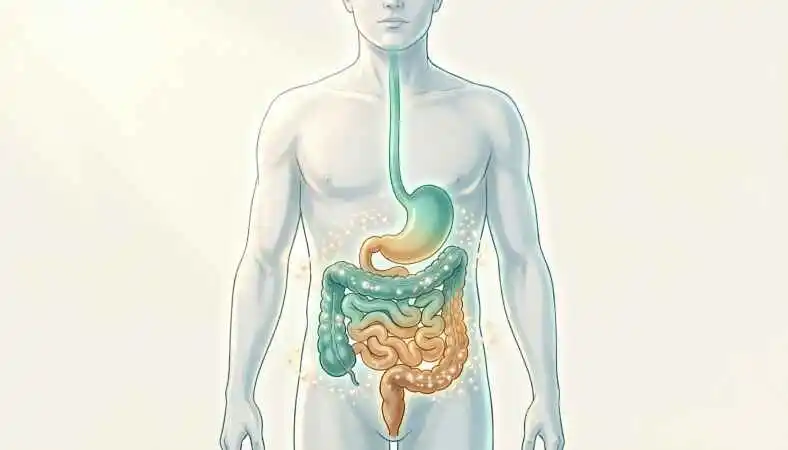
Here’s the full lineup:
- Mouth: Chewing (mechanical breakdown) plus saliva, which contains the first digestive enzymes — amylase starts breaking down starches before you’ve even swallowed.
- Esophagus: A muscular conveyor belt that moves food down through rhythmic contractions called peristalsis.
- Stomach: A churning, acid-soaked chamber (pH around 1.5–3.5) that turns food into a semi-liquid paste called chyme. Pepsin, another enzyme, starts dismantling proteins here.
- Small intestine: The MVP. Roughly 20 feet long, lined with villi and microvilli that give it the surface area of a tennis court. This is where most nutrient absorption happens, with help from enzymes from the pancreas and bile from the liver/gallbladder.
- Large intestine (colon): Absorbs water and electrolytes, houses trillions of gut bacteria, and forms what’s left into stool.
- Accessory organs: Liver, gallbladder, and pancreas — they produce the bile and enzymes that make chemical digestion possible.
Bold callout: Your digestive system isn’t just a food-processing plant. It houses about 70% of your immune system and produces most of your body’s serotonin. When your gut is off, the ripple effects go far beyond your stomach.
Why Understanding This Matters for Everyday Life
Most people only think about their digestive process when something goes wrong. That’s backwards. When you understand how the system works, you start making better choices before problems show up.
For example: knowing that digestion starts in the mouth explains why scarfing down a meal in three minutes flat leaves you bloated. Knowing that the small intestine does the heavy lifting on absorption explains why “what you eat” matters less than “what you actually absorb.” Knowing that your colon is home to a thriving bacterial community explains why a course of antibiotics can upend your digestion for weeks.
Healthy digestion isn’t an accident. It’s the predictable outcome of a system that’s well-fed, well-rested, and well-respected.
Section 2: The Gut Microbiome — The Trillion-Organism Organ You Didn’t Know You Had
Meet Your Gut Bacteria
Inside your large intestine lives a community of microorganisms so vast it’s almost hard to wrap your head around: roughly 38 trillion bacterial cells — slightly more than the total number of human cells in your body. Collectively, they’re called your gut microbiome, and they function almost like an organ in their own right.
These gut bacteria aren’t freeloaders. They:
- Ferment fiber you can’t digest yourself, producing short-chain fatty acids (like butyrate) that fuel your colon cells and reduce inflammation.
- Synthesize certain vitamins (K, some B vitamins).
- Train and regulate your immune system.
- Crowd out harmful pathogens.
- Influence how you store fat and respond to insulin.
A diverse, balanced microbiome is one of the strongest predictors of overall gut health. A depleted or imbalanced one (a state called dysbiosis) is linked to a long list of issues, from bloating and irregularity to more systemic inflammation.
What Wrecks Your Microbiome (And What Rebuilds It)
Things that damage the gut microbiome:
- Repeated courses of broad-spectrum antibiotics
- A diet low in fiber and high in ultra-processed foods
- Chronic stress (which alters gut motility and microbial composition)
- Excessive alcohol
- Artificial emulsifiers and certain food additives (in animal studies, these have been shown to thin the protective mucus layer)
Things that support it:
- A wide variety of plant foods (aim for 30 different plants per week — a number that comes from research linking dietary diversity to microbial diversity)
- Fermented foods like yogurt, kefir, sauerkraut, kimchi, and kombucha
- Prebiotic fibers: garlic, onions, leeks, asparagus, bananas, oats, apples
- Resistant starch: cooled cooked potatoes, green bananas, oats, legumes
- Adequate sleep and regular movement
| Food Category | Examples | Why It Helps |
| Prebiotic-rich | Garlic, onions, asparagus, oats | Feeds beneficial bacteria |
| Fermented | Yogurt, kefir, kimchi, sauerkraut | Introduces live beneficial microbes |
| Polyphenol-rich | Berries, dark chocolate, green tea | Supports microbial diversity |
| Resistant starch | Cooled potatoes, green bananas, legumes | Ferments into gut-fueling SCFAs |
A Real-World Example
I worked with a client — let’s call her Maya — who’d been “eating healthy” for years: grilled chicken, white rice, steamed broccoli, repeat. Decent on paper, but her diet had maybe six or seven plants in rotation. She was constantly bloated and irregular. We didn’t cut anything out; we just widened the net. Over six weeks she went from seven plants to about twenty-five. The change wasn’t dramatic overnight, but by week four her bloating had quietly disappeared. Same calories, same protein — way more microbial diversity.
Section 3: The Gut-Brain Connection — Why Your Stomach Feels What Your Head Thinks
It’s Not “All in Your Head”
Ever had “butterflies” before a big presentation? Gotten a stomachache the moment you received bad news? That’s the gut-brain connection in real time, and it’s not a metaphor — it’s a physical, bidirectional communication line.
Your gut is wired to your brain via the vagus nerve, a major highway carrying signals in both directions. Your gut also produces around 90% of your body’s serotonin and a significant portion of your GABA — neurotransmitters most people associate exclusively with the brain.
This is why gut health and mental health keep showing up together in research. Studies have found correlations between gut microbiome composition and mood, anxiety, even cognitive performance. The direction of causality is still being unpacked, but the link is real enough that researchers now talk about the gut as a “second brain.”
Practical Implications
- Stress slows digestion. When your body is in fight-or-flight mode, it shunts resources away from digestion. Chronic stress can mean slower motility, more bloating, and altered gut secretions.
- Eating while stressed is inefficient digestion. Your body can’t simultaneously mobilize for a threat and properly digest a meal. This is why mindful eating isn’t woo — it’s physiology.
- Your gut can send distress signals upward. Gut inflammation and dysbiosis have been linked to brain fog and low mood, which is why addressing the gut sometimes improves how people feel mentally.
Bold callout: If you’ve ever wondered why you can eat the same meal calmly one day and feel terrible eating it under stress the next — this is why. The food didn’t change. Your nervous system state did.
Three Simple Ways to Support the Gut-Brain Axis
- Take five slow breaths before eating. This shifts you toward parasympathetic (“rest and digest”) mode before food arrives.
- Chew thoroughly. It’s the one digestive step you have total control over, and it signals your whole system to prepare.
- Move daily. Gentle, regular movement supports gut motility and has independently positive effects on mood.
Section 4: Common Digestive Disorders — What’s Normal, What’s Not, and When to Get Help
Knowing the Difference
Everyone has the occasional off day. But recurring symptoms are worth paying attention to. Here’s a grounded overview of the most common digestive disorders — not to diagnose yourself, but to help you have a more informed conversation with a clinician.
Acid reflux (GERD): Stomach acid repeatedly flowing back into the esophagus. Occasional reflux after a heavy meal is common; frequent reflux (twice a week or more) may be GERD and warrants medical attention. Triggers often include large meals, lying down soon after eating, spicy or fatty foods, and caffeine.
Irritable bowel syndrome (IBS): A functional disorder — meaning the gut looks structurally normal but doesn’t work as it should. Symptoms include cramping, bloating, gas, and diarrhea or constipation (or alternating both). It’s often managed through diet (the low-FODMAP approach is well-studied), stress management, and lifestyle changes.
Inflammatory bowel disease (IBD): This includes Crohn’s disease and ulcerative colitis — conditions involving chronic inflammation and structural damage to the digestive tract. These are distinct from IBS and require medical treatment. Red flags include persistent diarrhea, blood in stool, unintended weight loss, and fatigue.
Celiac disease: An autoimmune reaction to gluten that damages the small intestine’s lining and impairs absorption. It’s not the same as gluten sensitivity and is diagnosed through specific blood tests and biopsy.
Small intestinal bacterial overgrowth (SIBO): Exactly what it sounds like — bacteria that should mainly live in the colon end up overgrowing in the small intestine, causing gas, bloating, and malabsorption. Diagnosed via breath testing.
Red Flags — See a Doctor If You Experience:
- Unexplained weight loss
- Blood in your stool (or black, tarry stools)
- Persistent or severe abdominal pain
- Difficulty swallowing
- Persistent changes in bowel habits lasting more than a couple of weeks
- Unexplained fatigue or anemia
Bold callout: Dr. Google is not your doctor. This section is for awareness, not diagnosis. If something feels wrong persistently, a real clinician — often a gastroenterologist — is the right move.
Section 5: Building Healthy Digestion — Practical Digestive Health Tips That Actually Work
This is the part most people want: what do I do? Here’s a no-nonsense, evidence-informed playbook for healthy digestion. Nothing exotic, no supplements you’ve never heard of — just the fundamentals, done consistently.
Eat for the System, Not Against It
- Lead with fiber. Most adults need 25–35 grams daily; most get half that. Build up gradually to avoid a sudden gas increase. Sources: beans, lentils, whole grains, vegetables, fruit, nuts, seeds.
- Hydrate, especially with fiber. Fiber without water can actually cause Aim for consistent fluid intake across the day.
- Don’t fear fat — choose it wisely. Your gallbladder needs some fat to function. Olive oil, avocados, nuts, and fatty fish support (rather than sabotage) the digestive process.
- Eat a rainbow. Different plant pigments feed different bacterial species. Color diversity ≈ microbial diversity.
Improve the How, Not Just the What
- Slow down. Eating quickly means under-chewed food, swallowed air, and a stomach playing catch-up. Aim for 20–30 chews per bite, or at minimum, put the fork down between bites.
- Stop eating at 80% full. Overloading the stomach slows emptying and encourages reflux. It takes about 20 minutes for fullness signals to register.
- Space out eating. Constant grazing keeps your digestive system working without a break. A 10–12 hour overnight fast (e.g., finish dinner by 8 p.m., eat breakfast at 8 a.m.) gives your gut a natural rest window.
- Avoid lying down right after meals. Wait 2–3 hours before reclining to reduce reflux risk.
Move and Sleep
- Walk after meals. Even 10–15 minutes of light walking after eating improves gastric emptying and blood sugar response.
- Prioritize sleep. Poor sleep alters gut hormones and microbiome composition. Aim for 7–9 hours.
- Manage stress daily. Not just when you’re overwhelmed. A few minutes of breathwork, a walk, journaling — small, consistent inputs keep your gut-brain axis calibrated.
Consider (But Don’t Over-Rely On) Supplements
- Probiotics: Can help in specific situations (after antibiotics, certain IBS cases), but they’re not a universal fix. Food-first is better for most people.
- Digestive enzymes: Over-the-counter enzymes may help with specific food intolerances (like lactase for lactose intolerance). Prescription enzymes are a different matter and are for diagnosed deficiencies.
- Peppermint oil: Has evidence for IBS symptoms in some people (enteric-coated capsules). Check with a doctor if you have reflux.
- Magnesium: Magnesium citrate or oxide can help with constipation; magnesium glycinate is gentler and supports sleep.
| Habit | Benefit | Effort Level |
| Chew thoroughly | Better breakdown, less gas | Low |
| Walk 10 min post-meal | Better motility, blood sugar | Low |
| 30 plants/week | Microbiome diversity | Medium |
| 10–12 hr overnight fast | Gut rest period | Low–Medium |
| Consistent sleep schedule | Hormone + microbiome support | Medium |
A Real-World Example, Continued
A guy I know — mid-40s, busy executive, ” eats well” — was taking antacids daily and convinced he had reflux disease. We didn’t change what he ate much. We changed three things: he stopped eating lunch hunched over his laptop, he started walking 10 minutes after lunch and dinner, and he stopped his 9 p.m. fridge raids. Within three weeks, antacids were gone. The “disease” was mostly habits.
Section 6: Long-Term Digestive Health — Thinking Decades, Not Days
Quick fixes get clicks, but gut health is a long game. Your microbiome shifts over weeks and months, not hours. Here’s how to think about it across a lifetime.
In Your 20s and 30s
This is the window of peak microbial resilience. Your microbiome is still responsive and diverse. Use it: build the habits now. The fiber, the plant variety, the stress habits, the sleep — establish them while your body forgives inconsistency. What you build here becomes the baseline you’ll lean on later.
In Your 40s and 50s
Digestive capacity starts to shift. Stomach acid and digestive enzymes may decline slightly. Motility can slow. This is when longstanding habits pay off — and when neglect starts to show. Pay attention to changes: new bloating, new irregularity, new reactions to foods that never bothered you before. Don’t write them off as “just getting older.”
In Your 60s and Beyond
Focus on maintaining muscle and movement (both support gut motility), staying hydrated (thirst signals weaken with age), and keeping plant variety high. Appetite may decrease, so nutrient density matters more than ever. Watch for unintended weight loss and changes in bowel habits — both are worth discussing with a doctor, not dismissing.
The Compounding Principle
Small inputs, repeated daily, compound. A high-fiber breakfast isn’t dramatic. A ten-minute post-dinner walk isn’t dramatic. Neither is one night of good sleep. But the stack, repeated for months, is what transforms digestive health. There’s no finish line — just a system that either gets a little more resilient or a little more fragile each quarter, depending on what you feed it.
FAQs
- What is the digestive system?
It’s the series of organs — mouth, esophagus, stomach, small and large intestines, plus accessory organs like the liver and pancreas — that breaks down food, absorbs nutrients, and eliminates waste.
- How long does the entire digestive process take?
On average, 24–72 hours from eating to elimination. It varies based on the food, your hydration, activity level, and individual metabolism.
- What are digestive enzymes, and do I need to take them?
They’re proteins that break food into absorbable components. Your body produces them naturally. Supplements can help with diagnosed deficiencies or specific intolerances but aren’t necessary for most healthy people.
- What’s the difference between probiotics and prebiotics?
Probiotics are live beneficial bacteria (found in fermented foods or supplements). Prebiotics are the fibers that feed those bacteria (found in onions, garlic, oats, asparagus, etc.). You need both.
- How much fiber should I eat daily?
Most adults should aim for 25–35 grams per day. Increase gradually and drink plenty of water to avoid bloating.
- Why do I get bloated after eating?
Common causes include eating too fast, swallowing air, high-FODMAP foods, food intolerances, constipation, or an imbalanced microbiome. Persistent bloating deserves a medical check.
- What is the gut microbiome?
It’s the community of trillions of microorganisms — mostly bacteria — living in your intestines. It influences digestion, immunity, metabolism, and even mood.
- Can stress really affect my digestion?
Yes. Through the gut-brain axis, stress alters motility, secretions, and microbial balance. Chronic stress is a common driver of digestive complaints.
- Is it normal to have a bowel movement every day?
Anywhere from three times a day to three times a week is considered normal. What matters most is what’s normal for you and whether it changes suddenly.
- What causes acid reflux?
A weakened lower esophageal sphincter allows stomach acid to flow back up. Triggers include large meals, lying down after eating, spicy or fatty foods, caffeine, and alcohol.
- Are food intolerances the same as food allergies?
No. Allergies involve the immune system and can be life-threatening. Intolerances involve difficulty digesting certain foods and are generally less severe but still uncomfortable.
- What is leaky gut, and is it real?
Increased intestinal permeability is a real phenomenon studied in medicine, particularly in certain conditions. The term “leaky gut” is often overused in wellness marketing; talk to a doctor rather than self-diagnosing.
- Should I do a juice cleanse to “reset” my digestion?
There’s no scientific evidence that cleanses reset anything. Your liver and kidneys handle detoxification. A better approach: eat consistently well and let your system regulate itself.
- Can I improve my gut health with diet alone?
For most people, yes. Diet — especially plant diversity and fiber — is the single biggest lever. Supplements can help in specific cases but don’t outperform fundamentals.
- What’s the low-FODMAP diet, and who is it for?
It’s a temporary elimination approach used mainly for IBS to identify trigger carbohydrates. It’s not meant to be a long-term diet and is best done with a dietitian’s guidance.
- Do antibiotics permanently damage the gut?
No, but they can disrupt the microbiome for weeks to months. Support recovery with a diverse, fiber-rich diet and, in some cases, probiotics.
- Is gluten bad for everyone?
No. Only people with celiac disease or diagnosed non-celiac gluten sensitivity need to avoid it. For others, whole grains containing gluten can be part of a healthy diet.
- Why do I feel tired after eating?
A combination of blood sugar shifts, increased blood flow to the digestive tract, and (after large meals) the energy cost of digestion. Smaller, balanced meals reduce the effect.
- How does aging affect digestion?
Stomach acid and enzyme production can decline, motility may slow, and the microbiome shifts. Staying active, hydrated, and eating nutrient-dense foods helps.
- Can chewing gum cause digestive issues?
It can lead to swallowing air (bloating) and, in large amounts, sugar alcohols in sugar-free gum can cause gas and diarrhea in sensitive people.
- Is drinking water during meals bad for digestion?
No. Moderate water with meals is fine and supports the process. Very large amounts might dilute stomach acid slightly, but normal intake isn’t a problem.
- What foods are best for gut health?
Diverse plant foods, fermented foods, fiber-rich whole grains, legumes, nuts, seeds, and polyphenol-rich foods like berries and green tea.
- What foods should I limit for better digestion?
Ultra-processed foods, excessive added sugar, large amounts of fried or very fatty foods, and alcohol. These can disrupt the microbiome and slow or irritate digestion.
- Can exercise improve digestion?
Yes. Regular movement supports motility, reduces constipation, and is associated with greater microbial diversity.
- What’s the connection between gut health and immunity?
About 70% of your immune system lives in your gut. A healthy, diverse microbiome helps regulate immune responses and fend off pathogens.
- How do I know if I have a food intolerance?
Symptoms like bloating, gas, diarrhea, or fatigue after eating specific foods are clues. An elimination-and-reintroduction process (ideally guided) is the most reliable way to identify triggers.
- Are probiotic supplements necessary?
Not for everyone. They can help after antibiotics or in certain IBS cases, but a food-first approach is sufficient for most healthy people.
- Can poor gut health cause skin issues?
There’s emerging research linking gut microbiome imbalances to skin conditions like acne and eczema, though the science is still developing.
- What’s the best breakfast for digestion?
One with fiber and protein — like oats with berries and nuts, or eggs with vegetables. It sets up stable blood sugar and supports regular motility.
- When should I see a doctor about my digestion?
If you have persistent symptoms, unexplained weight loss, blood in your stool, severe pain, or any sudden change in your normal bowel habits. Don’t wait it out.
Your Gut Is Talking — Start Listening
Your digestive system is one of the most honest indicators of how you’re living. It reflects what you eat, how you move, how you sleep, and how you handle stress — quietly, every single day. The good news is that it’s also one of the most responsive systems in your body. You don’t need a dramatic overhaul. You need better fundamentals, repeated.
Start small. Drink more water. Chew your food. Take a walk after dinner. Add a couple of new plants to your rotation this week. These aren’t gimmicks — they’re the same boring-but-effective inputs that every piece of solid research keeps pointing back to. The magic isn’t in some exotic supplement; it’s in consistency.
Here’s the reframe worth taking with you: you’re not just feeding yourself. You’re feeding the trillions of organisms in your gut, the immune system they train, and the brain they communicate with. Take care of that system, and it’ll take care of you for decades to come.
Your call to action: Pick one habit from this post — just one — and commit to it for the next two weeks. Track how you feel. Then add another. That’s how real gut health gets built: one intentional choice at a time.
⚕️Medical Disclaimer:
The information provided on this website is for general educational and informational purposes only and is not intended as a substitute for professional medical advice, diagnosis, or treatment. Always seek the advice of your physician or other qualified health provider with any questions you may have regarding a medical condition. Never disregard professional medical advice or delay in seeking it because of something you have read on this website.

