

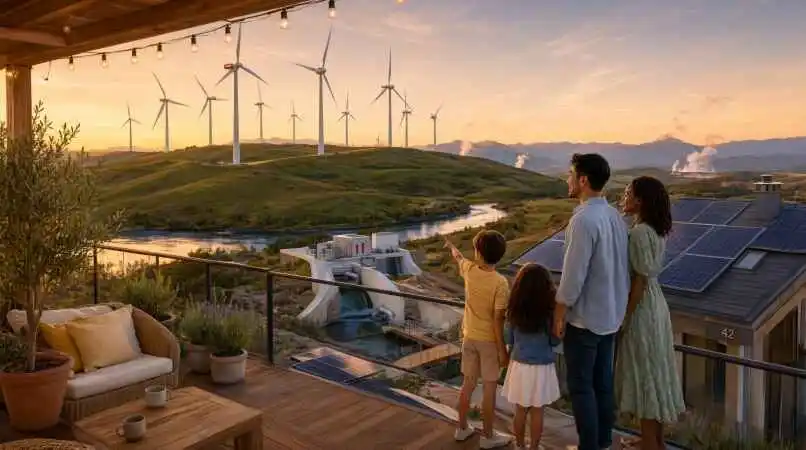
Natural Resources of Energy: The Power Sources Shaping Our Homes, Cities, and Future
Imagine waking up tomorrow and finding no electricity: no fan, no phone charge, no refrigerator, no water pump, no internet. Within hours, most of us would realize how deeply our daily comfort depends on energy. Yet the energy we use does not begin at the switchboard. It begins with natural resources of energy—sunlight, wind, flowing water, heat beneath the Earth, plants, coal, oil, natural gas, and uranium.
The real question is no longer simply, “Where does energy come from?” It is, “Which energy sources can we use without damaging the systems that make life possible?” That question matters because the world is changing quickly: renewable power reached about 49.5% of global installed electricity capacity by the end of 2025, with solar leading the expansion.
This guide explains the major natural energy resources in plain language, compares their strengths and limitations, and shows how individuals, communities, and businesses can make smarter energy choices.
What Are Natural Resources of Energy?
Natural resources of energy are materials and forces found in nature that humans can convert into useful power—heat, movement, light, or electricity. When you burn wood, charge a phone using a solar panel, or ride a bus powered by diesel, you are using energy that originally came from a natural source.
Energy resources fall into two broad groups:
| Type | Meaning | Main examples | Replenishment |
| Renewable energy sources | Naturally replenished over a short human timescale | Solar energy, wind energy, hydropower, geothermal energy, biomass energy, marine energy | Ongoing, though availability varies |
| Nonrenewable energy sources | Finite supplies that take millions of years to form | Coal, petroleum, natural gas, uranium | Not replenished on a human timescale |
The U.S. Energy Information Administration classifies petroleum, natural gas, coal, and nuclear energy as nonrenewable because their supplies are limited to what can be mined or extracted, while solar, wind, hydropower, geothermal, and biomass are major renewable sources.
Primary and Secondary Energy
It helps to separate the source from the form we actually use.
- Primary energy is energy in its natural form: sunlight, coal, wind, crude oil, flowing water, or geothermal heat.
- Secondary energy is energy converted into a more usable form: electricity, gasoline, diesel, hydrogen, or district heat.
A solar panel does not create energy from nothing. It converts sunlight into electricity. A hydroelectric dam converts the movement of water into electricity. A thermal power plant converts heat—often from coal, gas, biomass, or nuclear fuel—into steam, which turns a turbine.
Renewable Energy Sources: Power That Replenishes Itself
Renewable energy is not automatically perfect. A solar panel needs sunlight, a wind turbine needs wind, and a hydroelectric plant needs water. But unlike fossil fuels, these sources do not run out because we use them.
Solar Energy
Solar energy comes from sunlight. Photovoltaic panels convert sunlight directly into electricity, while solar thermal systems use sunlight to heat water, air, or another fluid.
Solar is now the world’s largest renewable power source by installed capacity. At the end of 2025, global solar capacity reached about 2,397 GW—roughly 46.5% of all renewable capacity.
Why solar energy is popular
- It can work at many scales: a rooftop system, a village microgrid, or a utility-scale solar farm.
- It has no fuel cost once installed.
- It produces no direct air pollution while generating electricity.
- It pairs well with batteries, especially in sunny regions.
Its limitations
- It generates little or nothing at night.
- Cloudy weather reduces output.
- Panels need space, cleaning, and proper disposal or recycling at end of life.
- Storage or grid support is needed for round-the-clock supply.
A useful way to think about solar is like collecting rainwater. The supply is free, but you still need the right equipment, good placement, and storage if you want water after the rain stops.
Wind Energy
Wind energy uses moving air to spin turbine blades, which drive a generator. The wind itself is indirectly solar-powered: the Sun heats Earth unevenly, creating pressure differences that move air.
Global wind capacity reached about 1,291 GW by the end of 2025, making it nearly equal to hydropower in installed capacity.
Where wind works best
- Coastal areas with steady sea breezes
- Open plains and agricultural land
- Mountain passes
- Offshore locations with strong, consistent winds
Advantages
- No fuel is required.
- Land between turbines can often still be farmed.
- Offshore wind can produce large amounts of electricity.
- It complements solar because wind often blows at different times from when sunlight peaks.
Challenges
- Output varies with weather.
- Turbines need maintenance and careful siting.
- Some communities raise concerns about noise, visual impact, birds, and land use.
- Transmission lines are often needed to carry power from windy regions to cities.
Hydropower
Hydropower converts the movement of water into electricity. Large dams store water in reservoirs and release it through turbines. Smaller “run-of-river” systems use the natural flow of a river with less storage.
Hydropower remains a major renewable source, with about 1,296 GW of renewable hydropower capacity globally at the end of 2025.
Why hydropower matters
- It can provide steady, dispatchable electricity.
- Reservoirs can act like giant batteries by storing water for later release.
- Dams may also support irrigation, flood control, and water supply.
- It has a long operational life when well maintained.
Important trade-offs
- Large dams can displace communities and alter river ecosystems.
- Sediment buildup can reduce reservoir capacity.
- Droughts can lower output.
- Fish migration and downstream water flow need careful management.
The best hydropower projects are not simply the biggest ones. They are the ones planned with strong environmental assessment, fair resettlement processes, fish passage, and long-term climate risk analysis.
Geothermal Energy
Geothermal energy uses heat stored inside the Earth. In some places, hot water or steam rises close to the surface and can drive turbines. In others, ground-source heat pumps use stable underground temperatures to heat and cool buildings.
Global geothermal power capacity was around 16 GW at the end of 2025—small compared with solar, wind, and hydropower, but valuable because it can run continuously.
Why geothermal is special
- It is not dependent on daytime sunlight or weather.
- It can provide baseload electricity in suitable regions.
- Ground-source heat pumps can cut heating and cooling demand in homes and offices.
- It has a small land footprint compared with many other power sources.
Limits
- High-temperature geothermal power works best in geologically active regions.
- Drilling can be expensive.
- Poorly managed projects may cause localized seismicity or water contamination risks.
- Not every location has accessible high-grade geothermal resources.
Biomass Energy
Biomass energy comes from organic material: wood, crop residues, animal manure, food waste, and specially grown energy crops. It can be burned directly, converted into biogas, or processed into liquid fuels such as ethanol and biodiesel.
Biomass can be renewable when the organic material regrows or when waste is used responsibly. It becomes problematic when forests are cut faster than they regenerate or when food crops are diverted from people to fuel.
Practical uses
- Biogas digesters for rural households and farms
- Wood pellets for industrial heat
- Landfill gas for electricity
- Agricultural residue for community power
- Biodiesel and ethanol for transport, where sustainably produced
The key rule: biomass is only genuinely sustainable when its source, harvesting rate, land impact, and emissions are managed carefully.
Marine Energy
Marine energy includes tidal power, wave energy, ocean thermal energy, and currents. It is still a small part of global capacity—about 0.5 GW at the end of 2025—but it has long-term potential in coastal countries.
Tidal energy is especially interesting because tides are predictable. However, the technology is still expensive, and projects must protect marine life and coastal ecosystems.
Nonrenewable Energy Sources: Powerful but Finite
Nonrenewable resources still supply a large share of global energy. They are energy-dense, transportable, and embedded in existing infrastructure. But they are finite, and extracting and burning them carries environmental and health costs.
Coal
Coal is a sedimentary rock formed from ancient plant material. It is burned to produce steam, which turns turbines and generates electricity. It is also used in some industrial processes, especially steelmaking.
Coal is relatively cheap to store and transport, but it is among the most carbon-intensive fossil fuels. Mining can damage land and water systems, while combustion releases carbon dioxide, particulate matter, sulfur dioxide, nitrogen oxides, and mercury.
Petroleum and Oil
Petroleum, or crude oil, is refined into petrol, diesel, kerosene, jet fuel, lubricants, asphalt, and petrochemicals. Its high energy density makes it difficult to replace in aviation, shipping, and long-distance freight.
Oil spills, pipeline leaks, air pollution, and greenhouse-gas emissions are major concerns. The transition away from oil is therefore gradual: electrification works well for cars and buses, but ships and aircraft need advanced fuels, hydrogen, ammonia, or other solutions.
Natural Gas
Natural gas is mainly methane. It is used for electricity, heating, cooking, and industry. It generally emits less carbon dioxide than coal per unit of electricity, but methane leaks during production and transport are a serious problem because methane is a potent greenhouse gas.
Natural gas is often described as a “bridge fuel,” but that only makes sense if leaks are minimized and the bridge actually leads to low-carbon systems rather than locking in new fossil infrastructure.
Nuclear Energy
Nuclear power uses uranium fuel in reactors to produce heat through fission. That heat generates steam and electricity. Uranium is not a fossil fuel, but it is classified as nonrenewable because it is a mined, finite resource.
Nuclear plants can produce large amounts of low-carbon electricity with high capacity factors. Their challenges include high construction costs, long build times, radioactive waste management, safety regulation, and public trust.
How Natural Energy Resources Become Electricity
Most electricity generation follows a similar principle: move a magnet near a coil of wire, or use a semiconductor to convert light into electric current.
| Resource | Conversion process | Main equipment |
| Solar energy | Photovoltaic cells convert sunlight directly into electricity | Solar panels, inverters, batteries |
| Wind energy | Moving air spins blades connected to a generator | Wind turbines |
| Hydropower | Falling or flowing water spins turbines | Dams, turbines, generators |
| Geothermal energy | Underground heat produces steam or heats a working fluid | Wells, turbines, heat pumps |
| Biomass energy | Organic material is burned, digested, or fermented | Boilers, digesters, engines |
| Coal, oil, gas | Fuel is burned to create steam or drive engines | Boilers, turbines, generators |
| Nuclear energy | Fission creates heat that produces steam | Reactors, turbines, cooling systems |
The difference is not just the fuel. It is the full chain: extraction, conversion, transport, storage, waste, and impact on people and ecosystems.
Comparing Energy Sources: A Practical View
No single energy source solves every problem. A sensible energy system uses a mix based on geography, demand patterns, storage, grid capacity, and social priorities.
| Energy source | Fuel cost | Emissions during use | Reliability | Main challenge |
| Solar energy | None | None | Daylight-dependent | Storage and land use |
| Wind energy | None | None | Weather-dependent | Intermittency and siting |
| Hydropower | None | Very low | High where water is reliable | Ecosystem and displacement impacts |
| Geothermal energy | None | Very low | High | Location and drilling cost |
| Biomass energy | Low to moderate | Varies | Can be steady | Sustainable feedstock supply |
| Coal | Moderate | High | High | Pollution and carbon emissions |
| Oil | Moderate to high | High | High | Price volatility and spills |
| Natural gas | Moderate | Moderate | High | Methane leakage |
| Nuclear energy | Low fuel cost | Very low | Very high | Cost, waste, and safety governance |
Renewables supplied 31.7% of global electricity generation in 2024, according to IRENA, while their share of installed capacity reached 49.5% by the end of 2025. Capacity and actual generation are not the same thing: a solar farm may have substantial installed capacity but produce electricity only when sunlight is available.
Why Energy Choices Affect Health, Climate, and Cost
Energy is not only an environmental issue. It affects the air we breathe, the water we drink, household budgets, public health, and national security.
Air Quality and Health
Burning coal, diesel, wood, and other fuels releases fine particles and gases that can worsen asthma, heart disease, lung infections, and premature death. Cleaner energy reduces these exposures, especially in dense cities where traffic, industry, and household fuel use overlap.
Climate Stability
Fossil fuels release carbon dioxide that accumulates in the atmosphere and traps heat. Renewable sources such as solar, wind, hydro, and geothermal produce little or no direct carbon dioxide during operation. Moving toward clean energy is therefore central to limiting climate risks such as heatwaves, floods, droughts, and sea-level rise.
Energy Security
A country that imports most of its fuel is exposed to global price shocks and supply disruptions. Solar, wind, hydropower, and locally produced biogas can keep more energy value within the region. They are not immune to supply-chain issues—panels, turbines, batteries, and minerals still matter—but they reduce dependence on continuous fuel imports.
Affordability
Renewable technologies have high upfront costs but low operating costs. Once a solar array or wind farm is built, there is no fuel bill. That can protect consumers from volatile fuel prices, though the benefit depends on financing, grid access, storage, and policy design.
The Hidden Resources Behind Clean Energy
Clean energy still depends on materials: silicon for solar panels, rare-earth elements for some wind turbines, lithium and cobalt for batteries, copper for grids, and steel and concrete for infrastructure.
This does not make renewable energy hypocritical. It means the transition must be responsible.
What responsible clean energy looks like
- Recycle panels, batteries, and turbine components wherever possible.
- Improve battery chemistry and reduce dependence on high-risk minerals.
- Design turbines and panels for longer life and easier repair.
- Source minerals through transparent, fair-labor supply chains.
- Build grids that use existing infrastructure efficiently before expanding blindly.
- Avoid sacrificing forests, wetlands, farmland, or Indigenous lands for poorly planned projects.
A solar panel is not “zero impact.” It is simply a much lower-impact way to produce electricity than continuously extracting and burning fossil fuels.
Energy Storage: The Missing Piece of the Puzzle
The biggest challenge with solar and wind is timing. Solar peaks at midday; demand may peak in the evening. Wind may be strong at night when electricity demand is lower.
Storage helps match supply with demand.
Batteries
Lithium-ion batteries are common for homes, electric vehicles, and short-duration grid storage. They respond quickly and are becoming cheaper, but they are best for storing electricity for hours rather than days.
Pumped Hydro
Pumped-storage hydropower moves water uphill when electricity is cheap or abundant, then releases it downhill through turbines when demand rises. It is a mature, large-scale storage method.
Thermal Storage
Molten salt, hot water, heated rocks, or phase-change materials can store heat for later use. This works well for industrial heat, solar thermal plants, and district heating.
Green Hydrogen
Electricity from renewables can split water into hydrogen and oxygen. Hydrogen can be stored and later used in fuel cells, industry, or difficult-to-electrify transport. It is not a magic solution—conversion losses are significant—but it may be valuable where direct electrification is difficult.
How Households Can Use Natural Energy More Wisely
You do not need to install a wind turbine to participate in the energy transition. Small decisions, repeated across millions of homes, create meaningful change.
Start With Efficiency
The cheapest and cleanest unit of energy is the one you never need to use.
- Switch to LED lighting.
- Use fans before relying on air conditioning where possible.
- Service air conditioners and clean filters regularly.
- Choose energy-efficient appliances.
- Seal gaps around doors and windows.
- Use natural light during the day.
- Wash clothes with cold water when suitable.
- Unplug chargers and devices that draw standby power.
Consider Rooftop Solar
If you own a suitable roof, solar can reduce electricity bills and provide backup power when paired with batteries. Before buying, check:
- Roof orientation and shading
- Local sunlight patterns
- Your typical daytime electricity use
- Net-metering or feed-in rules
- Inverter and panel warranties
- Installer reputation and after-sales service
- Battery need versus grid reliability
Use Time Wisely
If your utility offers time-of-use pricing, run heavy loads—washing machines, dishwashers, water pumps—when solar generation is high or demand is low. This reduces strain on the grid and can lower bills.
Choose Cleaner Transport
Walking, cycling, public transport, carpooling, electric two-wheelers, and electric vehicles all reduce fossil-fuel use. The cleanest option depends on your city: an electric car charged from coal power is better than a petrol car in emissions terms, but public transport is often even better per person.
Support Better Policy
Energy systems are shaped by rules, incentives, building codes, grid investment, and public participation. Support policies that expand clean energy, improve efficiency standards, protect vulnerable consumers, and require fair environmental review.
Energy Transitions in the Real World
The shift to sustainable energy is already visible. In 2025, renewable capacity additions reached a record 693 GW, with solar and wind accounting for nearly 97% of net renewable additions.
But growth is uneven. Some regions have abundant sunlight but weak grids. Others have strong wind resources but limited land or transmission capacity. Many low-income households still face upfront-cost barriers even when renewable electricity would be cheaper over time.
A fair transition needs more than technology. It needs jobs, training, affordable finance, reliable grids, and protection for workers and communities currently dependent on fossil-fuel industries.
Common Misconceptions About Natural Energy Resources
“Renewable means unlimited electricity at all times.”
Not quite. Renewable resources replenish naturally, but their availability changes. Solar needs daylight; wind needs wind; hydropower needs water. That is why storage, flexible demand, and diverse sources matter.
“Clean energy has no environmental impact.”
All energy systems affect land, materials, water, and wildlife. The goal is to reduce impacts dramatically—not pretend they are zero.
“Electricity from renewable sources is always expensive.”
Costs depend on location, financing, grid access, and system design. Solar and wind have become highly competitive in many markets, especially when fuel-price volatility is considered.
“Natural gas is renewable because it comes from nature.”
Natural gas is natural, but it is not renewable on a human timescale. It formed over millions of years from buried organic matter.
“Biomass is always climate-friendly.”
It depends. Waste-based biogas can be beneficial. Burning forest wood faster than it regrows can harm forests and increase net emissions.
FAQs
- What are natural resources of energy?
Natural resources of energy are naturally occurring sources that humans convert into usable power, such as sunlight, wind, water, geothermal heat, biomass, coal, oil, natural gas, and uranium.
- What is the difference between renewable and nonrenewable energy?
Renewable energy is replenished naturally over a short period, while nonrenewable energy exists in finite amounts and takes millions of years to form.
- What are the main renewable energy sources?
The major renewable sources are solar, wind, hydropower, geothermal, biomass, and marine energy.
- Is nuclear energy renewable?
No. Nuclear energy uses uranium, a mined and finite resource, so it is generally classified as nonrenewable, even though it produces low direct carbon emissions.
- Which renewable energy source is most widely used?
By installed capacity, solar energy is the largest renewable source globally, followed by hydropower and wind.
- Can solar panels work on cloudy days?
Yes, but output drops. Panels still generate some electricity from diffuse sunlight, though far less than under clear skies.
- Do wind turbines work when there is no wind?
No. Turbines need a minimum wind speed to generate power. Very strong winds can also force shutdown for safety.
- What is baseload power?
Baseload power is the minimum continuous electricity demand in a system. Geothermal, nuclear, large hydro, and some biomass systems can help supply it.
- Why is energy storage important?
Storage stores electricity when production is high and releases it when demand rises. It makes variable sources such as solar and wind more dependable.
- Are electric vehicles truly clean?
They are cleaner than petrol or diesel vehicles in most cases, especially when charged with renewable electricity. Their overall impact also depends on battery manufacturing and electricity mix.
- Is hydropower always environmentally friendly?
No. While it produces low operating emissions, large dams can alter rivers, displace people, affect fish, and change sediment flow.
- What is biomass energy?
Biomass energy comes from organic materials such as wood, crop waste, manure, and food waste. It can produce heat, electricity, biogas, or liquid fuels.
- Is biogas renewable?
Biogas can be renewable when made from waste materials such as manure, food scraps, or crop residues that are continually produced.
- What is geothermal energy?
Geothermal energy uses heat from within the Earth for electricity, heating, cooling, or industrial processes.
- Can geothermal energy be used anywhere?
Ground-source heat pumps can work in many locations, but high-temperature geothermal power plants need specific geological conditions.
- What is tidal energy?
Tidal energy captures energy from the rise and fall of ocean tides. It is predictable but currently limited by cost and suitable locations.
- Why are fossil fuels called fossil fuels?
Coal, oil, and natural gas formed from ancient plants and animals over millions of years.
- Which energy source produces the most greenhouse gases?
Coal is generally among the most carbon-intensive sources per unit of electricity, though the full lifecycle emissions of any source depend on technology and practices.
- What is energy conservation?
Energy conservation means reducing energy waste through efficient appliances, better building design, smarter habits, and improved systems.
- What is energy efficiency?
Energy efficiency means getting the same service—light, cooling, transport, or heating—while using less energy.
- Can a home run entirely on solar power?
Yes, with enough panels, suitable roof space, batteries or grid support, and efficient appliances. The practical answer depends on local sunlight, budget, and energy needs.
- Do solar panels need direct sunlight?
They work best in direct sunlight but still produce some electricity in indirect light. Shade, dust, heat, and panel angle affect performance.
- What happens to old solar panels?
They can be recycled, but recycling systems are still developing. Better panel design and collection programs are important as installations grow.
- Are wind turbines dangerous to birds?
Wind turbines can affect birds and bats, especially if poorly sited. Careful location choices, radar-based shutdown systems, and monitoring can reduce risks.
- What is a smart grid?
A smart grid uses digital communication, sensors, and automation to balance electricity supply and demand more efficiently.
- What is net metering?
Net metering lets solar users send excess electricity to the grid and receive credit, depending on local rules and utility policy.
- Why does renewable energy need government support?
Support can address upfront costs, grid upgrades, research, permitting delays, and market rules that still favor established fossil-fuel systems.
- What is a just energy transition?
A just transition ensures workers, communities, and low-income households are not left behind as economies shift away from fossil fuels.
- Can developing countries skip fossil fuels entirely?
Many can expand renewables rapidly, but the path depends on financing, grid infrastructure, storage, industrial needs, and existing energy access gaps.
- What is the most sustainable energy source?
There is no universal winner. For many places, a mix of solar, wind, efficiency, storage, and locally appropriate hydropower or geothermal offers the best balance of reliability, cost, and environmental impact.
Natural resources of energy are not just items on a science syllabus. They are the foundation of modern life—and the choices we make about them will shape public health, climate stability, jobs, and energy access for decades.
The goal is not to romanticize every renewable technology or demonize every conventional one. The goal is to build an energy system that is reliable, affordable, fair, and compatible with a livable planet. That means using less energy wastefully, choosing clean energy where possible, storing power intelligently, and demanding systems that serve people as well as profit.
Start where you are: audit your electricity use, improve efficiency, explore rooftop solar if it suits your home, and support cleaner transport and stronger clean-energy policies. The energy transition is not something that happens only in power plants. It happens in homes, streets, classrooms, and everyday decisions.
⚠️ Disclaimer: This blog post is for educational purposes only and does not substitute professional scientific, academic, or medical advice. Simplifications have been made for clarity. Numerical values are approximate. Students should rely on their curriculum and instructors; professionals should verify against peer-reviewed sources. The author assumes no liability for errors or consequences arising from use of this information.

